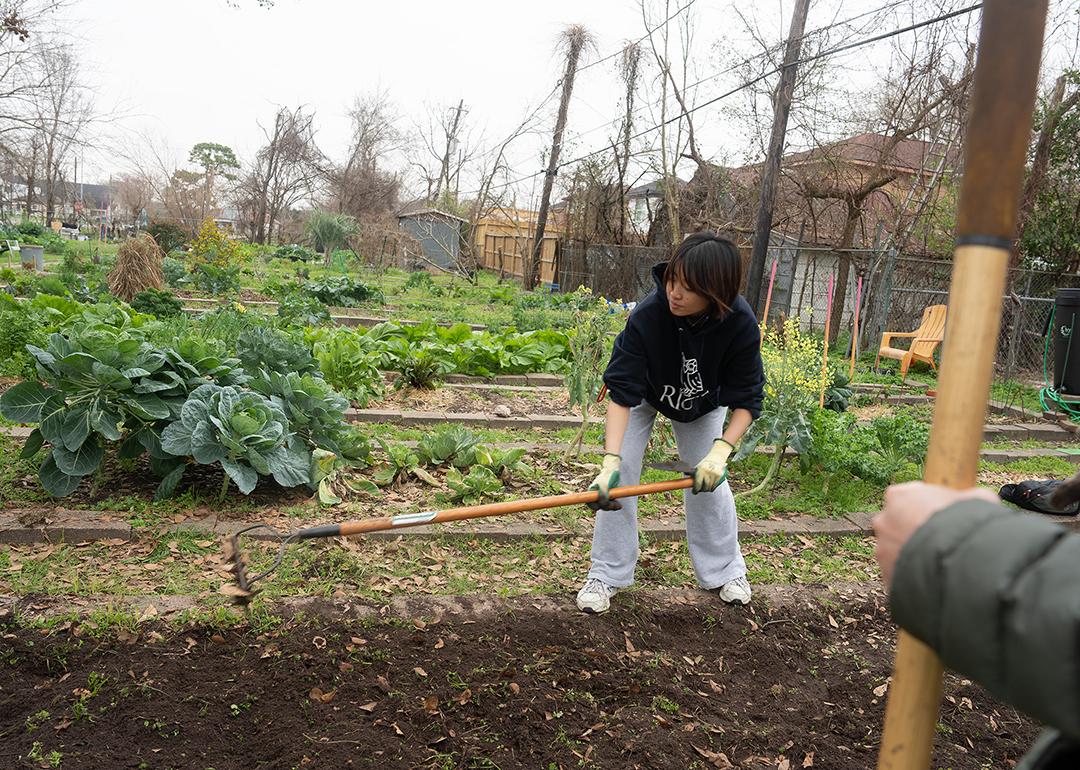
How urban farms can make cities more livable and help feed America
If you’ve spent any time on a roof, you know that it’s not especially pleasant up there — blazing in the summer, frigid and windy in the winter. Slap some solar panels up there, though, and the calculus changes: Shaded from gusts and excessive sunlight, , a technique known as rooftop agrivoltaics. And because that hardware provides shade, evaporation is reduced, resulting in big water savings. Plus, all that greenery insulates the top floor, reducing energy costs.
Long held in opposition to one another, urban areas are embracing elements of the rural world as they try to produce more of their own food, in community gardens on the ground and agrivoltaics up above. In an increasingly chaotic climate, urban agriculture could improve food security, generate clean electricity, reduce local temperatures, , and , among other benefits.
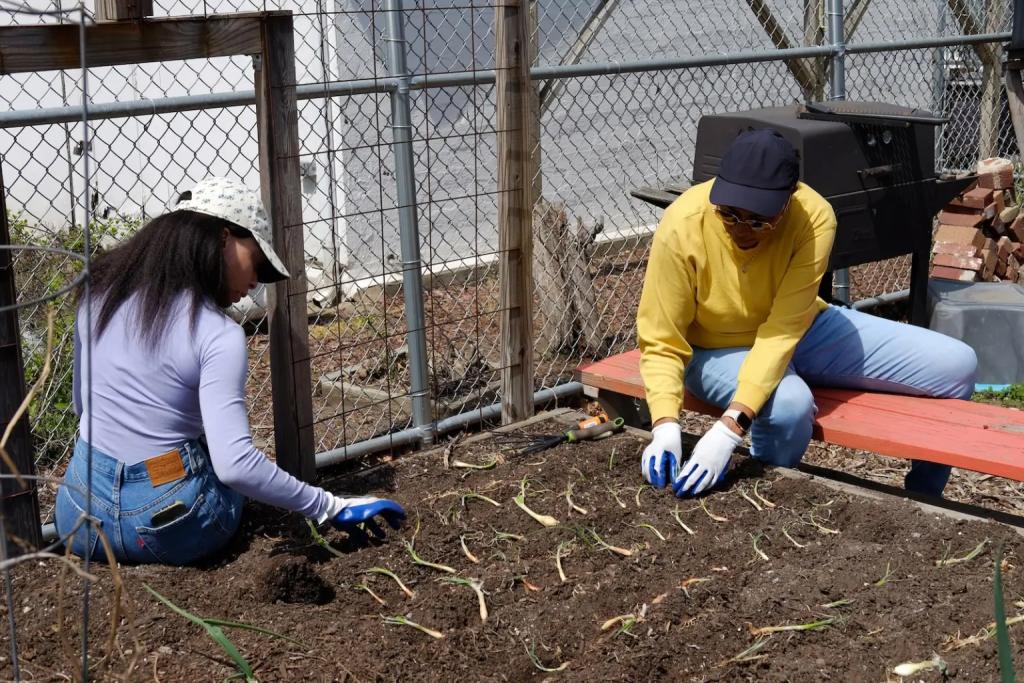
With relatively cheap investments in food production — especially if they’ve got empty lots sitting around — cities can solve a bunch of problems at once. Quezon City in the Philippines, for instance, into more than 300 gardens and 10 farms, in the process training more than 4,000 urban farmers. Detroit is speckled with . In the Big Apple, the nonprofit is turning vacant lots in underresourced neighborhoods into oases. “You have some places in New York City where there’s not a green space for 5 miles,” Alicia White, executive director and founder of the group told . “And we know that green spaces help to reduce stress. We know they help to combat loneliness, and we know at this point that they help to improve our respiratory and heart health.”
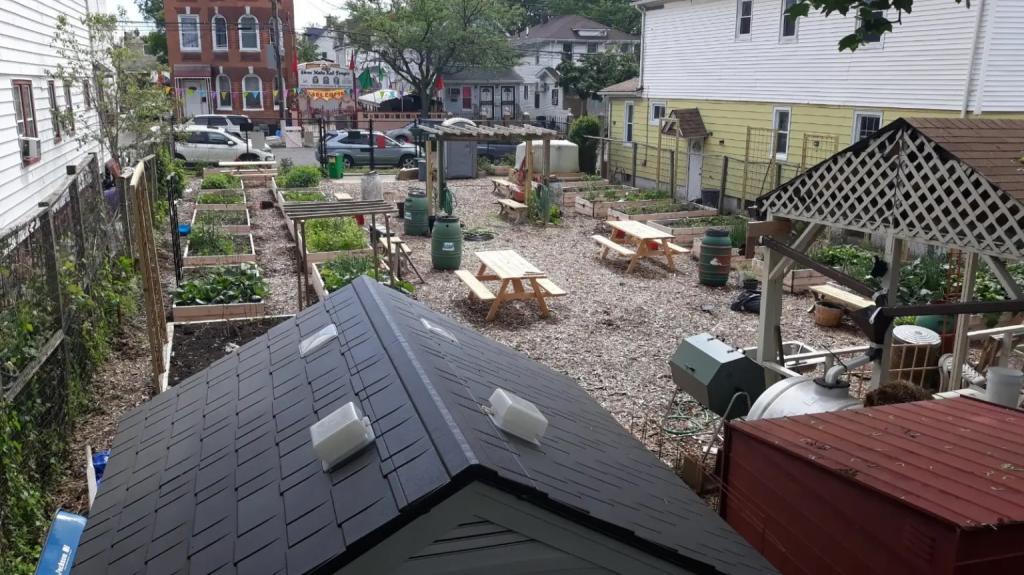
That makes these community spaces an especially potent climate solution, because it’s getting ever harder for people to stay healthy in cities due to the urban heat island effect, in which the built environment absorbs the sun’s energy and releases it throughout the night. Baking day after day during prolonged heat waves, the human body can’t get relief, an especially dangerous scenario for older people. But verdant patches reduce temperatures by releasing water vapor — essentially sweating into the neighborhood — and provide shade. At the same time, as climate change makes rainfall more extreme, urban gardens help soak up deluges, reducing the risk of flooding.
Oddly enough, while the ovenlike effect is perilous for people, it can benefit city farms. On rooftops, scientists are finding that some crops, like leafy greens, thrive under the shade of solar panels, but others — especially warm-season crops like zucchini and watermelon — grow beautifully in harsh full-sun conditions. “Most of our high-value crops benefit from the urban heat island effect, because it extends their growing season. So growing food in the city is actually quite logical,” said horticulturist Jennifer Bousselot, who studies rooftop agrivoltaics at Colorado State University. “This summer we had cucumbers that were the size of baseball bats, that were perfectly suited to the green roof.”
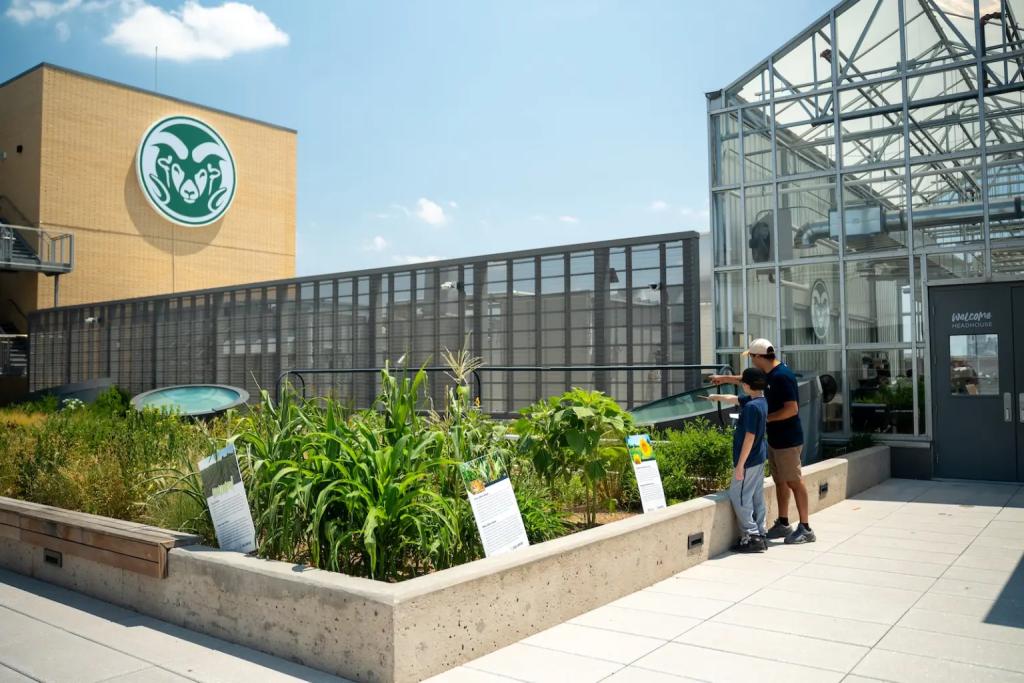
That’s not all that’s thriving up there. Bousselot and her team are also growing a trio of Indigenous crops: corn, beans, and squash. The beans climb the corn stalks — and microbes in their roots fix nitrogen, enriching the soil — while the squash leaves shade the soil and reduce evaporation, saving water. In addition, they’ve found that saffron — an extremely expensive and difficult-to-harvest spice — tolerates the shade of rooftop solar panels. Water leaving the soil also cools the panels, . “We’re essentially creating a microclimate, very much like a greenhouse, which is one of the most optimal conditions for most of our food crops to grow in,” Bousselot said. “But it’s not a system that needs heating or cooling or ventilation, like a greenhouse does.”
Growers might even use the extreme conditions of a rooftop for another advantage. Plants that aren’t shaded by solar panels produce “secondary metabolites” in response to the heat, wind, and constant sunlight that can stress them. These are often antioxidants, which a grower might be able to tease out of a medicinal plant like chamomile — at least in theory. “We are sort of exploring the breadth of what’s possible up there,” Bousselot said, “and using those unique environments to come up with crops that are hopefully even more valuable to the producer.”
Down on the ground in New York City, Project Petals has seen a similar bonanza. Whereas agricultural regions cultivate vast fields and orchards of monocrops, like grains or fruit trees, an urban farm can pack a bunch of different foods into a tight space. “If you could grow it in rural areas, you could grow it in the city as well,” White said. “We’ve grown squash, snap peas, lemongrass. In our gardens, I’ve seen just about everything.”
That sort of diversification means a cornucopia of nutritious foods flows into the community. (Lots of different species also provide different kinds of flowers for pollinators — and the more pollinators, the better the crops and native plants in the area can reproduce, creating a virtuous cycle.) That’s invaluable because in the United States, access to proper nutrition is extremely unequal: In Mississippi, for example, live in low-income areas with low access to good food, compared to 4% in New York. This leads to “silent hunger,” in which people have access to enough calories — often from ultraprocessed foods purchased at corner stores — but not enough nutrients.
Underserved neighborhoods need better access to supermarkets, of course, but rooftop and community gardens can provide fresh food and help educate people about improving their diets. “It’s not only about growing our own veggies in the city, but actually too it’s a hook to change habits,” said Nikolas Galli, a postdoctoral researcher who studies urban agriculture at the Polytechnic University of Milan.
In a published in the October issue of the journal Earth’s Future, Galli modeled what this change could look like on a wide scale in São Paulo, Brazil. In a theoretical scenario in which the city turned its feasible free space — around 14 square miles — into gardens and farms, every couple of acres of food production could provide healthy sustenance to more than 600 people. Though the scenario isn’t particularly realistic, given the scale of change required, “it’s interesting to think about that, if we use more or less all the areas that we have, we could provide the missing fruits and vegetables for 13 to 21 percent of the population of the city,” Galli said. “Every square meter that you do can have a function, can be useful to increase the access to healthy food for someone.”
Without urgent action here, silent hunger will only grow worse as urban populations explode around the world: By 2050, the Global Alliance for Urban Crises projects that will live in cities. Urban farms could go a long way toward helping feed all those people, and could indeed benefit from rural farmers making the move to metropolises. “They’re able to pass it on to the community members like me from New York City, who maybe didn’t have the expertise,” White said, “and helping them to find their way in learning how to garden and learning how to grow their own food.”
Whether it’s on top of a roof or tucked between apartment buildings, the urban garden is a simple yet uniquely powerful tool for solving a slew of environmental and human health problems. “They’re serving as spaces where people can grow, where they can learn, and they can help to fight climate change,” White said. “It’s so good to see that people are starting to come around to the fact that a garden space, and a green space, can actually make a bigger impact than just on that community overall.”
was produced by and reviewed and distributed by Â鶹ԭ´´.