Nearly 19 million people in the US live in a food desert: Here’s what that means
Nearly 19 million people in the US live in a food desert: Here’s what that means
We talk a lot about — more greens, less sugar, fewer processed foods. But what if access to those healthier choices isn’t actually a choice for everyone?
Obesity is an increasingly common health issue in the U.S., and it’s , stroke, type 2 diabetes, and certain cancers. While personal habits matter, access to nutritious food — or the lack of it — plays a huge and driving .
Millions of Americans live in food deserts: neighborhoods in cities, suburbs, and rural areas where it’s tough (and sometimes nearly impossible) to find fresh, affordable, minimally processed, healthy food. For many, it’s a daily reality that makes healthy eating feel more like a luxury than a basic right.
In this guide, explores what food deserts are, how they get that way, and how you can take action — whether you live in one or not.
What is a food desert?
Food deserts — sometimes called grocery deserts — aren’t barren wastelands. But they lack something essential: reliable access to healthy food that’s also affordable.
The term likely surfaced a few decades ago as researchers began exploring how structural inequality affects food access. Today, the United States Department of Agriculture Economic Research Service defines these communities as “.”
Here’s how that breaks down:
- Low-income means a poverty rate of 20% or more or a median family income at or below 80% of the area’s average.
- Low-access means at least 500 people or at least 33% of residents live more than a mile from the nearest supermarket in urban areas — or more than 10 miles in rural ones.
A neighborhood needs access to a supercenter, supermarket, or large —places that stock fresh produce, , and pantry staples to avoid being classified as a food desert.
In simpler terms, there’s no full grocery store nearby in a food desert. And if there’s no car or access to decent public transit, eating real, nutritious food becomes a major challenge.
Where are food deserts most common?
In 2008, the United States Congress asked the USDA to map out where food deserts exist and how they affect public health. The showed food deserts are overwhelmingly concentrated in low-income neighborhoods and disproportionately impact Black and Hispanic communities.
This is the result of , deindustrialization, disinvestment, redlining, and corporate food systems that prioritize profit over access. So, food deserts aren’t always just a matter of geography — they can be a reflection of policies.
Research on areas with lack of access to nutritious food
It may help to see specific examples of food deserts to better understand how these systems work. So, let’s look at Hartford, Connecticut, where have been extensively studied.
Though the city has supermarkets and farmers’ markets, they’re mostly in more affluent white neighborhoods. Full-service grocery stores are becoming increasingly rare in Hartford’s low-income areas and predominantly Black communities.
This pattern, known as supermarket redlining, involves large grocery chains avoiding or pulling out of low-income, predominantly Black and Hispanic neighborhoods. Specifically, between 1968 and 1984, 11 out of 13 chain supermarkets left Hartford — an 85% drop in less than two decades. More closures have followed in recent years.
This can end up leaving thousands of people without reliable access to fresh food.
Food apartheid vs. food insecurity vs. food swamps
We’ve talked about the meaning of “food deserts“ and “low-income, low access.“ But let’s break down a few more terms often used in conversations about food inequality: food apartheid, food insecurity, and food swamps.
Food apartheid
Many food and racial-justice advocates argue for this term. Why? “Food desert” can sound like a natural or accidental condition, while painting these areas as barren and inferior.
aims to point to the systems that create and uphold inequalities. As food-justice advocate of Soul Fire Farm : “Food apartheid is a human-created system of segregations, which relegates some people to food opulence and other people to food scarcity.“
Food insecurity
“Food insecurity” is a broader term to describe individuals or families who don’t have consistent, reliable access to enough nutritious food to support overall health. Some causes of food insecurity could be that food is too expensive, too far away, or just not available.
Research shows that is deeply tied to residential segregation, implying that who gets to live near a Whole Foods and who doesn’t isn’t random. It’s the result of long-standing economic and policy decisions.
Food swamps
While food deserts are defined by the absence of healthy food access, food swamps are defined by the overabundance of unhealthy options. These neighborhoods have tons of fast-food chains, dollar stores, and places where the shelves are stocked with ultra-processed, -heavy, or packaged foods.
These environments shape health outcomes over time. Studies have , metabolic disease, and diet-related health disparities.
In fact, one that counties with high food swamp scores had a 77% higher risk of obesity-related cancer mortality — a stronger association than food deserts had with cancer outcomes.
The impact of food deserts on health
Diet is among the biggest in the U.S. Studies consistently show that and are two of the strongest predictors of dietary habits.
This is partly because healthy and fresh food tends to be expensive, and education is a critical part of knowing how to nourish your body.
Food deserts . Without access to fresh, nutritious food or information about nutrition and health outcomes, people often turn to cheaper, less healthy options. This can lead to higher rates of obesity, , and .
On top of that, many of the same communities are — areas where access to necessary medications for chronic conditions like (hypertension) and Type 2 diabetes is limited. This creates a vicious cycle where the same systemic forces impact diet, medication, and overall well-being.
How to eat healthy if you live in a food desert
Living in a food desert presents real challenges to healthy eating, but there are ways to make the most of available resources.
Here are some practical strategies that can help prioritize nutrition, no matter where you live:
- Incorporate plant-based foods. If fresh are hard to find, opt for frozen or canned options without added salt or sugar. For , frozen options might be more affordable and also last longer.
- Look for protein sources. Whether it’s canned tuna, eggs, or dry beans, -rich foods and help . Choose minimally processed options that fit your budget and pantry space.
- Try to minimize processed foods. Opt for the least-processed options you can find. For example, whole-grain bread or brown rice can be more nutritious than their refined counterparts. Another good swap? If you’re thirsty, reach for instead of soda. This since sugary drinks are full of but don’t offer nutritional value.
- Buy in bulk when possible. If you have access to bulk-buying, opt for shelf-stable items like brown rice, beans, lentils, or oats. These foods are affordable, nutritious, and can last a long time (so you don’t need to worry about eating them before they expire). If bulk isn’t an option, consider buying larger packs of nonperishable items and storing them to save money.
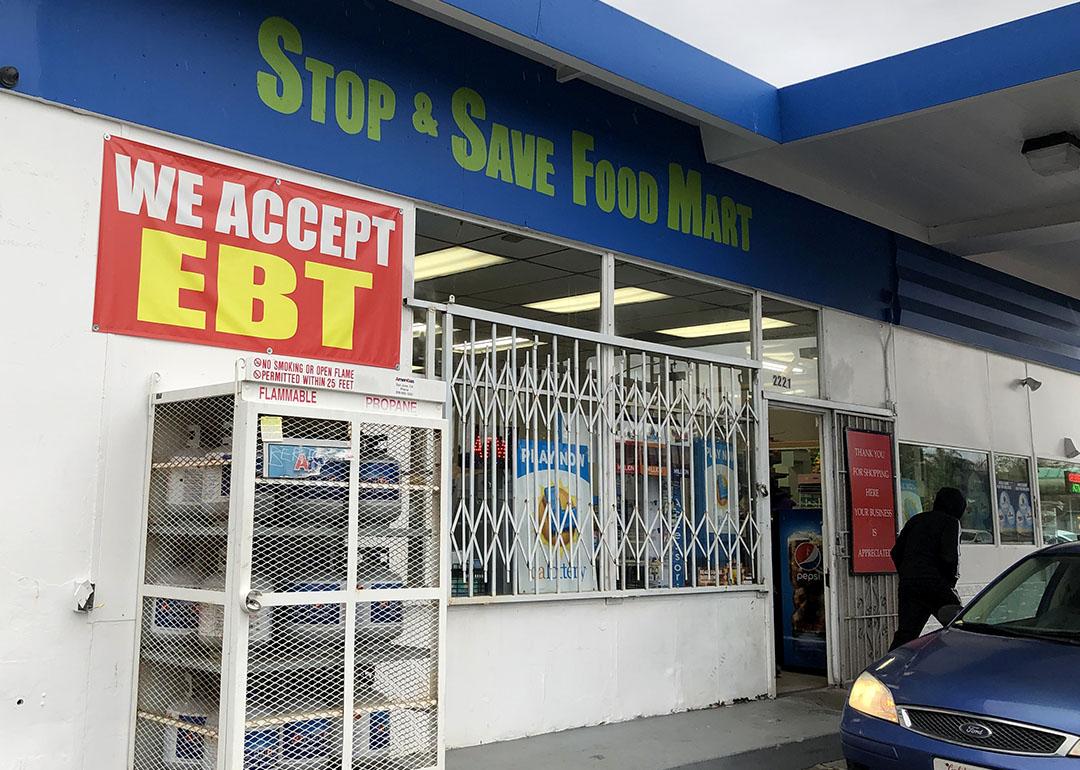
- Get creative with convenience stores. Even if you don’t have access to a full grocery store, many corner stores offer affordable snacks and meal options like hard-boiled eggs, yogurt, canned soups, or mixed nuts.
- Grow what you can. If you have access to a community (maybe at a local school) or space for a few pots on a balcony or windowsill, try growing your own herbs or vegetables. Even small-scale gardening can give you fresh, local produce and help reduce your reliance on processed food.
- Find local food initiatives. Some farmers’ markets or urban farms accept Supplemental Nutrition Assistance Program benefits. While some programs may require extra effort to access, they can offer more affordable, fresh produce. If joining a program isn’t possible due to cost or logistics, ask about sliding-scale options or partnerships with food banks to access fresh food.
- Leverage local food banks and pantries. Some food banks partner with local farms and grocery stores to provide produce, dairy, and meat. Some food banks also offer “healthy food boxes“ with fresh produce and nutritious meal kits.
If you’re in need, don’t hesitate to reach out to these resources.
Solutions to food deserts for those who don’t live in them
Addressing food deserts goes beyond providing food. Here’s how you can help:
- Share surplus food. Okay, we know we just said this isn’t the only way to help, but it is one way. So, if you have extra food, donate it to local shelters or food banks. Surplus food sharing helps ensure healthy food reaches people who need it, reducing waste and fighting food insecurity.
- Participate in gleaning programs. Some farms and organizations collect leftover crops to distribute to those in need. If there’s a gleaning program in your area, get involved to help fight hunger and food waste.
- Support food banks and local food pantries. Many food banks need donations and volunteers to expand their work. Depending on your situation, you can offer financial support, food donations, or volunteer your time.
- Volunteer and advocate for policy change. Support policies that address food insecurity and reduce barriers to healthy food access, such as zoning changes for grocery stores in underserved areas or supporting food-justice initiatives. You can also volunteer for programs (we’ll share a list of resources at the end!).
Final thoughts: Food deserts
Food deserts are about more than just distance to a grocery store — they’re the result of systems that have left many communities with fewer healthy, affordable food options. Food deserts disproportionately impact disadvantaged groups and low-income neighborhoods, and their effects ripple across health, education, and economic opportunity.
If you live in a food desert, know this: Healthy eating is still possible. It may take more effort and creativity, but tools like SNAP-accepting farmers’ markets, local food pantries, and community-driven initiatives are out there. You deserve access to nutritious food, and people and programs are working to help make that happen.
If you don’t live in one and want to help, you can advocate for policies that bring grocery stores and funding to underserved areas and support urban farms, mutual-aid programs, or nonprofits doing food justice work.
Here are notable programs and resources to look into that are working on implementing solutions to food insecurity and inequality:
It never hurts to reach out.
was produced by and reviewed and distributed by Â鶹ԭ´´.