DHS is deputizing local and state police forces to enforce immigration law
On Sept. 2, 2025, the Department of Homeland Security (DHS) published a announcing a change that has the potential to transform law enforcement across the country, and especially in rural counties.
A new promise to reimburse salaries, benefits, and overtime pay for county and municipal law enforcement officers who partner with U.S. Immigration and Customs Enforcement (ICE) could prove a major incentive for cash-strapped rural counties.
DHS will use funding from the One Big Beautiful Bill Act, passed earlier this year, to reimburse local law enforcement agencies that partner with ICE under the Task Force model of the .
The Task Force model deputizes local and state law enforcement officers with many of the powers of federal immigration agents, including the ability to arrest, detain, and interrogate people who are suspected of being undocumented — all without a warrant.
These activities occur “while performing routine police duties,” according to the press release, including traffic stops and investigations of nonimmigration-related incidents. In addition to reimbursing the costs of Task Force officer salaries and benefits, DHS will cover overtime costs up to 25% of the officer’s annual salary, and “quarterly monetary performance awards based on the successful location of illegal aliens.” DHS also covers the costs of the 40-hour training each officer undergoes to participate in the Task Force model.
“We encourage all state and local law enforcement agencies to sign a 287(g) agreement now,” said Madison Sheahan, ICE deputy director, in the press release. “By joining forces with ICE, you’re not just gaining access to these unprecedented reimbursement opportunities — you’re becoming part of a national effort to ensure the safety of every American family.”
But experts say these kinds of federal-local partnerships often face difficulties.
One question is the proper role and priorities of local law enforcement. Justin Smith served in county sheriffs’ departments in Kansas and Colorado for 36 years and is the incoming executive director for the . He said that even finding enough time and manpower to send deputies to the 40-hour training could be a challenge for understaffed rural departments.
Smith said it’s also important to recognize that ICE and law enforcement have fundamentally different goals and responsibilities.
“When we got a 911 call, our primary focus was on helping that person who called for help. If your job is to protect people from domestic violence, from theft, from burglary, that’s where your focus is,” Smith told the .
“An immigration agent’s job is to make sure immigration law is being upheld. That’s where those conversations come down to realistic expectations of what the role of local police is. And it’s not a black and white line, it’s different in every community.”
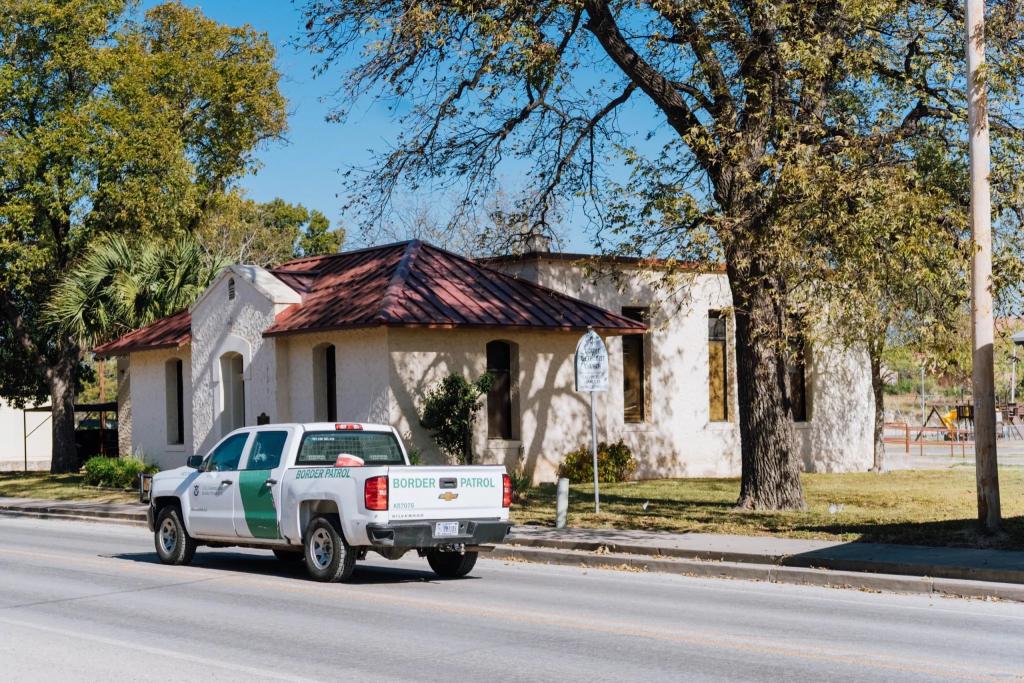
According to the , Section 287(g) agreements “blur the line between community policing and federal immigration enforcement.” Multiple that the perception that local law enforcement officers are acting as immigration enforcers erodes public trust in police departments, especially among immigrant communities.
Nayna Gupta, policy director for the American Immigration Council, said that she’s been hearing from sheriffs and police chiefs around the country who are concerned about a sharp decrease in crime reporting from communities who fear calling 911 will expose them to immigration enforcement.
This lack of trust makes communities less safe for everyone, she said.
“Asking local police to get entangled with federal immigration enforcement can really undermine their community ties,” Gupta told the Daily Yonder. “In more rural areas, part of protecting public safety for local sheriffs is maintaining close personal relationships and familiarity and trust with stakeholders in a community, and a program like 287(g) can really put that at risk.”
The Task Force model was by the Obama administration in 2012, after found that law enforcement agencies, including that of Sheriff Joe Arpaio in Maricopa County, Arizona, had engaged in illegal racial profiling and violated the rights of Latinos while participating in the Section 287(g) program.
But the model was revived by the Trump administration in January of 2025. As of Dec. 15, there are 669 state, county, and municipal law enforcement agencies participating in the Task Force model across 34 states, .
According to Smith, just because law enforcement officers get trained under Section 287(g) does not mean they’ll prioritize immigration enforcement over their other duties.
“It doesn’t mean [immigration] is their primary focus. It’s just giving them another tool to keep in their chest.”
But in jurisdictions where the Task Force model is actively enforced, even the most mundane activities can become dangerous for immigrants, according to Gupta.
“The Task Force model in particular means that just driving down the road and being pulled over for alleged speeding or alleged running of a stop sign could result in indefinite detention, and possible separation from family forever,” Gupta explained.
As the program has expanded, a lack of publicly available information has made it difficult to gauge its efficacy. In 2025, ICE has published monthly encounter reports that provided “a sampling of criminal aliens recently identified by state or local law enforcement operating under the 287(g) program.” But even those reports, which provided a few dozen anecdotal cases per month rather than a comprehensive list, are published with delays of several months.
A spokesperson for ICE did not respond to the Daily Yonder’s request for up-to-date numbers of arrests and encounters under the Section 287(g) program.
But according to sources with knowledge of local law enforcement agencies, the program is still yielding far fewer results than DHS might have hoped. This is in part because many local law enforcement agencies have neither the resources nor the inclination to participate effectively.
“Local police have their hands full,” Smith said. “[Section 287(g)] doesn’t change their priorities. If you’re having other local crime issues in your community, that’s where you’re going to be focused.”
Theoretically, DHS’s reimbursement policy could help pay for new officers to fill these gaps. But many who have experienced previous federal reimbursement programs are approaching that funding with some skepticism. For one thing, Smith said, new federal funding is unlikely to overcome in law enforcement hiring and recruitment. But even when there are interested recruits, it can take the better part of a year for new officers to be processed, trained, and sworn in, according to Smith. And most importantly, the funding is subject to change, which means county sheriffs and police chiefs can’t rely on it to fund long-term positions.
“The question is, is it sustainable?” Smith said. “That kind of funding is often here today, gone tomorrow. So it doesn’t change the game for a lot of sheriff’s offices that are struggling to get their basic tasks done.”
But Gupta warned that the broad nature of the agreements, coupled with financial incentives, gives the federal government considerable leverage to support its agenda.
“It is a patchwork in terms of which local sheriffs and police departments are really leaning into this enforcement agenda and which aren’t,” Gupta said. “But by expanding these agreements, the White House and DHS are setting up an infrastructure where at any moment, they can easily lean in on these agreements to have a force multiplier for ICE. And that infrastructure is what’s worrisome, given the kinds of abuses and overreach we’ve seen from the administration.”
Not a New Idea
The Section 287(g) program was created in 1996 as part of the Illegal Immigration Reform and Immigrant Responsibility Act. For nearly 30 years, participation in the program has been voluntary, and relatively few law enforcement agencies have signed on. Currently, there are two other models in addition to the Task Force model. The Jail Enforcement Model (JEM) and Warrant Service Officer (WSO) programs apply only to undocumented immigrants who are already in custody for a criminal offense.
In 2022, there were just 117 active agreements between the JEM and WSO models, according to the DHS . Now, there are over 1,250 active agreements, including Task Force, WSO, and JEM models, across 40 states as of Dec. 15, according to ICE.
These numbers have been bolstered by laws passed by states like Texas and Florida, which require law enforcement agencies to sign on to Section 287(g) agreements.
In its most recent session, the Texas legislature passed a requiring every county sheriff in a county that operates a jail, or contracts with a private entity to operate a jail, to apply for the Section 287(g) program by Dec. 1, 2026.

This transformation from a voluntary program to a state mandate for the vast majority of Texas sheriffs troubles Kristin Etter, director of policy and legal services at the Texas Immigration Law Center.
“287(g) has been around in federal statute for years. If law enforcement at the local and state level wanted to enter into a 287(g) model, they’ve always been able to do that,” Etter said. “This requirement forcing counties to do this is a real slap in the face of law enforcement officers, because it essentially tells them that [legislators] don’t trust their own local law enforcement agencies to be making the best decisions to keep their communities safe, and instead requires them to submit to the federal government.”
This concern is founded in part by the language of the bill, which requires county sheriffs to sign on to Section 287(g) “or a similar federal program, that authorizes the official and the official’s officers, employees, and contractors to enforce federal immigration law.”
According to Etter, this language means that the federal government could change its interpretation of Section 287(g) models, or scrap 287(g) for an entirely new program, and sheriffs across Texas would be legally bound to participate regardless of any changes.
Though the only applied to counties with a population above 100,000, the final version — which was — applies to nearly all Texas counties.
Community organizers and immigration advocates fear that this new law could put both documented and undocumented immigrants and their families at risk.
Sandra Fuentes is the co-chair of the Border Organization, a grassroots advocacy group centered in Del Rio, Texas, and neighboring communities in southwestern Texas. The Border Organization is part of a coalition called Texans United for Justice, which has been arranging meetings with county sheriffs to talk about their plans for implementing 287(g).
They hope to convince county sheriffs to implement the narrower Warrant Service Officer model of Section 287(g), as opposed to the more comprehensive and aggressive Task Force model. Organizers are also speaking with leaders of municipal police departments who are not currently obligated to participate under state law, but could be if the law is expanded to municipalities in the future.
The results of these efforts have been mixed. Some law enforcement officers have told Fuentes they won’t sign on to the Task Force model.
“They don’t have the manpower, they don’t have the inclination, they don’t have the money,” Fuentes told the Yonder.
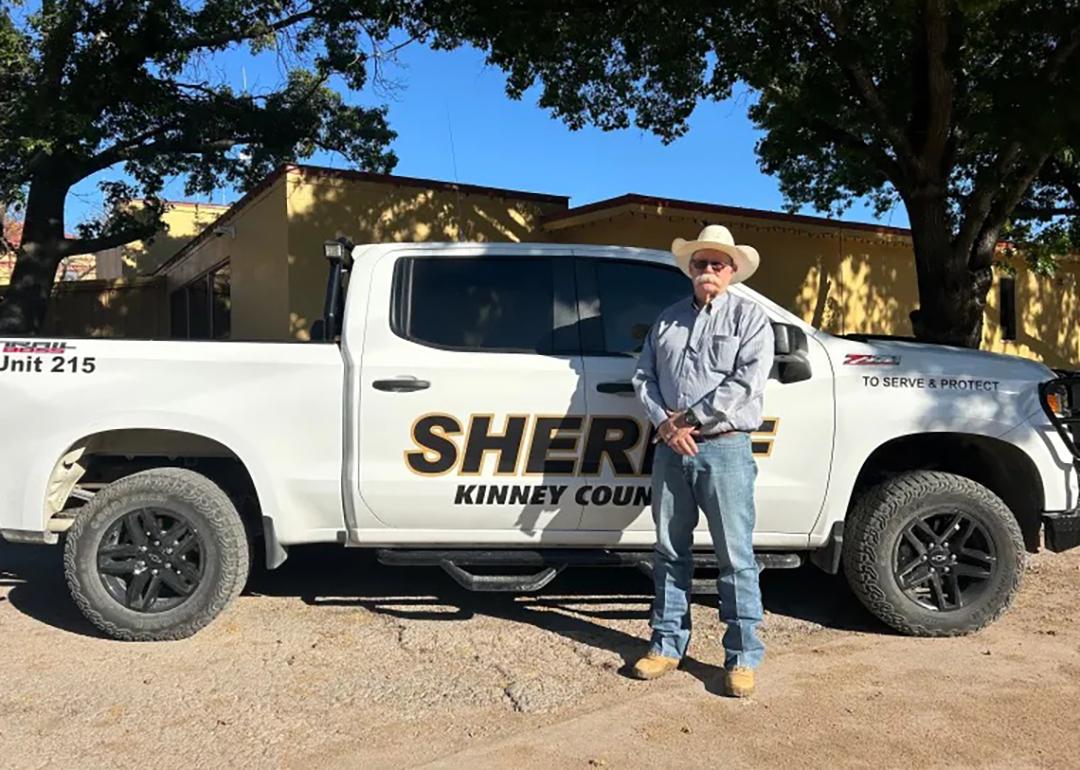
Others, like Kinney County Sheriff Brad Coe, signed onto the Task Force model back in March. But as of November, the Kinney County sheriff’s department had not yet begun training with ICE.
Kinney County is a rural county of around 3,100 people on the Texas-Mexico border. It has been on the front lines of , Texas’ immigration crackdown.
Before becoming sheriff, Coe spent 31 years as a border patrol agent in Kinney County. He was one of several county officials who declared that immigration trends amounted to “” of Kinney County in 2022, and has drawn scrutiny for his department’s and who were arrested on state trespassing charges.
But despite his evident enthusiasm for immigration enforcement, Coe doesn’t foresee Section 287(g) having much of an impact in his county.
In part this is because there is already such a heavy presence of federal agents in the border region.
“On paper we’ll be trained, but in reality I don’t expect to use it much because we already have the resources here with the federal government,” he told the Daily Yonder.
Instead, he feels that the implementation of Section 287(g) will bring more changes to the larger, more urban counties across Texas that have bigger jails and local law enforcement departments.
“In Abilene, Dallas, Fort Worth, Houston, the bigger metropolitan areas — even Lubbock and Amarillo — once [Section 287(g)] gets rolling in a bigger way, I think it’s going to have a huge impact.”
Justin Smith with the National Sheriff’s Association emphasized that it will be up to local communities to decide if, and how, Section 287(g) is implemented.
“We have 3,081 sheriffs around the country, and they each do things a little differently,” he said. “It’s going to take some time for all this to unfold.”
was produced by and reviewed and distributed by Â鶹ԭ´´.