Pennsylvania’s unique system of electing poll workers comes with downsides
Pennsylvania’s unique system of electing poll workers comes with downsides
For this November’s election, no candidate was listed on the ballot for judge of elections in Scranton’s Ward 6, Precinct 1. So the poll worker on duty allegedly wrote her own name on the ballots.
According to the Lackawanna County district attorney, Kathie Sico, who was serving as the precinct’s judge of elections that day, decided to write herself in for the position on the ballots before handing them to voters.
Sico — who has been charged with multiple violations of election law, including felony fraud by election officials and interference with elections — “stated that she knows it looks like voter fraud, but she has had so much going on the past couple weeks with her medical condition that she didn’t even think,” a detective with the county wrote in a criminal affidavit, .
Outright fraud by an elected poll worker, such as Sico is accused of, is rare. But the case highlights one of many issues that have arisen from Pennsylvania’s unique system of selecting the people who run voting locations — and some argue it’s time for change.
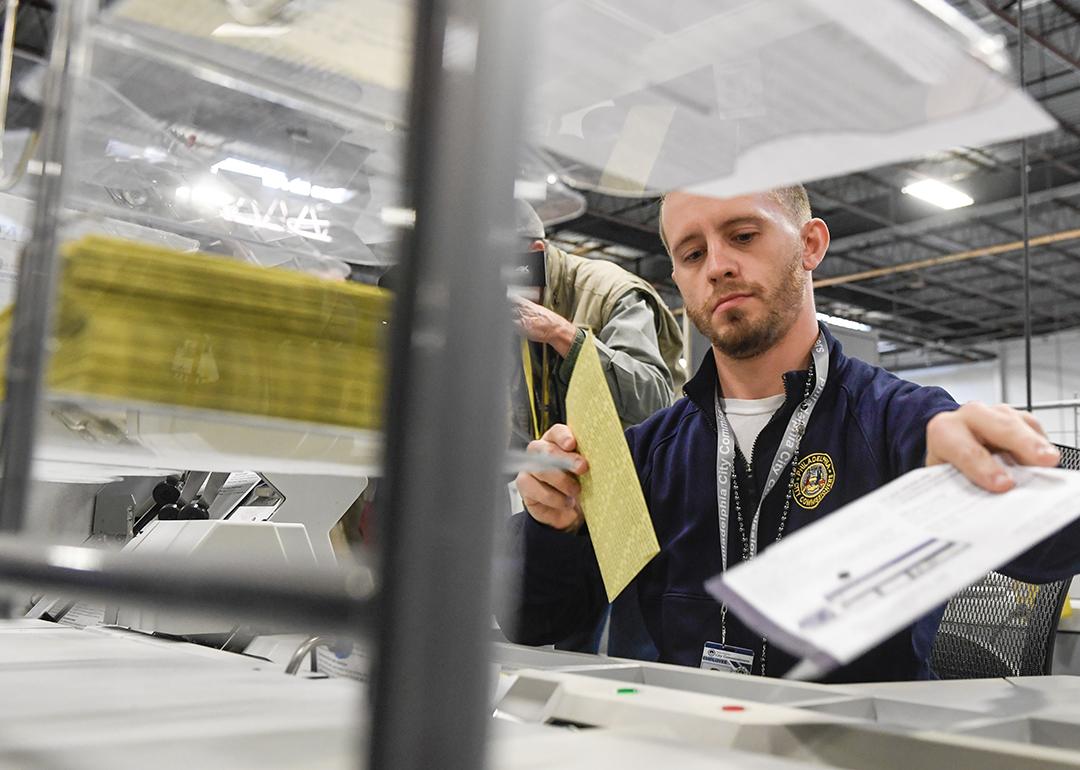
Unlike most states, which use some variation of an appointment-based system, Pennsylvania elects its poll workers. Each polling place has at least five workers, including three who are elected: the judge of elections, a minority inspector, and a majority inspector. There are over 9,000 voting precincts in the state, meaning the state needs to elect more than 27,000 workers
Pennsylvania is the only state that still elects poll workers
. And according to , it’s the only state in the country that still directly elects the workers who run voting precincts. The other longtime holdout, Rhode Island, did away with the practice in 2009.
Former Rhode Island state Rep. Michael Marcello, a Democrat who wrote the bill that ended those elections, told and Spotlight PA in May that the goal was to prevent these positions from being politicized. But his co-sponsor, former Democratic state Rep. Scott Pollard, recalled a more practical reason: It was tough to find people to run for the positions, especially when they needed to fill out paperwork to appear on the ballot.
The same is true in Pennsylvania. This year, thousands of poll worker positions went without named candidates on the ballot.
“There’s something about the emotional hurdle of having to be on the ballot,” said Sean Drasher, election director for Lebanon County. “They don’t want to be seen as a politician.”
In Allegheny County, which needs nearly 4,000 judges and inspectors to staff its precincts, only 439 candidates for those offices were on the ballot this fall.
But not having your name on the ballot is not much of a barrier to being elected to the position, as even a single write-in vote can be enough to win. In Lebanon County, write-in candidates won roughly half of the judge positions this year, along with about 70% of the inspector positions.
However, write-ins can create problems of their own.
Because it is possible to win with just a single vote, that election officials have to spend time and money resolving through a process called the “casting of lots” — essentially a game of chance equivalent to a coin flip.
tied in Westmoreland County this year, and in Lancaster County, election director Christa Miller estimated that 95% of the ties the county dealt with this year were for poll workers.
If no one wins through the election, the county appoints people to fill the vacant spots.
The downsides of electing poll workers
Drasher has a unique and personal connection to the elected poll workers system. His first job in election administration was as a poll worker, a position he won through a tied write-in election. He got the job when his daughter pulled the winning marble during the casting of lots.
“So I have a soft spot for it,” he said. “But now that I’m sitting in the chair, there are some big downsides to it just from an (operations) point of view.”
Drasher said that, on paper, the idea of having an elected judge along with two inspectors who — ideally — come from different political parties makes sense. If operating properly, it would ensure a bipartisan group of poll workers selected by members of their own community.
But in practice, the system fails to meet that standard, both because so many positions go without candidates and because the way the law is written is possible for both inspectors to come from the same party.
Under Pennsylvania law, the inspector candidate with the most votes becomes the majority inspector, and the candidate with the second-most votes becomes the minority inspector. In theory, since each political party can nominate only one candidate in the primary, this should produce inspectors from different parties. But with the ease of winning through write-in votes, it is not uncommon for the “minority” inspector to simply be a second member of the other inspector’s party.
The system can also produce winners who don’t want the job. Election officials say many people have their names written in by friends as a joke. Drasher said that can be okay if the unwitting electee is someone who will take the job seriously, but it often results in positions becoming vacant (winners can decline the job if they don’t want it) or experienced appointed poll workers getting pushed out.
“I hate to see it go, but I have to admit that if something came up, if the legislature said, ‘Hey, do you want to change it?’ I would lean toward changing it to become more in line with the way the other states do it,” he said.
That change could be on the horizon. Earlier this year, state Sen. Lisa Boscola (D., Northampton) announced that she would introduce a bill to transition to an appointment-based system.
In an interview this week, she said the current system is outdated and, “sadly,” at times laughable.
She said her bill, which hasn’t yet been introduced, will simply move the process from an election to an appointment by the county board of elections.
“It’s antiquated,” she said. “Us being the last state, that should say enough.”
was produced by and reviewed and distributed by Â鶹ԭ´´.