States hope to use rural health money to keep doctors, combat chronic disease
States hope to use rural health money to keep doctors, combat chronic disease
In their competition for rural health care dollars from a new federal fund, states are seeking money to bolster emergency services, address chronic diseases, and recruit and train more doctors and nurses.
All 50 states submitted their applications to the federal government in early November to get shares of the $50 billion Rural Health Transformation Program.
Congress created the program in response to concern from rural health care providers — as well as lawmakers on both sides of the aisle — about the effects of Medicaid cuts in the One Big Beautiful Bill Act that President Donald Trump signed this summer.
A analysis of 10 states’ proposals to the Rural Health Transformation Program found common focus areas, including expanding mobile health care access and bolstering emergency medical services. States also focused on chronic disease prevention programs, technological advancements and rural clinician recruitment.
Stateline examined proposals from states that had large rural populations or had released their proposals. Missouri, North Carolina and Oklahoma are among a dozen states that have expanded Medicaid and would be by rural Medicaid cuts — each seeing at least $4.5 billion in reductions over 10 years. The other states whose proposals were examined are: Colorado, Maryland, Minnesota, New Mexico, North Dakota, Washington state and West Virginia.
Rural health care leaders told Stateline that states had to rush to develop the pitches. After the official funding notice was announced by the federal Centers for Medicare & Medicaid Services (CMS), states had about seven weeks to put together their applications. Many held listening sessions with hospitals, clinics and community members, and opened public comment periods to help inform priorities. Others created or .
State officials and medical groups said the federal infusion of money is welcome, but isn’t enough to offset billions in Medicaid losses, and won’t be a magic bullet to solve a structural problem: A health care payment system that favors patient volume and doesn’t work for sparsely populated rural America. The new law cuts $911 billion from Medicaid over the next decade — with rural communities slated to lose about , according to health policy research group KFF. The new rural health program could offset just over a of cuts in rural areas, KFF estimates.
“It’s going to be a Band-Aid,” Toniann Richard, CEO of HCC Network, which runs six Missouri rural community health clinics, said about the grants. “How do we make sure that it’s not just a one-time Band-Aid — that it’s maybe a waterproof Band-Aid?”
More than 700 hospitals — roughly a of rural U.S. hospitals — are at risk of closing because of financial problems, while rural labor and delivery units struggle to stay open and residents grapple with higher rates of chronic illness but live far from care.
Half of the Rural Health Transformation Program — $25 billion — will be distributed equally to states with approved applications, regardless of each state’s proportion of rural hospitals or population. The remaining half will be allocated by CMS based on the number of rural residents and rural health facilities in a state, as well as the state’s spending plans and policies, among other factors. CMS said it will decide on applications by the end of the year.
From mental health to tech innovation
CMS outlined priorities for the program, with each state developing its own approach to fulfilling them. Those include technological improvements, an expanded and sustainable workforce, new ways of coordinating care and chronic disease prevention. Rural residents are likely to die early from conditions such as heart disease. Some states proposed new screening or telehealth initiatives for those conditions.
Helping rural areas keep clinicians was also a focus across the grant proposals. Several states said they would use funds to expand rural residencies and apprenticeships for medical school graduates to try to draw more providers to their areas.
Every rural and low-population Colorado county contains areas considered EMS deserts, the state said, proposing $45 million to $55 million over the next five years to expand rural EMS.
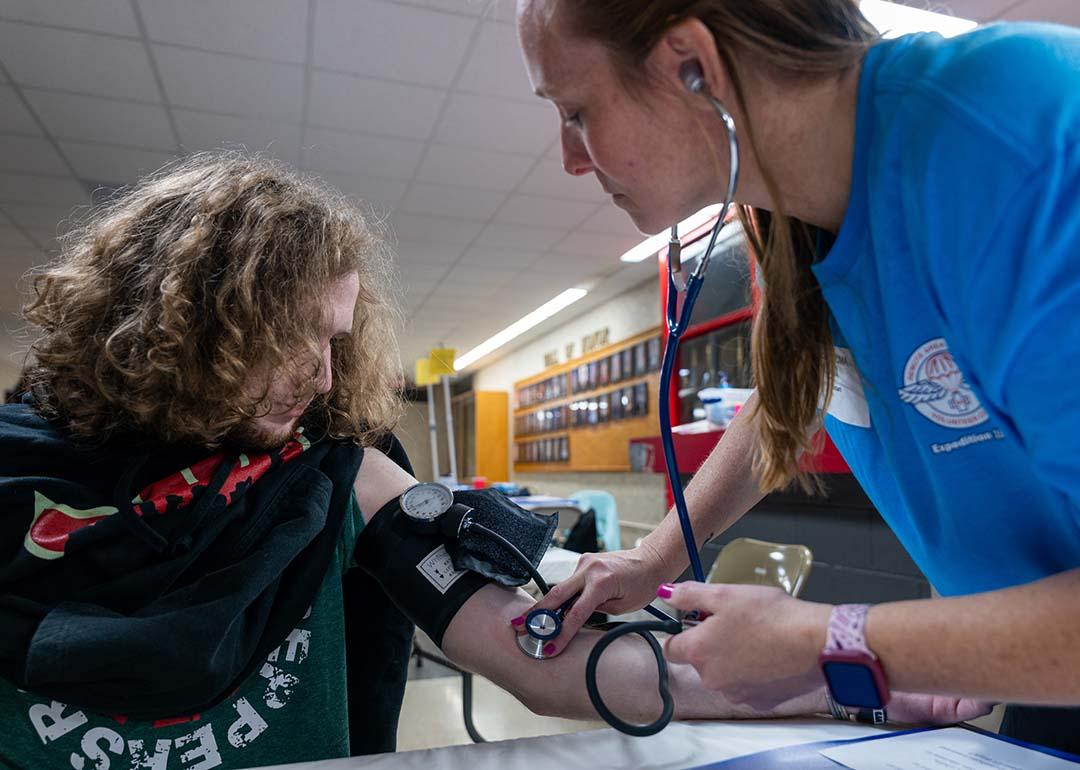
and other states proposed increasing remote patient monitoring for rural patients living far from care. That’s a form of telehealth that helps doctors track patients’ health while they’re at home, such as through devices to monitor weight, blood pressure or blood sugar levels that send results digitally to clinicians. Doctors can then monitor for unmanaged blood sugar or sudden weight gain and discuss a plan with patients without “forcing folks to have to drive into the clinic,” said Michelle Mills, CEO of the Colorado Rural Health Center, the state’s nonprofit rural health office.
Overdose and suicide rates are often higher in rural communities; behavioral and mental health were addressed in several state applications.
West Virginia has the rate of opioid overdose deaths. The state released a grant proposal summary that has little information on mental health and drug use initiatives, but says addiction treatment would be “enhanced” to support a “drug-free workforce.”
North Carolina said it would grow community mental health clinics and integrate behavioral health within “regional care networks.” Colorado, New Mexico, North Dakota and Washington also proposed initiatives focused on rural behavioral health care access or suicide prevention.
proposed establishing a grant program that would allow rural communities to apply for and create pilot projects tailored to their own specific needs, and a program for specialists to consult with each other across the state. The state also proposed $363 million toward specialty care and chronic disease management for high-risk rural groups, including planning regionalized “specialty and maternal care networks.”
West Virginia said it would create a new rural transportation system that would rideshare and other transportation services, as well as coordinate with EMS and hospitals to more efficiently transport rural patients to care.
States are also taking varied approaches to how they would split the funds or connect care among regions. For example, Missouri and North Carolina would divide states into regional rural “hubs” to target different communities’ needs. Missouri would integrate rural clinics, pharmacies and public health agencies by coordinating care for patients and sharing data.
Heidi Lucas, executive director of the Missouri Rural Health Association, advised the state on its application. One advantage of that regional model, she said, is that it allows low-income community health centers — also called federally qualified health centers (FQHCs) — to take the lead in specific regions that don’t have hospitals.
“In the southeast corner of the state, we’ve had multiple hospital closures, and so there, the FQHC is the only provider,” Lucas said.
“We’ve been screaming for decades about the need for money just like this to come in — but it’s under the cloud of all of the other cuts that are coming, potentially with Medicaid. … Knowing that that freight train is coming at us over the next decade,” she continued.
Oklahoma hasn’t provided details about its application. But Rich Rasmussen, president of the Oklahoma Hospital Association, said his team likewise proposed the state create a network of regional rural hospital hubs, through which hospitals could apply for resources. Each hub would have funding pools that could help pay for a range of services, from help for indigent patients to data services and workforce support.
North Dakota’s application said nearly 75% of its rural counties lack enough primary care clinicians. The state proposed retention and recruitment grants meant to incentivize practitioners to stay in rural areas, expanding rural housing and rotations for clinicians in training, and offering on-site child care at rural health facilities. It also aims to target maternal health care deserts by training EMS workers to better respond to rural maternal health emergencies.
New Mexico, North Dakota and Washington proposed specific initiatives to support rural tribal communities. For example, North Dakota wants to revamp electronic health records systems in tribal communities, as many rural, underfunded tribal health facilities use outdated systems that make it harder to transfer and access patient records.
Democratic state Rep. Jayme Davis is a member of the state’s Rural Health Transformation Committee, a group of lawmakers that recommended state legislation based on the grant application. She said she helped advocate for tribal communities’ needs. Native people make up about 5% of North Dakota’s population.
“I have an elderly parent and aunts and uncles, and going to Fargo is a strain on them,” she said of her family, who live in Rolette, 3 1/2 hours from Fargo.
²Ѳ¹°ù²â±ô²¹²Իå’s is divided into three initiatives: recruiting and training new rural health providers and students; creating more sustainable ways for patients to access care, such as mobile health care units dedicated to each rural region; and nutrition and food programs that connect local farm harvests with rural hunger “hot spots.”
Hospitals’ concerns
Health care officials in several states said they worry that the new program will not be enough to offset looming Medicaid cuts.
In Oklahoma, an October 2025 report from the Center for Healthcare Quality and Payment Reform estimates that of rural hospitals are at risk of closure, and more than a quarter are at immediate risk. Ahead of the grant application, the state’s hospital association provided financial vulnerability assessments of the hospitals to help inform the state’s application priorities.
Rasmussen, of the Oklahoma hospital association, said one of his biggest concerns is the new law’s decrease in payment programs that have helped struggling hospitals offset low reimbursement rates.
“It’s the rural hospitals that took the cuts by Congress,” he said, noting that over the next decade, Oklahoma would lose $6.7 billion due to Medicaid cuts. “Whatever our state receives is not going to come anywhere close to offsetting those costs.”
The rural grant program restricts how awarded funds can be spent. Dollars allocated to states must be used for specific purposes, meaning states cannot dole out direct funds to rural hospitals or rural clinics. For example, funds can’t be used for new construction and services already reimbursable by programs such as Medicaid.
CMS has also put limits on how much can be used for each approved purpose. There is a 15% cap on how much of the award can go directly to providers.
“That cap is fairly low from a lot of folks’ perspective,” said Carrie Cochran-McClain, chief policy officer of the National Rural Health Association, which represents rural health care providers. “It is in no way direct payments to rural hospitals or rural clinics, and it’s not even necessarily a guarantee in every state that those entities will be receiving funding, although I would hope so, given the general intent of the program.”
Weatherford Regional Hospital in western Oklahoma is the only critical access hospital still delivering babies in the state, according to the Oklahoma Hospital Association.
“For our hospital, we barely make a profit,” said Darin Farrell, president and CEO of the hospital, who added that he worries his facility won’t be able to maintain obstetrics after Medicaid cuts down the line. “If they don’t put something else to fill the gap of those cuts that are coming, then we’re all going to have to decide what services are the most vital.”
In West Virginia, more than half of the population lives in a rural area, and about a dozen rural hospitals are at risk of closure, according to the report by the Center for Healthcare Quality and Payment Reform. Jim Kaufman, president and CEO of the West Virginia Hospital Association, which met with Republican Gov. Patrick Morrisey’s office to provide feedback ahead of the application deadline, said the fund will not be enough to offset Medicaid cuts.
“We’re estimating we’re going to lose more than a billion dollars once all the cuts are fully implemented, just from the hospitals in West Virginia,” he said. “So while this rural health application does provide some opportunity to look at transforming rural health care, it will not replace the dollars that the hospitals are losing alone.”
was produced by and reviewed and distributed by Â鶹ԭ´´.