The trouble with Trump’s homelessness plan
The trouble with Trump’s homelessness plan
The Trump administration is pushing to involuntarily commit more people to psychiatric hospitals in an effort to keep them off the street, according to a issued July 24.
“Shifting homeless individuals into long-term institutional settings for humane treatment through the appropriate use of civil commitment will restore public order,” the memo states. It also calls for defunding “housing first” programs, which prioritize quickly getting people into stable housing with fewer restrictions.
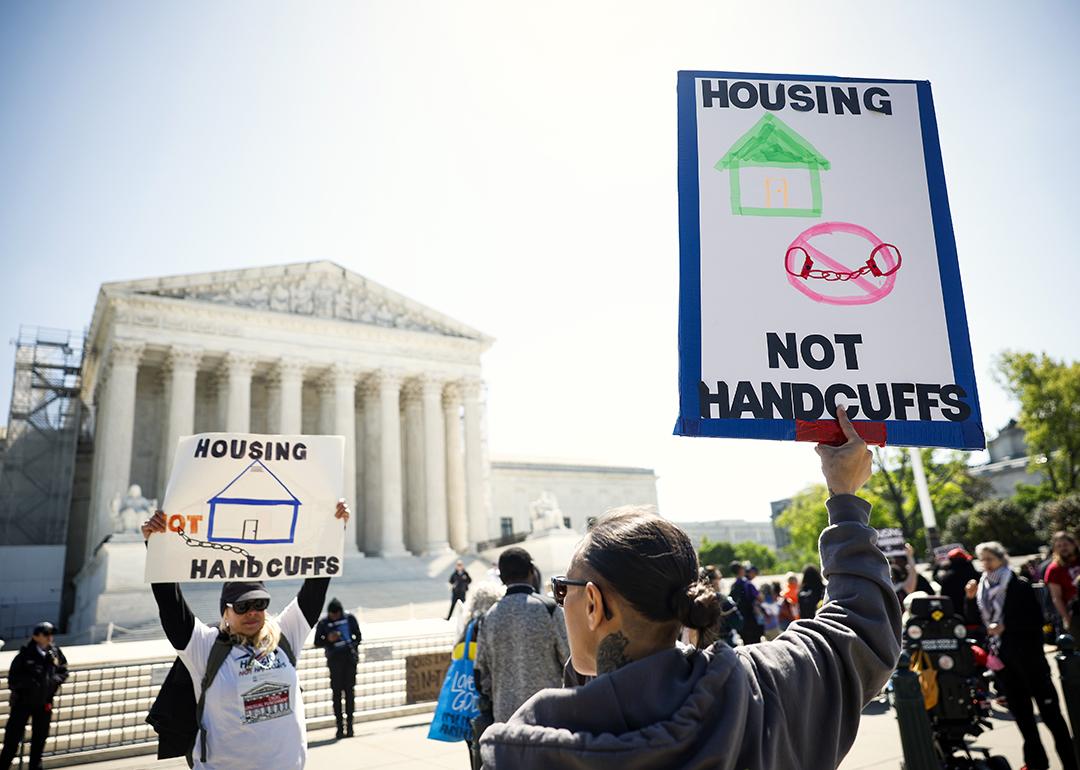
With the order, the new Trump administration is entering an ongoing debate over nationwide crises in mental healthcare and housing, and the intersection of the two. In recent years, even some blue states and cities like and have moved to increase the use of involuntary treatment. Proponents of these policies say that people with severe mental illness are often too sick to accept help and can pose a threat to themselves or others when left untreated. Critics argue that these approaches are ineffective, costly, and in violation of patients’ civil rights.
Some housing advocates say the president’s order is a deflection. “Some people experiencing homelessness have mental illness,” said Jesse Rabinowitz of the National Homelessness Law Center. “That’s not the cause of homelessness. The cause of homelessness is that housing is too expensive. Institutionalizing folks doesn’t treat the root cause of the problem.”
Standards for when someone is eligible for involuntary treatment vary state by state, and attorneys say much of Trump’s order is beyond his authority. But the order could have an impact on the distribution of federal funding and gives support to cities and states looking to crack down on homeless encampments.
To better understand the potential impact of this directive, spoke with Jennifer Mathis, Deputy Director of the Bazelon Center for Mental Health Law, which advocates against “unnecessary institutionalization” and for increased voluntary mental health treatment in community settings instead. This conversation was edited for length and clarity.
There had been chatter for a while about this happening. It was somewhat consistent with the rhetoric the president has used over the years in his campaigns and while in office. I think it’s entirely misguided.
It’s unusual, at best, for the president to tell the Justice Department to actively seek to undermine established law rather than to enforce it. There is on civil commitment. [The state cannot involuntarily commit someone who doesn’t have a mental illness and isn’t a danger to themselves or others.] That’s the law of the land. There is no legal support for what they are advocating. If there were, they would not need to try to overturn judicial precedents.
What makes it “misguided,” in your opinion?
It is a little peculiar to suggest that the primary goal of this administration — when it comes to people with mental health disabilities — is not to help them in the community, but to focus on civilly committing them. And then what happens? Are they going to civilly commit them on a long-term basis? You can’t commit your way out of a problem of not having sufficient community services. That’s the root cause of many of the issues they are addressing in this executive order.
It seems like a very backward vision of a system that resembles the one we came from many years ago, and that we got away from because it was not only destroying lives — it was destroying budgets as well. It is very costly to keep people institutionalized. If you don’t focus on creating the services that people need to avoid it, or to be discharged and free up other beds when people need them — you will continue to have people showing up at the front door. Civilly committing everybody doesn’t solve that problem. You can’t create hospitals ad nauseam. This is not serving people or treating them. It’s warehousing.
How does this order square with research on reducing homelessness or the use of involuntary treatment?
These provisions about using discretionary grants to expand civil commitments and involuntary outpatient commitments, to stop supporting housing-first policies or harm reduction policies — all of that seems to signal a shift away from evidence-based practices. There is a , that it works, and that it’s been a very effective and important strategy to meet the needs of people who often have the highest needs. Housing-first for many, many years. It was . That is a really effective strategy.
To say we’re not going to house people who — by virtue of their situation or disability — are not going to be able to comply with certain requirements, and therefore we’re going to leave them on the street, has not been very effective. So what will happen to the people who will remain unhoused? They’re going to be civilly committed then? And then what? Hospitalization is not a magic pill. They don’t seem to have a plan for what happens after.
On assisted outpatient treatment [the practice of providing someone with involuntary mental health or addiction treatment in the community under a court order], this executive order seems to be promoting it and suggesting agencies should use all means available to expand it. But the Government Accountability Office saying evidence is inconclusive that assisted outpatient treatment actually does anything.
How did increasing involuntary commitment and ending housing-first policies become a conservative talking point?
I don’t think this has become a priority issue among most conservatives. I think there are for whom this has been a priority. It’s not like Republicans broadly are clamoring for this.
There have been efforts to demonize people with mental health disabilities and portray them as violent, even despite a lack of evidence. All the data over all the years shows that people with mental illnesses . There was a specific effort to create these associations in the public mind of mental health and violence, because it was a convenient narrative. Some people did it because fear was a good way to generate support for mental health services, since otherwise, people didn’t seem to care. There were other actors who had other motivations and were happy to take advantage of those increasing public fears to scapegoat people with mental health disabilities to divert from gun control conversations. Whether it’s right or left, both have been guilty of perpetuating those stereotypes.
There has been a trend over the years to lower civil commitment standards. Apparently, the president thinks they should be [even] lower. Certain groups exist in states across the country who have beaten the drums for lowering [them]. It becomes a politicized issue where legislatures feel pressured to do something in the wake of a [violent] incident, and the answer is painted as “if you just lowered civil commitment standards, then this wouldn’t happen.”
What does it mean to issue this order just as Congress approved significant cuts to Medicaid and other social services?
That’s the absurdity of it.
Hospitals are the most costly services we have in our system — that is why state mental health systems moved away from psychiatric hospitals. Also, because it was much better for people to live a life in the community.
We are in an era where Congress has made historic cuts to the Medicaid program, and states are going to face massive shortfalls in their mental health service systems. The idea of encouraging states to bypass interventions that would help people avoid hospitalization and to live in the community, and instead spending historically scarce resources on the most expensive interventions … seems completely flawed. They would be able to serve far fewer people. It makes no sense.
was produced by and reviewed and distributed by Â鶹ԭ´´.