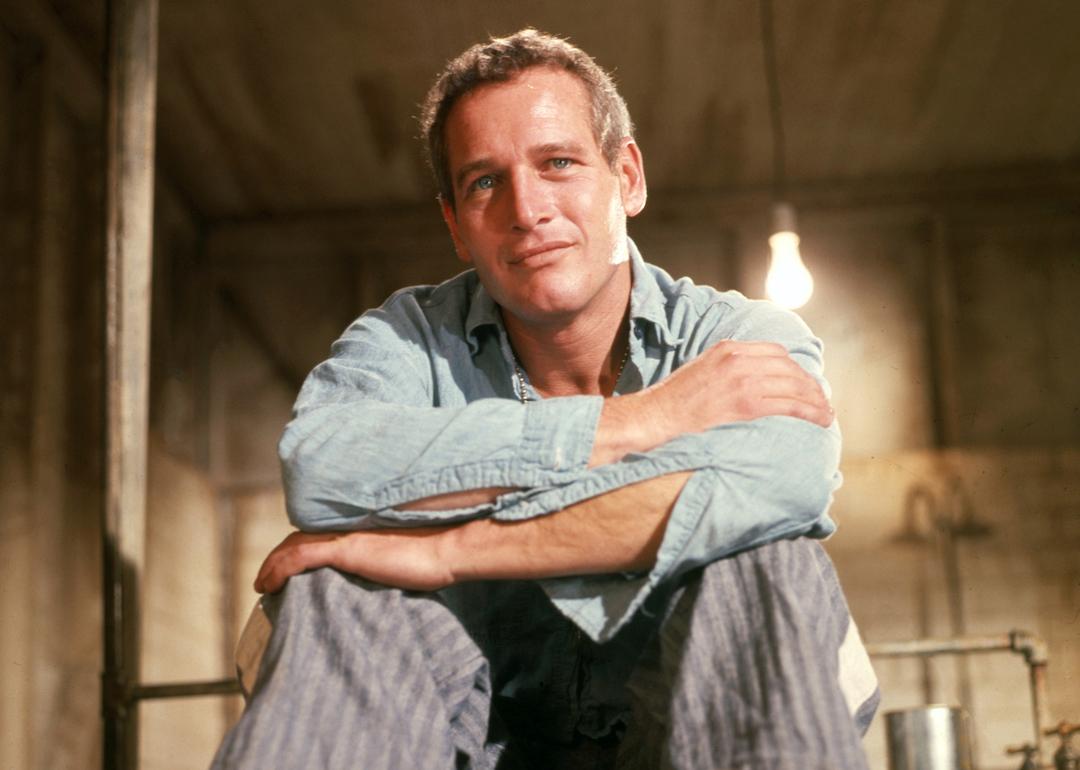
Celebrities whose illnesses changed how we treat them
This story originally appeared on Ro and was produced and distributed in partnership with Â鶹ԭ´´ Studio.
Celebrities whose illnesses changed how we treat them
Star power has played a crucial role in shining a light on countless pressing issues of the day, from climate change and human rights to mental health and poverty. The outsized influence of celebrities has, throughout history, transformed the public perception of HIV, how we understand eating disorders, and even how we treat cancer.
compiled a list of 10 celebrities who were able to bring transformative attention and medical breakthroughs to different illnesses due to being diagnosed with them. The list includes celebrities from the last century, starting with Lou Gehrig's ALS diagnosis in 1939.
Some of the celebrities on the list didn't publicize their illness, but their access to the experimental treatments they received at the time—or the additional attention given to the illness because of their diagnoses—changed medical care for future people living with similar conditions. Others became ambassadors for causes, helping to raise money for research or fighting common stigmas or misconceptions about various illnesses.
Keep reading to learn more about 10 famous figures whose illnesses changed the way we treat them.
Lou Gehrig: ALS
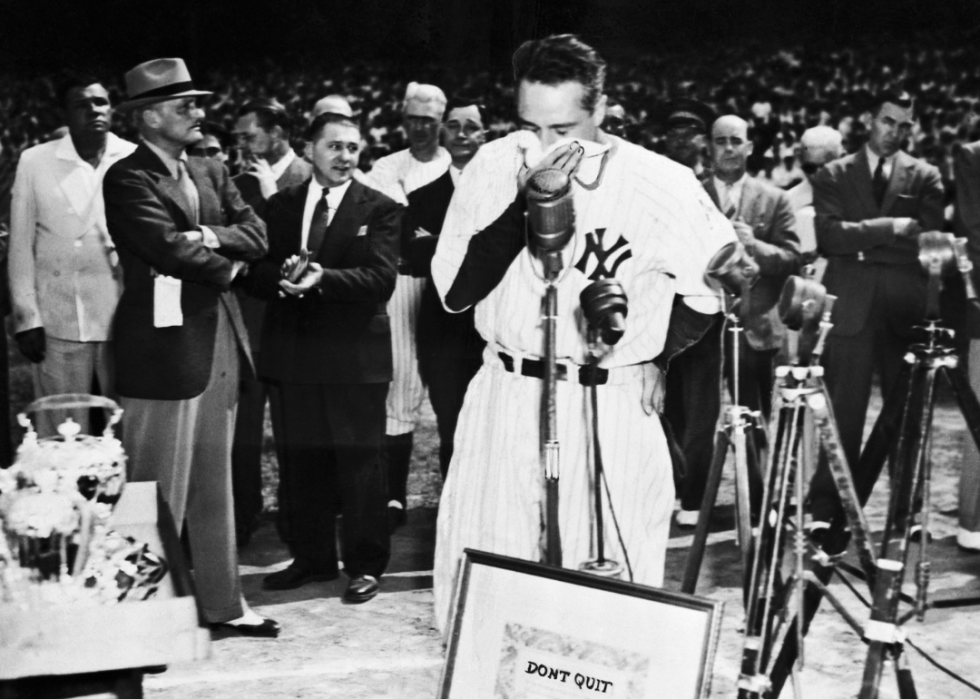
Prior to Lou Gehrig’s diagnosis in 1939, amyotrophic lateral sclerosis (ALS) was a relatively unknown disease. The progressive, neurodegenerative disease was first discovered by a but was given very little attention internationally—in turn, there was very little money allocated for learning about its causes, effects, and treatments.
That all changed when the Yankees' first baseman publicly shared his diagnosis at Yankees Stadium on July 4, 1939. Over 62,000 fans were in attendance, listening to Gehrig describe himself as “the luckiest man on the face of the earth" to have the privilege to play for the MLB.
In the wake of his announcement and retirement—and eventual death from the disease less than two years later—foundations were started, articles were written, and funding poured in to study this illness. In fact, ALS became so synonymous with the baseball player that it's often referred to as .
Babe Ruth: Cancer
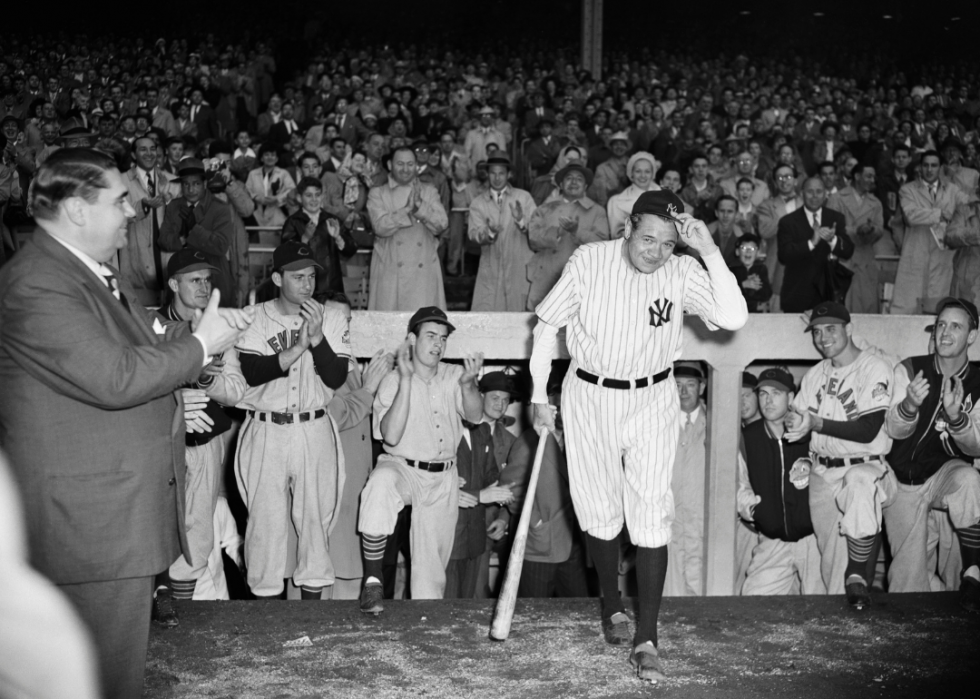
In the mid-1940s, baseball legend Babe Ruth began to experience a sharp pain behind his left eye that traveled down his neck and into his world-famous shoulders. Unbeknownst to him, a cancerous tumor had spread from behind his nose to the base of his skull. Though the Sultan of Swing was never told of his official diagnosis, he became that are so commonly given to cancer patients today.
While radiation treatments (which Ruth underwent regularly) had been in use for decades before Ruth’s illness, chemotherapy was only just beginning to develop. In fact, it was so new that the drug Ruth was given—teropterin—had only ever been used in mice before.
While the treatments didn’t wind up saving Ruth’s life, they significantly increased his lifespan. Ruth was among the first patients to receive the combination of radiation and chemotherapy, which would later go on to become the standard for a wide range of different cancers
Rita Hayworth: Alzheimer’s
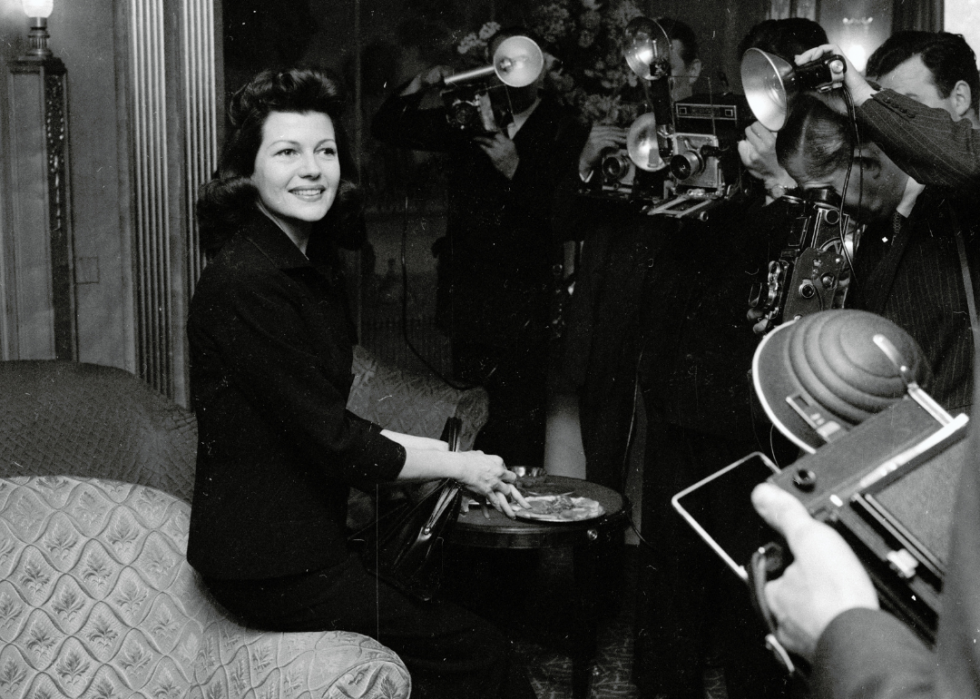
From when she first began struggling with her memory in the 1960s to 1979 when she was finally given a correct assessment, . Doctors told the actress it was her alcoholism that was causing her memory to fade and her behavior to change, nothing else. In reality, she was struggling with Alzheimer’s.
When she died from the disease in 1987, Hayworth became the first public face of Alzheimer’s. Her prognosis sparked conversations that led to an increase in federal funding and helped destigmatize dementia. Today, the Alzheimer’s Association—which partnered with Hayworth and her daughter, Princess Yasmin Aga Kahn, —throws a each year to raise money for research.

Stephen Hawking: ALS
One of the world’s greatest minds, scientist when he was 21. But it wasn’t until 2018, at the age of 76, that he died from the disease. His survival far outlasted doctor’s predictions—most physicians warned Hawking that he would only have a handful of years left before the neurodegenerative illness claimed his life.
Hawking’s diagnosis, much like Lou Gherig’s, drew plenty of attention to the condition. But it also encouraged new research into why some patients were able to live so long with the disease while others declined rapidly. While scientists still don’t have answers to that particular question, their research continues to uncover valuable information that can help those afflicted with ALS in a number of important ways.
Barney Clark: Congestive heart failure
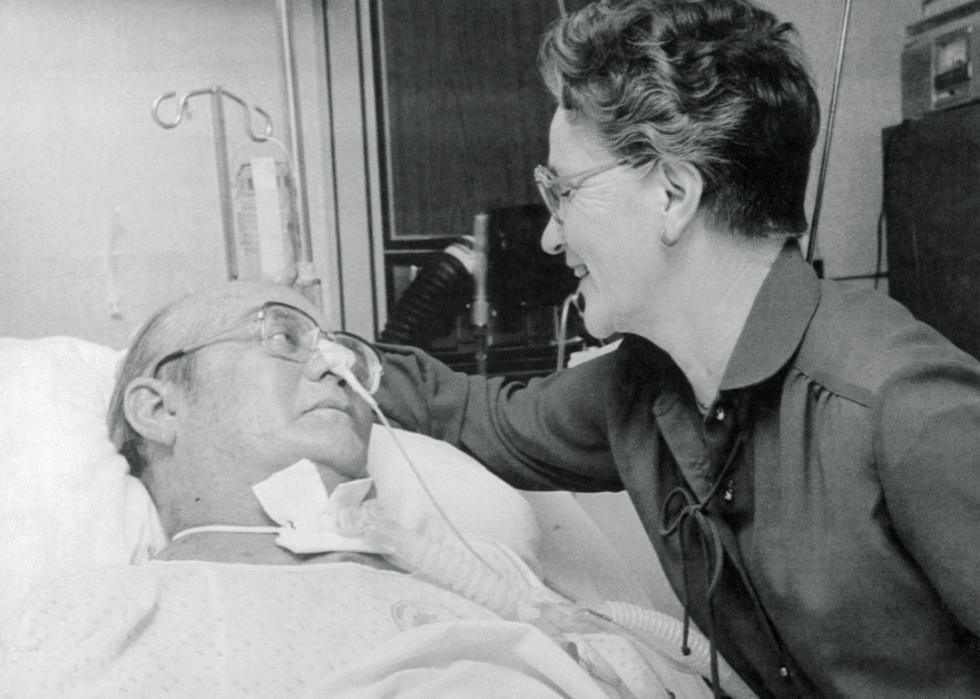
Unlike the other celebrities on this list, wasn’t a household name until he became sick. In the early 1980s, the 61-year-old dentist's heart was failing. Things were so bad that he could no longer manage the walk from his bedroom to the bathroom, and every doctor he saw advised him to prepare for the end of his life. That was presumably why, in 1982, he agreed to be one of the first artificial heart recipients, undergoing an incredibly risky surgery that, if successful, would leave him tethered to a dishwasher-sized air compressor for the rest of his life.
The surgery was successful, to a degree: Clark lived for another 112 days, floating in and out of consciousness the entire time. In the 40 years since Clark’s operation, the science behind artificial hearts and the surgery necessary to implant them has developed significantly, allowing patients to live much longer, and more normal lives, after their transplants.

Michael J. Fox: Parkinson’s disease
Michael J. Fox is among more than 1 million Americans currently living with Parkinson’s disease. A neurodegenerative disorder that can cause tremors, difficulty moving, and a variety of other debilitating symptoms, Parkinson’s disease has treatments but currently has no cure. That may be poised to change, however, thanks to the Michael J. Fox Foundation.
When he was first diagnosed in 1991, Fox began a foundation that was meant to be “fundamentally different from any that existed.” Today, the focuses on developing treatments and finding a cure by funding projects that can be done now rather than some number of hypothetical years down the round. The organization also pairs interested volunteers who have Parkinson's disease with clinical trials in an effort to improve the research and bring better therapies to patients as quickly and efficiently as possible.

Magic Johnson: HIV
In 1991, at a somber and hastily thrown-together press conference, NBA superstar Magic Johnson announced to the world that he was HIV-positive. His disclosure came at a time when, unlike today, the public perception of the disease was widely stigmatized. At the time, many were concerned that even casual touching, like shaking hands, would be enough to spread it. Johnson’s diagnosis humanized the virus.
reports that the day after Johnson became the unofficial spokesman for HIV, calls to testing centers doubled. Over the next several weeks and months, testing rose by 60% and funding increased from basically zero to enough to enable breakthrough treatments. Johnson’s diagnosis and his outspoken efforts to destigmatize the virus have transformed the medical and social treatment of those living with HIV and AIDS.

Princess Diana: Bulimia
Diana, Princess of Wales, was an icon since first stepping out into the public eye in the late ’70s with Prince Charles. Glamorous, relatable, and empathetic, Diana served as a role model for generations of women who longed for her picture-perfect life. However, behind the scenes, as we now know, not everything was easy for the people’s princess while she was alive.
Diana was strikingly candid and . Her willingness to speak out encouraged many others who saw their own symptoms reflected in her to seek help and find recovery. While many public figures, like Charli D’Amelio, are open about their own struggles today, Diana is believed to be one of the first celebrities to ever address it in any sort of public forum.

Mike Webster: Chronic traumatic encephalopathy
Few NFL players have had as prolific a career as Mike Webster, the former Steelers’ center. Over the course of 245 games, Webster won four Super Bowls, played in the Pro Bowl nine times, and was even inducted into the Football Hall of Fame. But after his retirement in 1991, Webster's behavior became erratic: He sometimes forgot to eat, wandered off without warning, slept under bridges, and even threatened strangers with firearms.
It wasn’t until after his death in 2002 that a physician named Bennet Omalu found the root cause of Webster’s decline: (CTE). The progressive brain disease, which is caused by repeated trauma to the head, has since been uncovered in dozens of former athletes and sparked numerous conversations about the safety of players and the responsibility teams and franchises have for them. Media coverage of CTE in professional athletes has also increased awareness in the general public about the seriousness of head trauma.

Selma Blair: Multiple sclerosis
In 2018, actress Selma Blair learned that she had multiple sclerosis (MS), a disease that causes the immune system to attack the brain and spinal cord, interfering with signals sent to the rest of the body. Since then, she’s become a quasi spokesperson on the disease, even going so far as to appear in a documentary titled “Introducing Selma Blair” that candidly looks at how the condition affects her and at the stem cell transplant she endured to treat it.
Nearly 1 million people in the United States are living with MS, according to (NMSS). Blair’s ongoing commentary about what it’s like to live with the disease has encouraged more funding to be allocated for research. It's also promoted empathy and compassion, helping those afflicted better explain to their loved ones exactly what they’re going through. Cynthia Zagieboylo, the president of NMSS, told , “Blair’s decision to share the story of her experience could be beneficial to other people who have the disease and those who want to know more about it.”