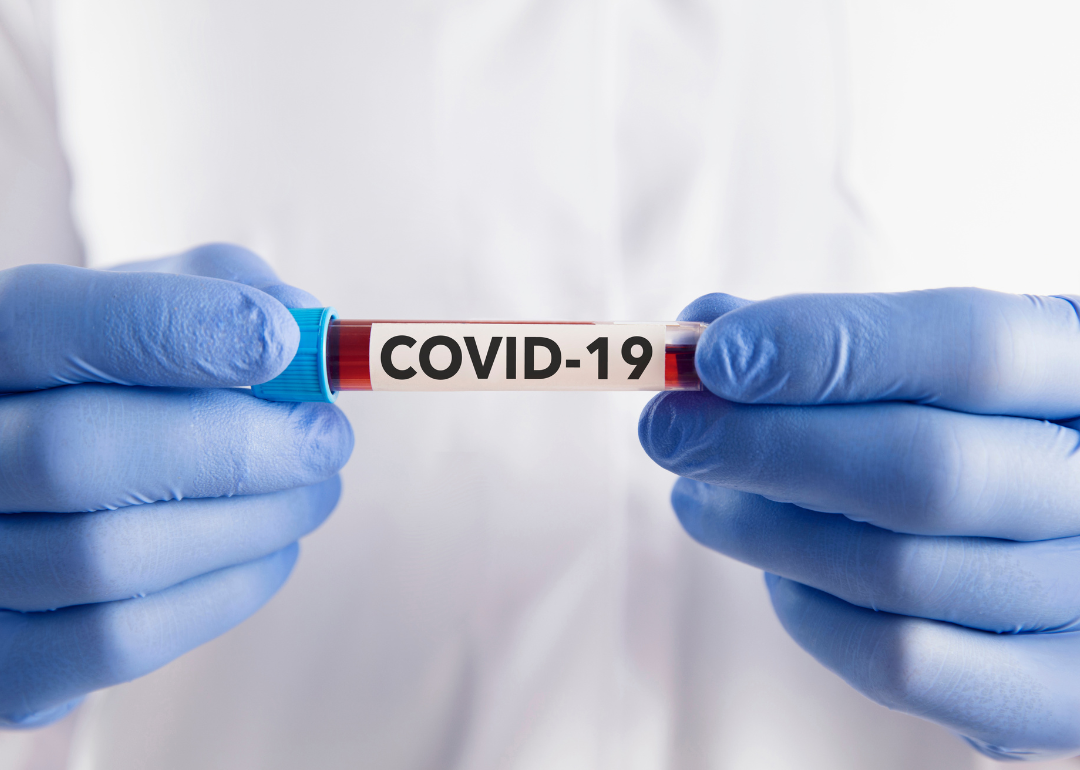
Debunking 50 COVID-19 myths
In the internet age, misinformation has become increasingly pervasive as undocumented claims easily spread online. Social media outlets like Facebook and Twitter have become breeding grounds for conspiracy theories, while chat rooms (like the ) offer echo chambers for unsubstantiated claims from to . Myths and unproven theories seem to peak around significant historical events and tragedies, and the novel coronavirus pandemic is no exception. As quickly as one misconception is debunked, another seems to pop up, like a never-ending game of Whack-A-Mole.
In late July, for example, Facebook, Twitter, and YouTube in which a group called "America's Frontline Doctors" staged a press conference outside the Supreme Court. The group, including Houston pediatrician and minister Dr. Stella Immanuel, claims that hydroxychloroquine is a cure for COVID-19. This video garnered 20 million views on Facebook alone in a day, and was retweeted by President Trump. Scientific studies have demonstrated that hydroxychloroquine has little effect in treating COVID-19, and the for use in treating COVID-19 patients in June.
Here, debunks 50 pervasive myths about COVID-19 and SARS-CoV-2, the virus that causes it, that run the gamut from outlandish medical advice to covert political operations. In the process of untangling the claims, we scoured news articles and public health resources such as the , the , and .
The trouble with myth, in many cases, is the more spectacular the claim, the more difficult to disprove it. If someone believes veteran scientists, governmental health organizations, or the media are in on a plot, any counter-evidence is chalked up to fake news. In the forthcoming gallery, you'll learn about the roots of some of the false claims (most often via a social media post that went viral), and how they've been disputed. With respect to the scientific method and investigative journalism practices, in some instances, misinformation is refuted by the sheer lack of supporting evidence.
Keep reading to learn more about some of the most popular, outlandish, false, and downright dangerous claims that have circulated about COVID-19, treatments, transmission, and social distancing.
Myth #1: There are COVID-19 treatments and cures
Those with COVID-19 symptoms can seek medical care to treat specific symptoms and offer pain relief. However, the World Health Organization states there are .
Myth #2: There are multiple strains of COVID-19
Despite rumors of mutated versions, as of May 19 there is in fact just . A paper released April 30 by scientists at Los Alamos National Laboratory claimed a new strain of the virus was even more contagious than the first; however, the research has not been formally published or properly vetted by other scientists—nor do the claims match the available evidence so far.
Myth #3: Young people aren't susceptible to COVID-19
While , young people are also susceptible. The in young adults, according to University of Louisville doctors.
Myth #4: Going to someone’s house can count as social distancing
Gatherings of any size are still considered to be in violation of . No matter whether you convene at a “household, such as a friend’s house, parks, restaurants, shops, or any other place," gathering with people outside of your immediate household does not qualify as social distancing.
Myth #5: COVID-19 was created in a lab
from the Menzies Health Institute Queensland has echoed a chorus of fellow scientists who say all available evidence suggests COVID-19 is a naturally occurring virus. The source of such rumors apparently originated in a Facebook post . In fact, that virus was a synthesized version of two influenza viruses.
Myth #6: The coronavirus can't be transmitted on surfaces
Direct contact with someone who has COVID-19 is not necessary for transmission, according to a review published in February 2020 in the , which found human coronaviruses can survive up to nine days on certain surfaces. While this is not considered by the CDC to be the main way , it is thought to be possible to contract the virus in this way.
Myth #7: If you feel well, you can't spread COVID-19
Individuals infected with the novel coronavirus may have no symptoms (or subtle symptoms). The first few days of this infection may represent the highest level of viral emission from cells—meaning it’s potentially .
Myth #8: Ebola, swine flu, SARS, and Zika were as bad as COVID-19 and nothing got shut down in US
Parts of social media have claimed that and—although the outbreaks were more serious than COVID-19—nothing was shut down in response. The Ebola outbreak did occur from 2014–2016 during Obama’s presidency, but . Amidst the , which was also during his presidency in 2009 and 2010, more than , and the for up to two weeks. The , with 8,000 cases worldwide, came in 2003 before Obama. The outbreak took place in 2015 and 2016, but resulted in, respectively, 62 U.S. cases and 10 in territories, and 5,168 cases in states and 36,512 in territories.
Myth #9: COVID-19's death toll is lower than the seasonal flu
Annual flu deaths are estimates produced by the CDC, based on several algorithms and associated mathematical equations that include case numbers, hospitalizations, and surmised unreported deaths. Meanwhile, (via death certificates recorded by the CDC) have varied in recent years between 3,448 and 15,620.
Myth #10: COVID-19 is a mutated form of the common cold
There are many strains of coronaviruses, and a number of those do cause colds. COVID-19, however, is not a . It did not arise from a cold; the widely accepted information on its origins states the coronavirus causing COVID-19 came from an animal host (possibly a bat) and mutated from there in such a way that it infected people.
Myth #11: The US has done more COVID-19 testing than all other countries combined
Trump’s claims that the combined is false: As of April 28, the , far outpaced sum total of all other countries. As for touting the fact that the , this is true. But considering the size of the U.S. and scale of its outbreak, as of July 29 actually come in well below other countries including Peru, Saudi Arabia, Mexico, Sweden, India, and several others.
Myth #12: The US is doing enough testing for states to reopen
Safely reopening the economy coincides with establishing an infrastructure that tracks data; namely infection rates, contacts of those who have tested positive, and information on isolated groups. The country as a whole, and most states, fall significantly below the threshold for testing rates that are necessary to safely reopen.
Myth #13: Antibiotics can prevent and treat COVID-19
—but they will not do anything for viruses. The new coronavirus is a virus; however, those admitted to hospitals may be prescribed antibiotics for bacterial co-infections should they arise.
Myth #14: 5G is spreading (or causing) COVID-19
, the fifth generation of internet communications technologies. That’s because viruses don’t transmit along radio waves. The novel coronavirus is also not, in fact, , nor is it the result of 5G weakening immune systems to the point that people contract the virus. COVID-19 is a biological virus spread by contact with someone who is infected.
Myth #15: Mosquito bites transmit the coronavirus
There has been no evidence whatsoever that . In fact, all the evidence gathered so far indicates the respiratory virus is spread through droplets, such as those emitted when a person coughs or sneezes.
Myth #16: The virus was engineered to increase vaccination rates
In May, a 26-minute video excerpted ahead of the release of a documentary called “” went viral, featuring a , who, among many unsubstantiated claims, said the . There is neither evidence it was manufactured nor any discussion of forced vaccinations. There is plenty of evidence, however, of Mikovits' past claims and studies needing to be retracted, proving to be dubious, or being refuted altogether.
Myth #17: Cats and dogs can spread the coronavirus to humans
While cats and dogs can become infected with COVID-19, there is no evidence so far that these animals can spread the virus to people. Cats have been shown to transmit the virus to other cats, but dogs have not been shown to do so, and there is .
Myth #18: Packages from China or elsewhere can spread the coronavirus
There have been While the virus can survive on paper or cardboard for up to 24 hours, almost all packages take longer than that to ship. There is also no evidence that the amount of virus in a droplet on cardboard or paper would be enough to infect someone. The CDC has maintained that the and not via surfaces.
Myth #19: Eating Chinese food can spread the coronavirus
The . As it is spread through droplets from the mouth or nose, it would be virtually impossible to catch it from eating food—let alone Chinese food. The misinformation represents one of several racist untruths about the virus.
Myth #20: COVID-19 originated from people eating bat soup
Consuming . The misinformation was spread by a viral picture that purported to be of a woman eating bat soup in China. The photo was actually of a travel show host , a Pacific island. It is believed that the novel coronavirus originated in bats, but that bats transmitted it to another animal (possibly a ) that then transmitted the virus to people.
Myth #21: Introducing bleach into your body can cure you of COVID-19
Swallowing bleach—or spraying, pouring, rubbing, or otherwise introducing it into your body—will not The World Health Organization has stressed that bleach and other household disinfectants are only effective at killing the virus on surfaces such as countertops. Introducing these disinfectants inside your body can be lethal.
Myth #22: You can't catch the coronavirus in hot weather
Unfortunately for all of us anxious to see life return to normal, it is still possible to . Scientists know this because even countries with warm climates, as well as southern U.S. states like Florida that stay warm year-round, have documented cases of COVID-19. Furthermore, case spikes in Arizona, Florida, Texas, and California this summer disprove the theory.
Myth #23: Being able to hold your breath for 10 seconds means you don't have COVID-19
Early on in the pandemic, hundreds of wild claims circulated claiming any number of miracle cures and self-tests for COVID-19. One was that if you could without coughing or experiencing significant pain, you didn’t have the virus. While attempting to do so will certainly indicate whether you have a cough or other respiratory issue, many people with the virus have been asymptomatic. The only way to know for sure .
Myth #24: Peeled onions will protect you from the coronavirus
Claims that are nothing new—but in March, that claim included coronavirus. The theory has been thoroughly debunked by scientists. The old wives’ tale may have its origins in the 14th century when some thought (they couldn’t—only quarantine worked). There is no known cure or preventative treatment for COVID-19.
Myth #25: Drinking tonic water will prevent coronavirus
Chiropractor Eric Nepute (who is not a medical doctor) made a 20-minute viral video claiming, among other things, that consuming Schweppes tonic water would help prevent COVID-19 because of the quinine in the drink. Quinine has successfully been used as a since the 1800s, but there is insufficient evidence to suggest it can help treat or prevent COVID-19. Furthermore, the FDA limits quinine levels in tonic to because of the adverse side effects of consuming high levels. To get a medical-grade dose of quinine, one would have to every eight hours. And even then, it wouldn't do anything to prevent the spread of COVID-19.
Myth #26: Eating garlic can prevent the coronavirus
that is healthy and also might possess microbial properties. Sadly, it will not prevent or cure COVID-19.
Myth #27: UV lamps are effective disinfectants for your skin
UV light is a powerful disinfectant. But using it as such on your skin can cause eye damage and irritate your skin. The is with frequent hand-washing and alcohol-based hand sanitizer.
Myth #28: Hand dryers are effective in killing the coronavirus
Washing your hands thoroughly with soap and water will remove the virus from your skin; alcohol-based hand sanitizers will also kill the virus on contact.
Myth #29: We know the probability of COVID-19 transfer among those wearing/not wearing masks
A viral meme claimed: the was 70% when a person with the virus did not wear a mask and a person nearby did; risk dropped to 5% if the carrier wore a mask and the person nearby did not; and fell to 1.5% if both people wore a mask. While the meme was meant to encourage public safety by wearing masks, the information was misleading. While the odds of transmission do go down when people wear masks, there are too many variables at play for scientists to nail down specific transmission risks.
Myth #30: Runners and cyclists can project coronavirus particles up to 16 feet
There has not been a study concluding runners and cyclists can project coronavirus particles 16 feet. The person who made the claim, , is an aerodynamics engineer. His findings were not part of a study and included no input from experts in biology or virology. In fact, experts have agreed to other people keeping a six-foot distance.
Myth #31: Flu shots increase one's risk of contracting the coronavirus
People and organizations who are distrustful of vaccines have falsely claimed that , and based it on a Pentagon study that said no such thing. The Military Health System has not wavered in its recommendation that people get flu shots.
Myth #32: Hydroxychloroquine is a cure for COVID-19
Hydroxychloroquine, trotted out in April as a potential treatment for COVID-19, was claimed by to have significantly lowered the country's mortality rates from the virus. President Trump has promoted the drug multiple times, even as a preventative. However, were stopped in May due to a higher risk of death among those taking it. On June 15, for hydroxychloroquine to be used by hospitals in treating COVID-19 patients.
Nevertheless, President Trump in late July in which pediatrician claims the drug is a "cure" for COVID-19. The video has since been removed from Facebook, Twitter, and YouTube for spreading misinformation.
Myth #33: Melanin protects against the coronavirus
In February, an article circulating online claimed in a person’s body could help prevent viral infections. The story cited a study that in fact tested how melanin levels in animals could help prevent parasites.
Myth #34: Gargling salt water prevents respiratory infections
is an age-old home remedy for throat irritation. But there have been no studies that show it will prevent or cure respiratory infections caused by the novel coronavirus. The "good" news? Doing so won’t cause you harm.
Myth #35: There are several effective, alternative medicine treatments for COVID-19
Despite widespread claims of UV therapy, immune-system "boosters" that can keep a person from catching COVID-19, or a vitamin cocktail to ward off viruses, there is . While probiotics and zinc can be good for you, they're not going to cure you.
Myth #36: Alcohol consumption can protect against the coronavirus
Alcohol-based hand sanitizers can be effective ways to kill the novel coronavirus on your skin. But —nor does it offer any treatment if you have COVID-19.
Myth #37: A positive antibody test means you have immunity to the coronavirus
Testing positive for doesn’t mean a person has permanent immunity to coronavirus. Those who do test positive for the antibody are likely to have immunity for a period of time and —but scientists don’t yet know for how long.
Myth #38: The COVID-19 death toll is being inflated
Suppositions that the have no basis in any evidence. Distinctions between death tolls on the CDC website and those from Johns Hopkins, for example, are the result of a lag in processing death certificates—not falsifying numbers.
Myth #39: COVID-19 models don't take preventative measures into account
Modeling for as social distancing efforts evolve. These models account for multiple variations in human behavior and transmission of the novel coronavirus, causing projections to fluctuate.
Myth #40: You are more likely to die from COVID-19 if you're put on a ventilator
Confusion around death rates of those placed on ventilators caused many to associate the machines with more certain death. This isn't the case: The is more intimately tied to underlying conditions, not whether someone is put on a ventilator.
Myth #41: Bill Gates wants to implant vaccine microchips in people
are a dime a dozen, with several accusing Gates of either creating COVID-19 himself or using his to eventually help ensure forcible vaccinations and that could be used for tracking the public's every move. Gates’ statements about were severely taken out of context; he said that vaccines help to reduce infant mortality rates, so that where such rates are reduced, couples may choose to have fewer children because of a higher chance of survival—thereby curbing overpopulation. As for implanted ID chips? There’s simply no supporting evidence that ID2020 has an endgoal of implanting chips that could be used as tracking devices.
Myth #42: COVID-19 is a cover-up for Trump breaking up a global child trafficking ring
QAnon conspiracy theorists have floated an idea that Trump is working on a behind-the-scenes battle with the so-called "deep state," . Part of the shutdown amid coronavirus, some theories go, was a means to allow for breaking up the ring. Those who believe in this theory claimed the U.S. Navy hospital ship Comfort, along with New York City’s Central Park field hospital, were in fact set up to rescue and treat rescued children, respectively. There is not a single shred of evidence supporting any of these claims.
Myth #43: Dr. Anthony Fauci knew in 2005 hydroxychloroquine could treat the novel coronavirus
One News Now, an anti-LGBTQ+ political organization, has claimed Dr. Anthony Fauci—director of the National Institute of Allergy and Infectious Diseases since 1984—studied and found it to be an effective treatment for human coronaviruses. The 2005 study referenced by One News Now is in fact regarding the —on SARS.
Myth #44: Americans married to immigrants were blocked from receiving stimulus checks
Despite claims originating from a Facebook post, were not excluded from stimulus checks. In fact, only U.S. citizens who filed jointly on their taxes with spouses using an Individual Taxpayer Identification Number were ineligible for a stimulus check. The rule does not apply to military families.
Myth #45: Criminals are using drugged face masks to rob people
There isn't a single documented instance of a to a person in order to render someone unconscious and rob them. The original Facebook post from March 30 offered no concrete details, including date, location, perpetrators, or primary documentation to support the claim.
Myth #46: President Trump has the full authority to reopen states
Despite Trump saying he has “total" authority to reopen states, the , even in emergency situations. Individual states have the right to set rules related to public health.
Myth #47: American public health officials overreacted to the pandemic
William "Bill" Bennett on April 13 claimed Americans have less than two-tenths of 1% chance of contracting the novel coronavirus, stoking the perception that American public health officials . His calculation is based on faulty, incomplete numbers: dividing confirmed . But with testing so incomplete, Bennett’s numbers were significantly lower than actual case counts in the country.
Myth #48: The CDC changed course to encourage masks in public without new evidence
The CDC encouraged civilians to wear masks in public because of of COVID-19. The decision was not random.
Myth #49: Dolphins and swans returned to Venice canals
During Italy’s nationwide shutdown in March, photos of were shared widely across social media. It’s true that these animals were seen swimming in Italian waterways—but the presence of these animals wasn’t anything new or on the heels of human departure: The dolphins were swimming off the coast of Sardinia, almost 500 miles south of Venice, while the swans were photographed in Burano canals, where they typically appear.
Myth #50: Reduced pollution due to COVID-19 will have long-term environmental benefits
It is true that there have been amid the novel coronavirus outbreak. But while some of these , experts agree the changes are only temporary. As soon as areas open back up and consumption of fossil fuels increases, pollution will unfortunately return without long-term benefits from the respite.