Dehydration facts and myths: What you need to know
You’ve probably heard your fair share of dehydration facts (“eight glasses a day,” anyone?). But do you really know how dehydration shows up in your day-to-day? The truth is, dehydration is more nuanced than most people think — and staying properly hydrated is about more than chugging water. It’s one of those sneaky, everyday health issues that often flies under the radar until your body starts waving red flags. And it doesn’t take much to throw your fluid levels off — a tough workout, a hot day, or even a couple of extra coffees can do the trick.
You need the right balance of fluids and electrolytes to keep everything from your brain to your muscles functioning well. Here, breaks down what dehydration really looks like, what dehydrates you, and how to deal with it.
Understanding Dehydration
Your body is about , and that fluid is critical for almost all of your bodily functions. But when you lose more fluids than you take in, your system doesn’t have the water it needs to run smoothly — that’s .
“Water balance in the body is regulated by a system made up of the kidneys, hormones, and electrolytes like sodium, potassium, magnesium, and chloride,” says . “The body maintains equilibrium by adjusting urine output, sweat production, and fluid shifts between your cells and your bloodstream.”
In other words, your body works hard behind the scenes to keep fluid levels stable. But that balance is delicate — and without enough fluid or electrolytes, the system can falter.
“Low electrolyte levels in the blood cause water to move into the cells to help balance the concentration of electrolytes,” says . “But if electrolyte levels are very low, too much water can move into the cells, which can make them dysfunctional.”
That imbalance can trigger symptoms of dehydration (more on that in a moment).
Common Causes of Dehydration
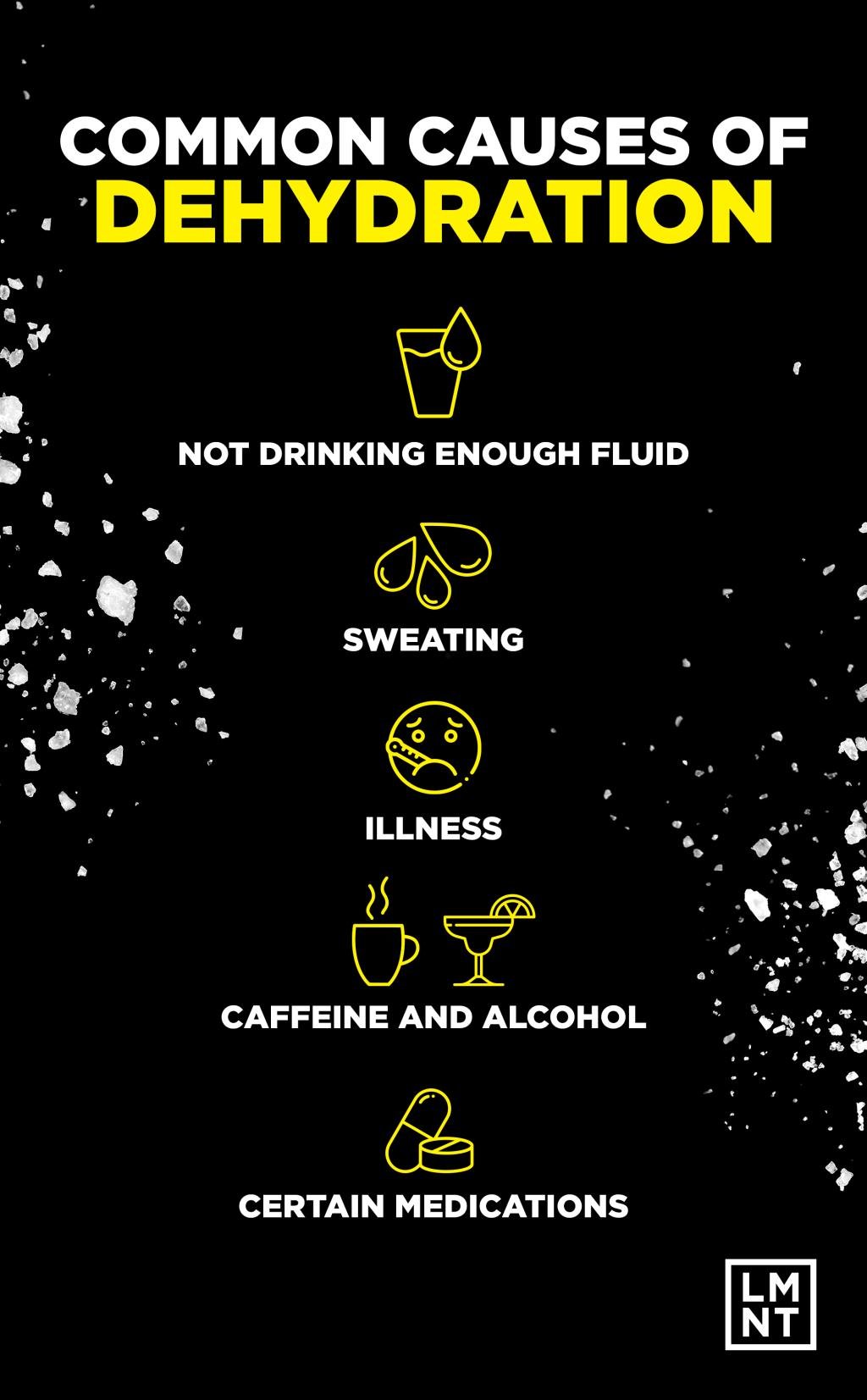
Dehydration can sneak up on you for all kinds of reasons. Here are the to be aware of.
- Not drinking enough water: It sounds obvious, but many people don’t drink water when they’re thirsty, and falling short on fluid intake is one of the most common .
- Sweating: Physical activity and high temperatures cause your body to lose fluids through sweat. If you’re not replenishing what you’ve lost, dehydration can set in quickly and can be especially pronounced during prolonged or intense workouts.
- Illness: Vomiting, diarrhea, and fever can rapidly deplete your fluid stores. Certain chronic illnesses — like diabetes, cystic fibrosis, and kidney disease — can also cause you to urinate or sweat more often, raising the risk for dehydration.
- Caffeine and alcohol: Both have diuretic effects, which means they can through urination, especially when consumed in large amounts or without enough water.
- Certain medications: Some drugs, including , and , can increase fluid loss.
Signs and Symptoms of Dehydration
Dehydration can range from mild to severe, and symptoms can build gradually, making them easy to miss at first. Here are to look out for.
Mild to moderate dehydration
So, how do you know if you’re dehydrated? According to Dalal and Bates, these early signs are your body’s way of telling you it needs more fluids.
- Thirst: Often the first cue, thirst signals that your body’s fluid levels are already dipping.
- Dry mouth: A sticky, parched feeling in your mouth is a common warning sign.
- Brain fog: Dehydration can make it harder to think clearly or stay focused.
- Fatigue: Dehydration can lower blood pressure and reduce oxygen flow to your muscles and brain, leaving you feeling drained.
- Dark urine: Pale yellow urine is a good indicator that you’re well-hydrated. But when you’re dehydrated, your body conserves water, making your urine darker and more concentrated.
- Dizziness or lightheadedness: These symptoms can occur when dehydration causes a drop in blood volume or pressure.
Severe dehydration
Severe dehydration is dangerous, says Dalal. Seek medical attention right away if you notice
like:
- Rapid heartbeat or breathing: Your heart may work harder to maintain blood flow with lower fluid volume.
- Low blood pressure: Severe fluid loss can cause your blood pressure to drop, especially when standing up.
- Confusion: Dehydration can impair brain function, making it difficult to think clearly.
- Little to no sweating, even in heat: This may indicate your body is conserving water due to severe depletion.
- Extreme fatigue or fainting: This is a sign of dangerously low blood pressure or inadequate circulation.
- Sunken eyes or shriveled skin: These are physical signs your body is running low on fluids and struggling to maintain normal functions.
Hydration Myths Debunked
There’s no shortage of hydration advice, but not all of it holds water. Let’s clear up some common myths so you can hydrate smarter, not harder.
Myth #1: Everyone needs exactly eight glasses of water a day
Reality: There’s no one-size-fits-all number. “The ‘eight cups per day’ guideline is a more generalized recommendation,” says Dalal. “Hydration needs are based on body size, activity level, climate, and diet.”
For example, someone who exercises regularly or lives in a hot, dry environment will typically need more fluids than someone who’s sedentary in a cool climate. Instead of fixating on a number, Dalal recommends paying attention to your body’s cues — like thirst and urine color — and adjusting your fluid intake accordingly.
“Most people get a significant portion of their hydration from food (especially fruits and vegetables with a high water content) and other beverages,” like herbal teas, milk, and coconut water, she adds. “The ideal game plan is to listen to your body's cues and adjust intake based on personal needs.”
Myth #2: Thirst is always a reliable indicator of hydration status
“While thirst is a helpful indicator, you should not use it as a sole indicator of hydration status,” says Dalal. “By the time a person feels thirsty, they may already be mildly dehydrated. Thirst sensitivity also decreases with age, and certain conditions or medications can interfere with thirst signals.”
In addition to noting your thirst levels, also pay attention to your environment and output. For instance, if you’re exercising outside on a hot day, you’ll need more fluid and electrolytes than when you’re sitting at your desk in the air conditioning.
Myth #3: You can’t drink too much water
Yes, you can drink too much water, and in some cases, it can be dangerous. “Overhydration, or , occurs when excessive water intake dilutes blood sodium levels, potentially leading to dangerous consequences like brain swelling and electrolyte imbalances,” says Dalal. “We see this more in endurance athletes who consume large amounts of water without replenishing electrolytes.”
The tricky part? Symptoms of overhydration can look a lot like dehydration. Common signs include headache, fatigue, muscle cramps, nausea, and even increased thirst, says Bates. This overlap can make it easy to misinterpret the problem.
To stay safe, focus on hydrating with both fluids and electrolytes, especially during extended periods of physical activity, heat exposure, or heavy sweating.
Myth #4: Coffee and tea dehydrate you
Short answer? It depends on how much you drink.
“Yes, caffeine has mild diuretic properties, but regular coffee and tea drinkers develop a tolerance to this effect,” says Dalal. “Moderate coffee and tea consumption actually contribute to daily fluid intake rather than causing dehydration.”
The key here, though, is moderation. Drinking too much caffeine — more than the (two to three cups) per day — can severely dehydrate you, she adds.
Similarly, “I've found that coffee and tea more specifically lead to dehydration because they are used in place of water or other electrolyte-rich liquids,” adds Bates.
Dehydration Facts You Should Know
Staying hydrated isn’t just about drinking when you’re thirsty; it’s about understanding how your body uses and holds onto fluids. Here are a few key facts that can help you stay ahead of dehydration and support your overall health.
- Hydration is personal: There’s no one-size-fits-all rule for how much water you need. Factors like age, body size, gender, climate, altitude, physical activity, and diet can significantly affect your fluid needs, says Dalal.
- Water isn’t the only option: While water is essential, electrolytes play a critical role in helping your body absorb and retain that water, says Dalal. are one great option.
- Food hydrates you, too: About comes from food. Many fruits and vegetables (like apples, oranges, carrots, and broccoli) are . Including these in your meals is an easy way to boost hydration without picking up a glass.
- Even mild dehydration can affect you: Just and can lead to mental fatigue, brain fog, slower reaction times, and irritability. It also messes with aspects of your physical performance, like coordination, strength, and range of motion.
- Older adults and kids are more vulnerable: Both age groups have less reliable thirst cues, so they may not feel thirsty even when their bodies need fluids. because they often rely on adults to provide water and are more susceptible to digestive illnesses that cause fluid loss. And as people get older, they’re .
Best Ways to Treat and Prevent Dehydration
Dehydration can sneak up on you. But with a few proactive habits, it's easy to treat or stay ahead of it entirely.
How to treat dehydration
If you’re already showing signs of fluid loss, here are dehydration treatments to keep in mind.
- Use an oral rehydration solution: These solutions — available as drinks or powders — contain a balanced mix of electrolytes to help your body absorb water more efficiently. “[They’re] beneficial in situations where fluid and electrolyte losses are high, like prolonged exercise, excessive sweating in hot climates, vomiting, diarrhea, or drinking too much alcohol,” says Dalal.
- Eat water-rich foods: Incorporating fruits and vegetables into your everyday diet can support rehydration while delivering important vitamins and minerals.
- Sip water gradually: Chugging large amounts of water at once can overwhelm your system. Instead, drink smaller amounts to replenish fluids steadily and gently.
How to prevent dehydration
Want to avoid dehydration altogether? Here’s what to do for dehydration prevention.
- Learn to recognize early signs: Feeling thirsty, sluggish, or noticing your urine is darker than usual? These are early cues that you need more fluids, says Bates. Don’t ignore them — reach for water or an to catch dehydration before it worsens.
- Proactively adjust fluid intake: Hot weather, intense workouts, high altitudes, or illness all increase fluid needs. The best thing for dehydration prevention is drinking more before, during, and after these situations, says Dalal. She also recommends electrolytes if you're sweating heavily or losing fluids through illness.
- Be mindful of dehydrating habits: Alcohol and highly caffeinated drinks can increase fluid loss, says Dalal, especially in large amounts or during high-risk times (like when you’re exercising or sick). Consider limiting these and pairing them with water to help offset potential diuretic effects.
Surprising Facts About Drinking Water
Staying hydrated isn’t just about meeting a daily quota — it can also have some pretty interesting effects on your body. Here are a few lesser-known facts about hydration that might surprise you.
- You can hydrate with food: Remember, around 20% of your daily water intake comes from food. Eating (think cucumbers, watermelon, celery, tomatoes, strawberries, and lettuce) is a refreshing and nutritious way to support hydration.
- Your thirst signal weakens as you age: As we get older, , which means older adults may not feel thirsty even when they’re mildly dehydrated.
- Hydration supports digestion: , making it easier to pass so you can avoid constipation.
The Role of Electrolytes in Hydration
Hydration isn’t just about water. You also need electrolytes to absorb and use that water effectively. are minerals like sodium, potassium, magnesium, and calcium that help regulate fluid balance, nerve function, and muscle contractions.
When you lose fluids through sweat, illness, or even everyday activities, you also lose electrolytes — particularly sodium. “Sodium helps retain water in the bloodstream and helps absorption in the intestines,” says Dalal. “Without enough electrolytes, water absorption can be inefficient, and imbalances can cause dehydration or overhydration.”
Drinking large amounts of water without replenishing electrolytes and following a low-carb diet (like the Keto diet) can also increase sodium and other electrolyte loss, she adds.
In these situations, electrolyte-enhanced drinks or powders can help restore balance and support better hydration. These solutions are especially useful for athletes, people spending time in hot climates, or anyone recovering from illness, says Dalal. If you’re not in these situations, a balanced diet full of fruits and vegetables can help maintain healthy electrolyte levels.
Hydration and athletic performance
Water and electrolytes are a power duo, especially when it comes to . Proper hydration supports muscle contraction, nutrient delivery, and waste removal. Without enough fluids and electrolytes, your heart has to work overtime to pump blood and your muscles may grow tired and crampy.
How to gauge hydration status
Accurately tracking hydration can help maintain peak performance. According to Dalal, a few simple ways to monitor hydration include the following.
- Urine color: Pale yellow usually indicates good hydration, while darker shades may suggest you need more fluids.
- Body weight changes: Weighing yourself before and after exercise can help determine how much fluid you’ve lost through sweat. Losing 1% to 2% of your body weight indicates dehydration.
- Other symptoms: Dry mouth, dizziness, and fatigue can all be subtle signs that you’re not well-hydrated.
Hydration tips for before, during, and after exercise
Smart hydration strategies can help you train harder, recover faster, and stay safer. But there’s no one-size-fits-all formula.
“Some people are heavy sweaters and therefore do best with having electrolytes before, during, and after their workouts for peak performance. Others don't sweat as much and therefore do better with adding electrolytes post-workout,” says Bates. “Testing out a variety of different hydration timings and monitoring your own performance tends to provide the best individualized results.”
That said, here are Dalal’s general pointers to keep in mind.
- Before: Start hydrating two to three hours before your workout by drinking 16 to 20 ounces of water (or an electrolyte drink if you’re in the heat or training intensely). Sip another 8 to 10 ounces half an hour before you begin.
- During: For workouts under 60 minutes, water is usually sufficient, but this is highly situationally specific. A 20-minute CrossFit workout or hot HIIT class is very different than 20 minutes of lifting weights or treadmill walking. For longer, hotter, or higher-intensity sessions, pick a drink with added electrolytes to replenish sodium and other minerals lost through sweat.
- After: For intense activity where you sweat heavily, rehydrate with 16 to 24 ounces of electrolyte fluid for every pound of body weight lost during exercise. If you’re not weighing yourself before and after exercise, rehydrate with water after your activity and consider incorporating an electrolyte beverage or electrolyte-rich foods into your post-workout meal or snack.
Practical Hydration Tips
With a few simple habits, you can keep your fluid levels steady and feel your best without overthinking it. Here’s what the experts recommend.
- Start your day with water or electrolytes before coffee to get ahead of dehydration. Remember: Before is prepping, after is chasing.
- Pair rehydrating with daily tasks (like during meals or after brushing your teeth).
- Set reminders if you tend to forget to drink water until you’re already parched.
- Add some pizzazz to plain water by adding citrus, berries, or cucumber slices.
- Eat your fluids by regularly munching on fruits and vegetables.
- Always discuss any supplement plan with a healthcare professional, especially if you have a serious medical condition such as kidney disease, heart failure or high blood pressure.
FAQs
What are three facts about dehydration?
- Even mild dehydration affects your energy and mood.
- Electrolytes are essential for proper fluid balance and are not optional.
- Hydration needs change depending on factors like your age, location, and activity level.
Is it true that 75% of Americans are dehydrated?
While this is a popular claim, there’s no scientific evidence to back it up. Still, dehydration is common, especially among children and older adults — for instance, .
What five things may identify dehydration?
Thirst, dry mouth, fatigue, dizziness, and dark urine.
What are three serious effects of dehydration?
Low blood pressure, rapid heartbeat or breathing, and fainting.
What actually happens in dehydration?
When you don’t get enough fluid and electrolytes, your body isn’t able to properly regulate temperature, digest your food, lubricate your joints, and more.
Conclusion
Staying hydrated is a simple but critical health habit — your muscle function, brain performance, energy levels, and more. And while water is crucial, it’s only part of the equation. Electrolytes (especially sodium, potassium, and magnesium) are critical in helping your body balance fluids effectively.
Key Takeaways
- Proper hydration isn’t just about water. Your body also needs electrolytes like sodium, potassium, and magnesium to absorb and retain fluids effectively.
- Dehydration can be more subtle than you think. Symptoms like fatigue, brain fog, and dark urine can be early signs that your body is out of balance.
- Intense workouts, hot weather, illness, certain medications, and even aging can all increase your risk for dehydration, so it’s extra important to stay on top of fluids and electrolytes during those times.
- Forget the “eight glasses a day rule.” Your ideal water intake depends on your body, age, activity level, diet, and environment.
- Foods like fruits and vegetables are also hydrating. In fact, they make up 20 to 30% of your daily fluid intake.
was produced by and reviewed and distributed by Â鶹ԭ´´.