
How to redefine men's mental health stigmas
Men’s mental health is often overlooked, but it shouldn’t be. —especially for men. Society often teaches men to “tough it out” instead of seeking help. This mindset can take a serious toll. Every year, , and men are two to three times more likely to deal with unhealthy substance use than women.
Yet men are far . With , it’s clear that breaking the stigma and reaching out for support is critical.
The good news? Opening up about emotions only makes you stronger. Being vulnerable can improve mental well-being, strengthen relationships, and even boost resilience. If you’ve ever struggled in silence, you’re not alone. talks about how breaking the stigma can lead to a healthier, happier life.
Key takeaways
- Men face mental health challenges just like women, but they often suffer in silence due to stigma and societal pressure.
- Seeking help and talking about emotions can improve mental well-being, build stronger relationships, and reduce stress.
- There are many resources available for men, like therapy and support groups to help manage mental health.
Men’s mental health matters
Men’s mental health is still overlooked and not talked about nearly enough. Even today, it’s common to hear people question why mental health matters at all. For generations, men have been expected to be strong, independent, and self-reliant—often at the cost of their emotional well-being.
Many boys grow up being told to “man up” or hide their feelings, . This pressure to appear tough can lead .
But mental health is just as important as physical health, and ignoring it doesn’t make struggles disappear. The good news is that more men are starting to break the cycle, proving that strength comes from facing challenges—not avoiding them.
Men struggle with mental health just as much as women
Some people believe that mental health issues affect women more than men, but the truth is that . The difference is that many men are less likely to open up about it.
Conditions like , , and are common among men, but they often go undiagnosed because of stigma. Recognizing the signs and seeking help early can make a huge difference.
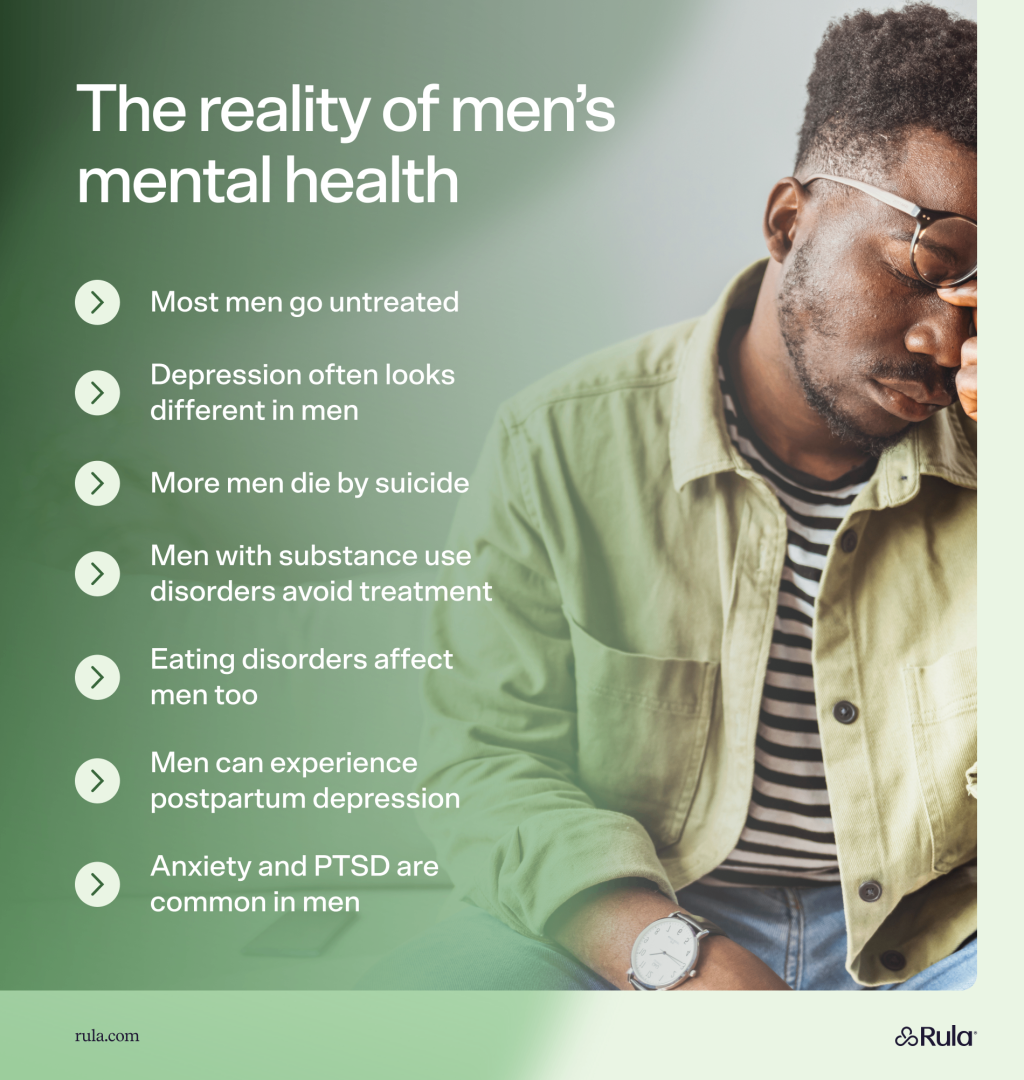
The reality of men’s mental health
Mental health challenges don’t discriminate—they affect men just as much as anyone else. The problem is that men often suffer in silence.
Here’s what the statistics and data show:
- Most men go untreated. Research shows that about in the U.S., yet many never receive treatment.
- Depression often looks different in men. in men often goes undiagnosed because rather than sadness.
- More men die by suicide. Suicide rates among men are four times higher than in women, yet men are far less likely to seek help.
- Men with substance use disorders avoid treatment. Many or appearing weak.
- Eating disorders affect men too. Though often seen as a women’s issue, with an , yet men are less likely to be diagnosed.
- Men can experience postpartum depression. (PPD) due to hormonal changes, stress, and lack of support, but it often goes unrecognized.
- Anxiety and PTSD are common in men. Men, especially veterans and first responders, face high rates of and (PTSD), but stigma often prevents them from seeking care.
The impact of untreated mental health issues
Ignoring mental health issues doesn’t make them go away. In fact, it can make things worse. When men don’t get support, it can affect every part of their lives.
For example:
- Suicide risk increases. , and untreated mental health issues are a major factor in this alarming statistic.
- Substance use becomes a coping mechanism. Many men turn to alcohol or drugs to numb emotional pain, which can lead to further mental and physical health issues.
- Relationships suffer. When mental health issues are left unaddressed, they can .
- Physical health declines. Mental health conditions can contribute to serious physical health problems—including , and chronic stress—making it even more important to seek help.
More men are going to therapy than ever
For years, the idea that “real men don’t go to therapy” kept many from seeking help. But that’s changing. as a way to , improve relationships, and take control of their mental well-being. Therapy provides tools to navigate life’s challenges, but support doesn’t have to start or stop there.
Talking to trusted friends, family members, or mentors about what you’re going through can make a huge difference. Opening up doesn’t mean you have to have all the answers—it just means you’re willing to share the weight. Whether it’s having a conversation with a close friend, checking in with a partner, or joining a support group, connection is key. Recognizing when you need support and reaching out—whether to a therapist or someone in your circle—is one of the strongest things you can do.
Being vulnerable doesn’t make you less of a man
It takes real courage to be honest about your struggles. While many men are taught to push through tough times alone, opening up can actually make you stronger—not weaker.
How emotional vulnerability improves men’s mental health
Many and keep their feelings to themselves. But ignoring emotions doesn’t make them go away. It can lead to more stress and create distance in relationships. Being open about struggles can have lasting benefits.
- Talking about emotions helps reduce stress and anxiety. over time.
- Being open strengthens relationships. Whether it’s with a partner, friend, or family member, honesty builds trust and deeper connections.
- Expressing emotions can boost resilience. Facing struggles head on and asking for help can make you stronger in the long run.
What resources are available for men’s mental health?
If you or a man you care about is struggling, know that support is available. Reaching out isn’t a sign of weakness—it’s a step toward strength and healing. No one should have to navigate mental health challenges alone, and the right resources can make a big difference.
- Therapy and counseling: A mental health professional can help you work through stress, anxiety, or depression with strategies that fit your needs and lifestyle. Many therapists specialize in men’s mental health and understand the unique challenges men face.
- Support groups: Connecting with other men who understand what you’re going through can help reduce feelings of isolation and provide encouragement.
- Online platforms and hotlines: If reaching out in person feels overwhelming, anonymous support is available through crisis hotlines, mental health apps, and online therapy platforms.
- Self-care and healthy habits: Mental health isn’t just about what’s in your head. It’s also about . , , time for hobbies, and meaningful all play a huge role in managing stress and improving well-being.
You don’t have to handle everything on your own. Whether it’s going to therapy, talking to a trusted friend, or making small changes to your routine, taking action today can help you feel better and stronger tomorrow.
was produced by and reviewed and distributed by Â鶹ԭ´´.