
Pediatric cancer is on the rise, with some types becoming more common
This story originally appeared on Northwell Health and was produced and distributed in partnership with 麻豆原创 Studio.
Pediatric cancer is on the rise, with some types becoming more common
More than 15,000 children in the United States likely will be diagnosed with cancer in 2023, based on estimates from the.
While rare, cancer is the fourth leading cause of death in children and adolescents from 1 to 19 years old. And a new study published in the shows pediatric cancer is rising overall.
The study evaluated nearly 250,000 pediatric cancer cases over a more than 15-year period. It found rates of leukemia, lymphoma, and several other cancers increased during that time, while melanoma rates fell.
collaborated with 麻豆原创 to analyze the data on rising cases of pediatric cancer. The overall rate of cancer cases increased to 177 per million in 2019 from 165 per million in 2003, the study found.
Rises in pediatric cancers may be due to, such as changes in how cancer is reported. For example, the increase in cancer rates may be due to the more prominent use of electronic pathology reporting to cancer registries, which has grown more common in the last 20 years.
The good news is survival rates have increased dramatically since the 1970s. Treatment for leukemia, for example, used to be one-size-fits-all鈥攅very child got the same treatment. Now, doctors can tailor the treatment for children with leukemia based on their molecular changes. Personalized treatments, including cellular therapies and targeted immunotherapies, have significantly improved pediatric cancer survival rates. While this study didn't look at survival rates, one researcher behind it hopes that the study can be used to help design tests for new treatments and to give insight into the growing number of childhood cancer survivors.
"," Dr. David A. Siegel, M.D., told the journal HemOnc Today. "That's important for physicians to keep in mind as they think about these questions going forward."
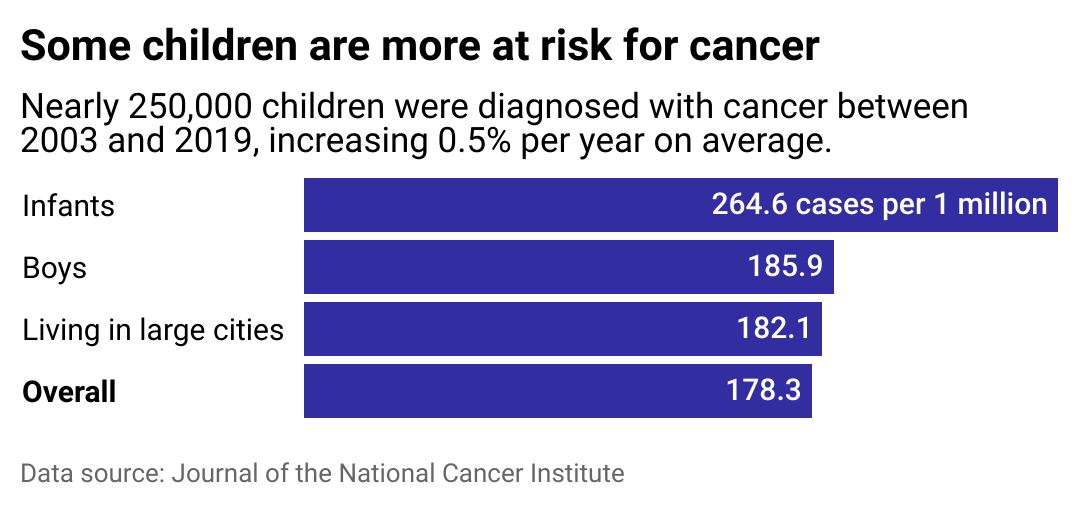
Groups most impacted by pediatric cancer
Rates of different cancer types varied based on a number of factors, including age, gender, race or ethnicity, and which part of the country a patient was located.
Compared by age, pediatric cancer rates were highest among infants under 1. Male children had higher rates of cancer than female children due to a mixture of. Children living in large cities also have higher cancer rates. According to a 2022, exposure to traffic-related air pollution has direct links to childhood leukemia.
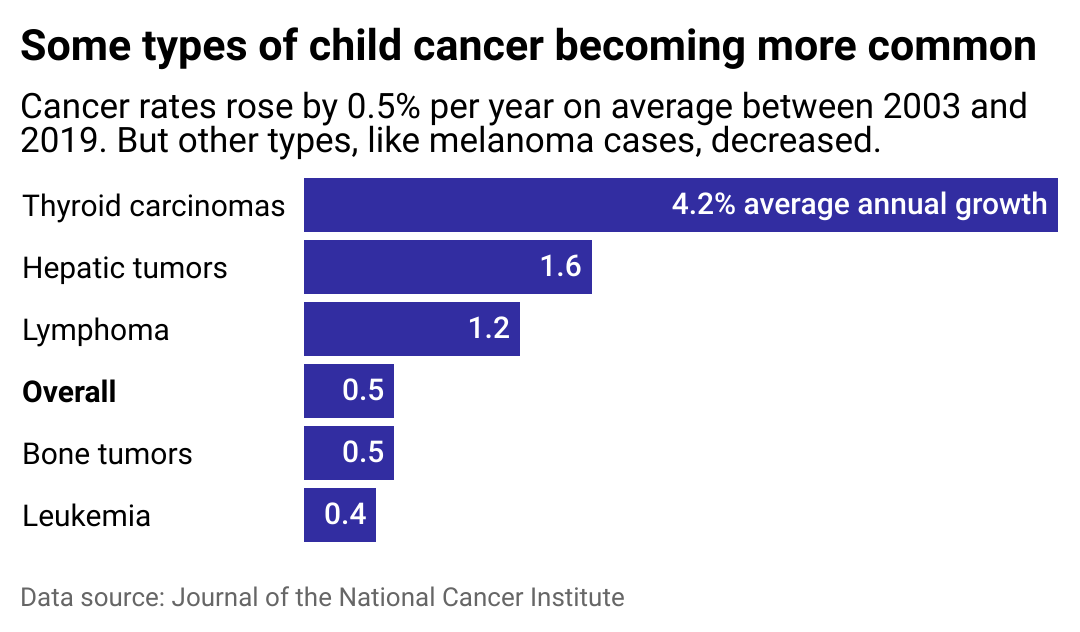
Some cancers are becoming more common
According to the National Cancer Institute, other environmental exposures have also been linked to the rise in pediatric cancers. For example, exposure to ionizing radiation, which most commonly comes from X-ray machines and other medical devices as well as radioactive material found in soil, can lead to cancer in children.
Thyroid carcinomas, which saw the highest levels of growth, may be rising due to advanced technology leading to increased detection and. This type of cancer is very low risk and doesn't often need treatment. Overdiagnosis occurs when screening tests lead to a diagnosis when detection and treatment are unnecessary. The rise of certain lymphoma cancers may be attributed to the World Health Organization's 2008 redefinition of certain cancers and their diagnostic criteria. Alternatively, melanoma cases may have decreased due to public health interventions concerning sun protection, resulting in less ultraviolet light exposure.
Additional writing by Kelly Glass. Story editing by Ashleigh Graf. Copy editing by Kristen Wegrzyn.