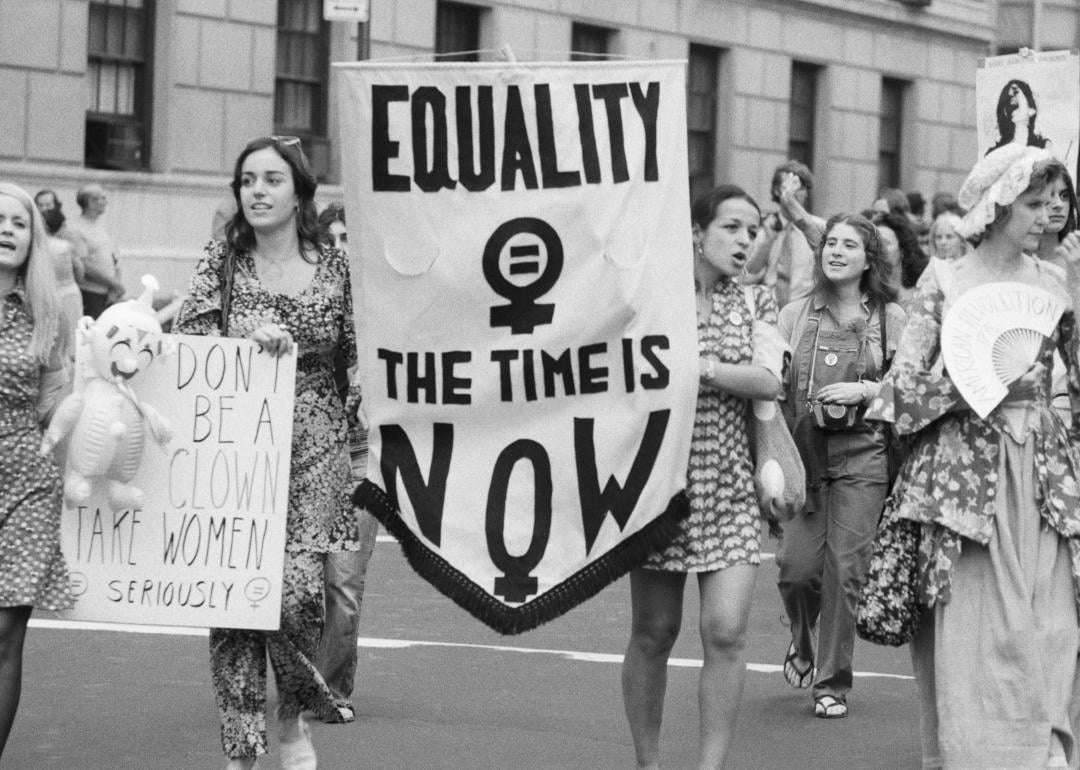
Is there gender bias in mental health care? Here's what the data shows
Is there gender bias in mental health care? Here's what the data shows
The mental health of those who do not identify as men has long been misunderstood and stigmatized, even leading to disproportionately harsh treatment. In ancient times, ""鈥攄erived from the Greek word for "uterus"鈥攚as coined to describe a range of symptoms seen as unusual for women, from heightened emotions to seizures, for which treatment included sex. A stigma associated with the term has persisted well into the modern age. The condition was only from the Diagnostic and Statistical Manual of Mental Disorders (DSM) in 1980.
Incredibly, women were largely excluded from scientific health care research before 1990 and weren't required to be included in National Institutes of Health-funded studies with humans . This long-time research disparity has contributed to and for those who don't identify as men.
To assess how gender bias impacts mental health care, looked at the numbers, including statistics on medication prescription rates across genders and data on cost-related barriers faced by women seeking mental health care.
It's important to note that the data included in this article was collected using a binary understanding of , excluding important information about non-binary and transgender people. This exclusion reinforces health care disparities for gender-diverse people, deepening the they already face when seeking care.
The wage gap makes mental health care less accessible for those who don't identify as men
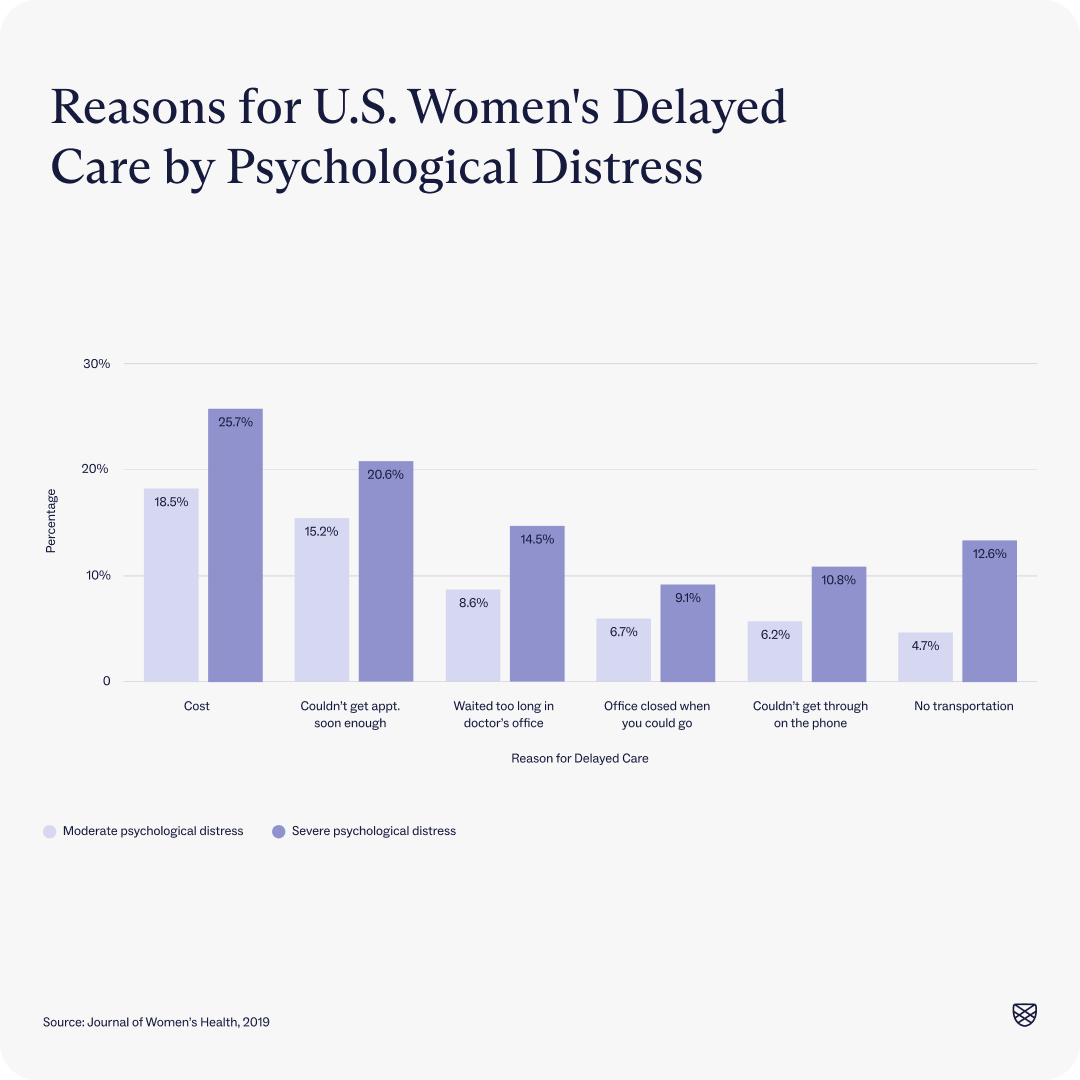
Women earn about on average, with larger gaps for women of color, women with disabilities, and . Income is both a for mental health issues, according to the American Psychiatric Association, and makes accessing care more challenging. Essentially, those who aren't men face disproportionate cost-related barriers when it comes to accessing mental health care because of the wage gap. to this effect found that cost is the greatest barrier to accessing timely mental health care for women experiencing moderate psychological distress and severe psychological distress.
The dearth of female mental health providers may impact patient outcomes
While increasing numbers of women are , there are still more male physicians, especially in certain fields. Data shows that this provider imbalance can actually impact patient outcomes. In cardiology, for instance, only about providers is a woman, leading to, at times, dire consequences. Female cardiology clients are less likely to get the when risk factors go unmanaged and are more likely to if treated by male doctors, studies show.
Gender concordance (when a physician and patient have the same gender) is also missing for clients who aren't men in parts of the mental health care landscape. A found that, although half of the U.S. population is female, just over one-third of practicing psychiatrists are female, with much lower rates for people (and women) of color. While there's not much research specifically on gender concordance and mental health care outcomes, that other kinds of concordance between providers and clients do affect mental health care results.
Women are more likely to be prescribed medication for mental health conditions than men
Research shows that women and men have similar rates of mental health conditions, but there are differences in the way people of those genders receive treatment. For instance, women are to be prescribed psychotropic medications than men.
Women are also more likely to be diagnosed with depression
Another difference in the treatment provided to women as compared to men comes at the point of diagnosis. that medical professionals are more likely to diagnose women with depression than men, even when both genders have the same symptoms or similar scores on .
How to address gender bias in mental health care
Addressing gender bias in mental health care is, first and foremost, a systemic issue. Above all, providers, researchers, and lawmakers need to raise awareness of how gender bias impacts treatment and advocate for equitable services across the board. Below are some other steps that can be taken to address gender bias in mental health care.
Consider sex and gender in research
Many studies don't account for outcome differences based on sex or gender, but this so-called "neutral" research overlooks important differences that may impact treatment outcomes. For instance, women of childbearing age are regularly left out of drug-related studies and trials (despite many pregnant women using antidepressants during pregnancy), leading to information on psychotropic medication use during pregnancy. Similarly, mental health research often overlooks gender-specific factors like . Research funding and academic leadership play a role in this gender-neutral approach, and are calling for a shift towards considering sex and gender in mental health research to improve treatment outcomes.
Improve mental health literacy
Having an understanding of mental health conditions and mental health care options can actually improve mental health outcomes. According to , increased mental health knowledge is correlated with recognizing the need for mental health care and seeking mental health care when needed. Although women tend to seek mental health care more often than men, mental health literacy remains an important tool for ensuring people of all genders get the care they need.
Seek gender-affirming mental health care
It's important to connect with a mental health care provider who is and committed to meeting your needs. One way to do this is to specifically look for providers or organizations .
was produced by and reviewed and distributed by 麻豆原创 Media.