
What 16 therapists wish you knew before your first session
Starting therapy for the first time feels like stepping into the unknown: sitting in a waiting room, wondering what you may have gotten yourself into, with a head full of assumptions about what therapy is “supposed” to look like.
Maybe you’re picturing yourself on a couch while a distant therapist scribbles notes and asks, “How does that make you feel?” Or maybe you’re wondering if therapy will actually work, if you’ll click with your therapist, or how long it’ll take before you feel different.
The reality is that therapy looks different for everyone, and no two journeys are exactly alike. But one thing does apply to everyone: Therapy has the power to genuinely change your life.
Whether you’re still on the fence or already have your first appointment scheduled, hearing directly from therapists can help you feel more prepared for what’s ahead. That’s why asked 16 mental health professionals this simple question: “What’s one thing you wish people knew before they started therapy?”
Their answers might surprise you.
1. You don’t need to be in crisis to start.
You don’t need to be in crisis to benefit from therapy. It can help you better understand yourself, develop , and improve your relationships. While it can be hard to prioritize yourself and make space for therapy, once you start, you’ll often find you can navigate life’s challenges more effectively—and the support can have lasting impact.
– , licensed marriage and family therapist and board-certified art therapist
2. There’s no ‘right’ way to do it.
There’s no “right” way to use therapy. Some people worry about what to talk about or how to bring things up, but the best way to use therapy is however you want or need it. Your therapist will meet you where you are while gently challenging you along the way. You can even talk with your therapist about how to best use your time together.
– , licensed clinical social worker
3. Progress happens in small steps.
Progress usually comes in small, incremental steps rather than sudden breakthroughs. Embracing this perspective helps you stay engaged in the process and builds the resilience and openness to change that are essential for lasting benefits.
– , licensed clinical social worker at Thriveworks
4. Prepare to feel everything.
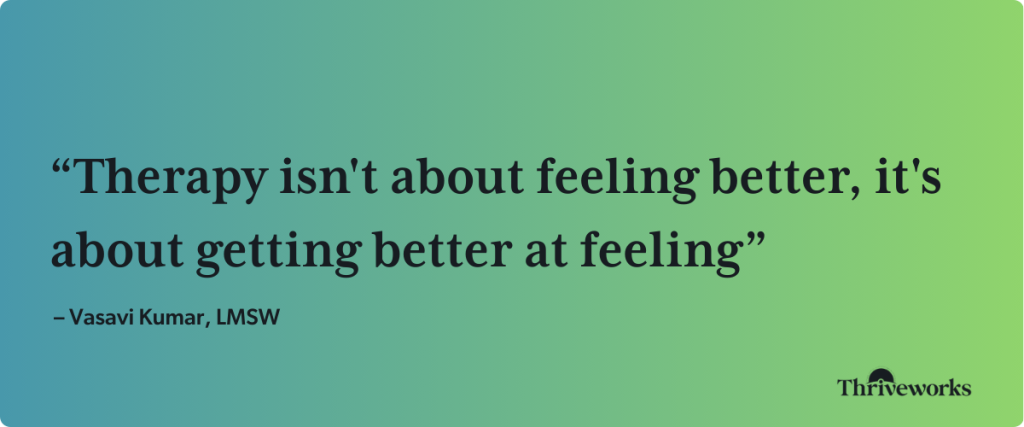
Therapy isn’t about feeling better, it’s about getting better at feeling. If you’re looking for quick relief, therapy will frustrate you. But if you’re ready to sit in discomfort, get radically honest, and take responsibility for your life, therapy will change everything.
– , licensed master social worker and author of “”
5. Finding the right therapist is like dating—you might need a few tries.
You can be picky when . The therapeutic relationship is the most important part of therapy, so if you don’t feel connected to your therapist or they’re just “OK,” it’s probably not the best match. You deserve someone you actually like and feel seen by.
– , licensed clinical social worker
6. It’s about finding yourself, not fixing yourself.
Therapy isn’t really about reducing symptoms. It’s about realizing you aren’t the symptoms themselves. It’s about working with the symptoms and helping you find the human behind them. It takes hard work, but the result is both control and a new understanding of yourself.
– , registered psychological associate and author of “”
7. Your therapist wants you to speak up.
You are the expert on you. I always encourage self-advocacy because you know yourself better than anyone. It’s always OK to ask for a new therapist if you’re not comfortable or request different interventions that better fit your lifestyle. Therapy should be a safe space for you to be your truest self with absolutely no judgment.
– , licensed clinical social worker candidate at Thriveworks
8. You’re ‘choosing your hard’ either way.
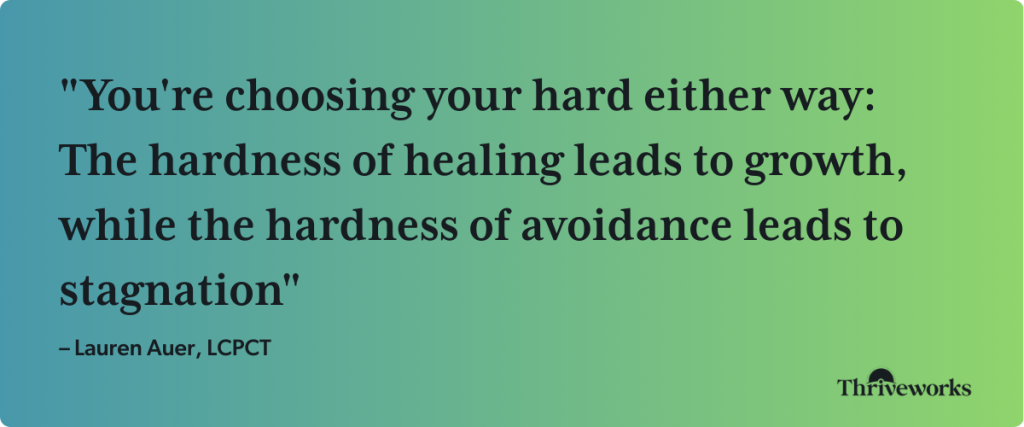
It’s hard to begin therapy and lean into the healing work: confronting painful emotions, examining difficult patterns, challenging long-held beliefs. But it’s also hard to resist healing: carrying unresolved trauma, maintaining unhealthy coping mechanisms, navigating life with limited emotional tools. The difference is that the hardness of healing leads to growth, while the hardness of avoidance leads to stagnation. Therapy isn’t about eliminating difficulty from your life; it’s about choosing difficulties that transform you rather than deplete you.
– , licensed clinical professional counselor
9. The real work happens between sessions.
Therapy isn’t a “magic cure.” Yes, it can help, but the sessions themselves aren’t what lead to change. It’s what you do between sessions with the content from those sessions that helps you reach your goals.
– , licensed psychologist at Thriveworks
10. Therapy only works if you’re honest.
Therapy is a two-way street. Your therapist is there to guide and support you, but they can’t read your mind. You’ll need to be open and honest for therapy to really work. There will be moments that feel uncomfortable or tough, but that’s part of the process. Therapy works best when you can be yourself without holding back.
– , licensed marriage and family therapist
11. You are always in control.
You will not be asked to surrender control. Many people don’t know what to expect and fear that someone else will take control. As clinicians, we’re here to help you learn more about what’s troubling you and how to manage it within a collaborative relationship. So speak up if you need something different, have questions, or if something isn’t working.
– , psychiatric-mental health nurse practitioner at Thriveworks
12. Discomfort means it’s working.
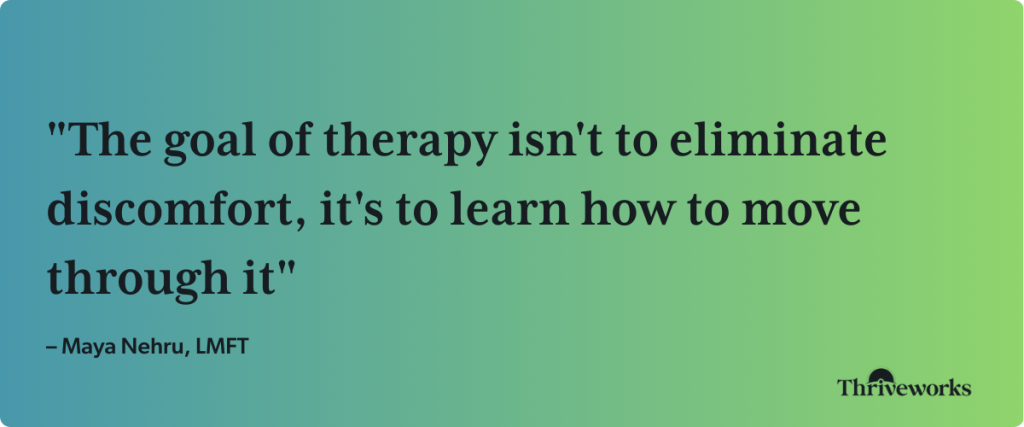
There is no change without resistance. Our bodies and minds are wired for familiarity, even when that familiarity is uncomfortable. Resistance to therapy isn’t a sign that you’re failing; it’s a sign you’re moving toward something different. The goal isn’t to eliminate discomfort, it’s to learn how to move through it instead of letting it pull you back to what’s familiar.
– , licensed marriage and family therapist
13. Don’t let one bad experience stop you.
If you have a negative experience with a therapist, don’t let it deter you from your healing journey. Allow yourself time to pause if needed, then continue searching for a therapist who aligns with your needs and provides the support you deserve.
– , licensed clinical social worker
14. Give yourself permission to struggle.
Give yourself permission to struggle with the process of change. The struggle means you’re challenging your old ways of thinking, feeling, and behaving. It’s uncomfortable at first, but once new thoughts, feelings, and behaviors become your new norm, the rewards are greater satisfaction with yourself and others.
– , licensed clinical social worker at Thriveworks
15. True healing takes time.
Therapy is not a quick fix, but a lifelong tool for growth. Many people expect immediate solutions or think their challenges will disappear overnight—but healing takes time. It’s about uncovering layers, understanding patterns, and giving yourself space to process emotions safely. It’s normal to have ups and downs throughout the process.
– , licensed clinical social worker
16. Your therapist is grateful you’re there.
We are incredibly grateful for you. It takes immense courage to sit down with a stranger and talk about things affecting your mental, physical, and emotional health. I don’t take it for granted that I’ve been given this role, and I’m honored that you’re taking this journey with me.
– , licensed mental health counselor at Thriveworks
was produced by and reviewed and distributed by Â鶹ԭ´´.