Why aging causes flu-like body aches in women
You wake up feeling like you鈥檝e run a marathon, even though you didn鈥檛 work out. Your body feels heavy, sore, and achy鈥攁lmost like you鈥檙e coming down with something. But you鈥檙e not sick. What鈥檚 happening?
More than of women in midlife experience body aches, whole-body muscle soreness, muscle fatigue, stiff or swollen joints, aching bones, and other pain symptoms.
鈥淭hese kinds of discomforts are a very real and often frustrating part of the journey that can come on gradually and insidiously,鈥� explains Natalie Kunsman, M.D., a family medicine physician who treats women in this age group.
Many chalk it up to old age or arthritis, but hormones are often to blame, reports.
If you鈥檙e in your 40s and have never felt these sensations before, plus you鈥檙e having 鈥�, , , , , , and 鈥攖hen signs point to hormonal fluctuations.
How Hormones Drive Body Aches
As estrogen and progesterone decline in midlife, the body鈥檚 balance shifts in ways that can make you more sensitive to pain.
Estrogen keeps muscles and bones strong, lubricates joints, and . When levels drop, it can lead to increased stiffness, muscle soreness, and joint pain, explains women鈥檚 health expert and OB-GYN Kecia Gaither, M.D.
on the nervous system and helps dial down pain. When it declines, pain receptors become more active.
Together, low estrogen and progesterone prime the body for pain.
Orthopedic surgeon and aging specialist Vonda Wright, M.D, first coined the term 鈥渕usculoskeletal syndrome of menopause鈥� in a to describe the constellation of muscle, joint, and bone pain that comes with declining estrogen levels during the menopausal transition. Her research was the first to validate the experiences of many women who report feeling like their bodies are 鈥渇alling apart鈥� despite no obvious injury.
The Pain鈥揑nflammation Loop
Lower estrogen doesn鈥檛 just stiffen joints鈥攊t can also affect the immune system, ramping up 鈥淲hen estrogen levels start to fluctuate, it can raise histamine levels [which stimulates inflammation] and disrupt the regulation of anti-inflammatory cytokines (signaling proteins), leading to muscle and joint stiffness,鈥� Kunsman says.
Add in muscle loss from declining estrogen and reduced activity, and the pain cycle can intensify. Weaker muscles provide less support for joints, leading to instability and discomfort.
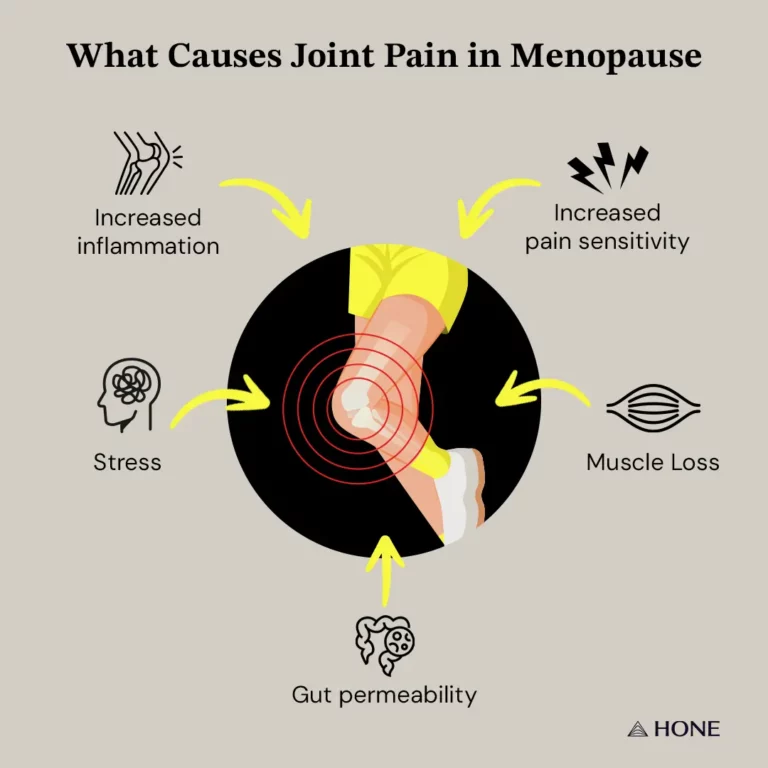
Some women also notice heightened pain sensitivity. 鈥淗ormones, especially estrogen, modulate pain signals,鈥� Kunsman says. 鈥淲hen estrogen drops, pain perception may increase.鈥� This may explain why chronic pain conditions such as fibromyalgia often first appear or worsen during the transition to menopause.
Fluctuating estrogen levels can also disrupt gut bacteria that help regulate hormones, triggering inflammation and contributing to bloating, fatigue, and body-wide aches.
Chronic stress compounds the problem by raising cortisol and lowering recovery hormones, creating a vicious cycle where stress and pain feed each other.
Lifestyle fixes that help
Before turning to medication, both doctors recommend addressing the root cause through movement, nutrition, and stress management.
Move more
Staying active protects against muscle loss and helps control inflammation. preserves lean muscle mass, while moderate aerobic activity lowers pro-inflammatory markers. also releases endorphins鈥攖he body鈥檚 natural painkillers. 鈥淚f you鈥檙e starting new workouts, make sure to stretch and recover between sessions,鈥� says Kunsman.
Adjust your diet
A of proven , including avocados, berries, broccoli, dark chocolate, , mushrooms, and olive oil can help calm inflammation.
Minimize processed foods, refined sugars, and alcohol. Gaither suggests adding foods with phytoestrogens (like soy and flaxseed) to mimic estrogen鈥檚 positive effects, and plenty of calcium and vitamin D to protect bones.
Support your gut
Hormone shifts also alter gut bacteria, which can increase inflammation and pain. 鈥淪upporting gut health with probiotics and fiber helps restore balance,鈥� says Gaither.
Manage stress
Feeling calm and in control helps keep cortisol in check, which helps prevent and ease stress-induced inflammation and body aches. Try yoga, walking, deep breathing or meditation and mindfulness. These improve mood-enhancing hormones and activate the , which helps your body relax.
When to Consider Hormone Therapy
Hormone replacement therapy (HRT), also commonly called (MHT), typically involves estrogen or a . In some cases, is added to improve muscle mass, libido, , , and bone density.
MHT is to help relieve debilitating menopause symptoms, including hot flashes, , and joint pain. A study in the journal also found that women who took suffered less joint pain even though they had more joint swelling.
was produced by and reviewed and distributed by 麻豆原创.