Why veterans with PTSD are turning to psychedelics
When Marcus Capone retired from active duty in 2013 after 13 years as a Navy SEAL and explosives breacher, he had a hard time reintegrating into family life, reports. “I was struggling to find solace, purpose, or peace,” he recalls. “I wasn’t getting along with my wife and kids, nothing was working out.” Four years later, he reached a breaking point: “Time was running out; I was thinking about suicide.”
Traditional therapy and a rotating cast of antidepressants and mood stabilizers brought no relief. Prescribed “a host of medications for almost seven years,” he says he found himself only sliding further into despair. Like the roughly 30% of major depression patients deemed treatment-resistant, Capone felt trapped.
Then his wife Amber suggested what seemed a last-ditch, even desperate, gamble: psychedelic medicine. A friend in the Army had found relief from post-traumatic stress — could it help him, too? “I said, ‘What the heck?’” Capone remembers. “I’ve tried just about everything else, nothing really worked.”
On Veterans Day 2017, Capone crossed from San Diego into Mexico to try ibogaine, a potent, naturally occurring alkaloid long used in African healing rituals. Though illegal in the U.S., it’s offered in clinics just south of the border — in Tijuana and beyond — where active duty and retired service members quietly seek it out to treat drug addiction and mental health issues. The substance is unregulated in Mexico, Costa Rica, the Bahamas, and other countries where treatment centers offer psychedelics therapy in a legal gray area. In Canada, doctors can prescribe it for medical use.
For Capone, the transformation after the one-time treatment was immediate: “Within two-and-a-half days, I felt like the weight of the world lifted off my shoulders,” he says. “The fog completely disappeared. I was able to focus, process information and make decisions, things that I was having trouble doing prior to treatment. My cognitive abilities returned.” His wife describes it as “reuniting with someone I hadn’t seen in 15 years.”
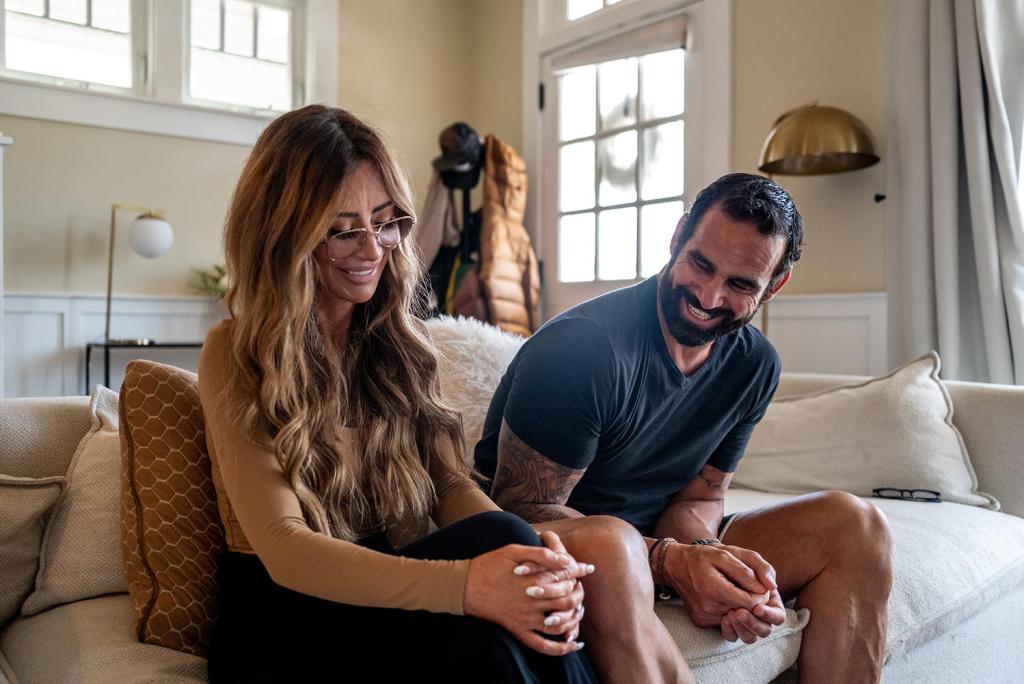
Determined to “pay it forward,” in 2019 Marcus and Amber Capone, pictured above, founded (Veterans Exploring Treatment Solutions), a nonprofit that sponsors psychedelic treatment for veterans. The treatments can be quite expensive, starting around $5,000 and going up to $15,000 if a client has an opioid addiction and needs detox first. “If you include all the preparation, treatment and integration, it’s roughly $12,500 per individual,” Capone calculates, but to him, the results justify the effort: “It’s really a drop in the bucket to change someone’s life completely.”
To date, VETS has sponsored over 1,000 treatments, but the demand is far greater: Over 250 veterans and athletes apply each month. Prospective clients are screened for health risks, including heart conditions and a history of psychosis in the family, risk factors prohibitive for psychedelic treatment. In 2014, a 42-year-old woman from Norway died in a Costa Rica clinic from a after taking ibogaine. Therefore, clinics combine the treatment with an intravenous drip of magnesium to protect the heart, and a cardiologist is always on-site just in case, according to Capone.
VETS partnered with the authors of a recent that examined 30 U.S. special forces veterans with a history of traumatic brain injury (TBI). The study found ibogaine effective for dramatic, sustained improvements: average reductions of 88% in post-traumatic stress symptoms, 87% in depression, and 81% in anxiety one month post-treatment. “No other drug has ever been able to alleviate the functional and neuropsychiatric symptoms of traumatic brain injury,” says the lead author, Stanford psychiatry professor . “Formal cognitive testing also revealed improvements in participants’ concentration, information processing, memory, and impulsivity.” with animals suggest that the drug can repair and reconfigure neural networks in the brain.
“I almost felt a defragging of my brain,” Capone says of the experience in the yet to be released documentary . “All the walls you put up, all the body armor, the ego, all that goes away.”
The study found no adverse effects of the treatment, and Capone, too, says that while not every participant got better, at least no one got worse.
“I went from being constantly angry and feeling alone, burdened by the trauma of war and the loss of 12 friends to suicide, to finding a renewed sense of hope and peace,” Patrick Flatley, a U.S. Army Green Beret veteran and study participant. “The turning point was ibogaine treatment. Today, I am grateful to sleep well, live without daily fight or flight reactions, and look forward to life with newfound hope.”
Before jumping on a bus to Mexico, people should know that most participants describe the ibogaine treatment as harrowing, challenging, and extremely unpleasant. “It can be very deep, very dark and very emotional, potentially scary,” says Capone, who describes his own experience as “complete chaos, chainsaws buzzing.” It makes some participants physically ill: “Many people get sick on ibogaine, many puke, they’re re-experiencing traumatic experiences.”
Therefore, the clinics that offer ibogaine in Mexico follow the trip with another treatment: Participants smoke , a psychedelic derived from a toad, which has been nicknamed “the God molecule” because it tends to ignite spiritual opening and feelings of bliss. Capone describes the experience as “extremely uplifting and spiritual.” He emerged, he says, as “the pure version of an individual that loves everything.”
But ibogaine is not the only option. Other studies have found effective for veterans with treatment-resistant depression. Some VETS clients choose to undergo treatment with ketamine, which is legal in the U.S., others ayahuasca, psilocybin, or MDMA, more popularly known as Ecstasy. Capone says while the veterans undergo treatment, their spouses often attend a psilocybin retreat to process their own traumas and improve their mental health.
“Each tool has its own use. Ketamine is very effective in reducing suicidality immediately because it’s the fastest-acting antidepressant, while the others may do a deeper job getting to the root cause of trauma,” Capone notes.
None of the scientists and veterans I spoke with recommended legalizing psychedelics, but all of them are in favor of making it available for medical purposes, as Oregon and Colorado already do, and they call for . Texas just launched the largest publicly funded psychedelic research initiative in history with a for drug development trials with ibogaine.
is another veteran who was helped so much by psychedelic treatment that he made it his mission to work full-time as a facilitator for psychedelic-assisted therapy. The former Marine has worked as a therapist at the Portland VA Medical Center for veterans seeking MDMA and psilocybin therapies within the Veterans Health Administration in Oregon. Now a doctor of psychology, he even traveled to Ukraine to treat traumatized soldiers there, convinced that psychedelics can lead to a breakthrough in “dealing with PTSD or traumatic brain injuries that cannot be achieved with other kinds of therapy.”
Most patients who come to him seeking treatment are “folks who already tried all kinds of other therapies, the majority has engaged in a decade or more of standard clinical care,” he says. But he warns against seeing psychedelics as a magic bullet: “Most people who show up with really great outcomes have also done a lot of personal work on themselves before stepping into psychedelics.”
Skiles has worked with over 400 veterans and is cooperating with researchers trying to better understand the science behind psychedelics and PTSD. He says many people with post-traumatic stress experience a kind of “over-activation” in the frontal lobe of their brains. Psychedelics, he says, impact the brain’s serotonin receptors and help restore the chemical balance.
His favorite example is the treatment of a Navy SEAL with 53 lesions on his brain from blast injuries. “His endocrine system had shut down,” Skiles explains. “Two regimens of psychedelics reset his endocrine system, and his body started producing the hormones again [that] he needed to function.”
The fact that 17 veterans take their own lives in the U.S. every day creates an urgency to find treatments that work for them, and Capone hopes to also include more athletes with traumatic brain injuries. “I’ve been to too many memorials and funerals of colleagues, friends and teammates,” he says.
Like Skiles, Capone emphasizes the need for a controlled, medical setting, with adequate preparation and integration coaching. Under the right conditions, he says, “it’s almost miraculous, but we don’t want to call it that because miracles can scare people.”
If you or someone you know is struggling with mental health, the by phone, text message, or .
was produced by and reviewed and distributed by Â鶹ԭ´´.