State mottos, translated: What your state’s official motto really means
State mottos, translated: What your state’s official motto really means
Every U.S. state has its own seal, a carefully designed emblem that is stamped on official documents, flags, and even courtroom walls. However, hidden in plain sight are also mottos that reveal each state’s values, history, and self-image. From bold declarations of independence to humble nods towards faith, nature, and even resilience, these mottos form a sort of secret code. has decrypted this code by outlining all 50 state mottos, categorized by theme, providing insights into the story behind the seals.
50 state mottos by theme
When you line up all 50 state mottos, patterns start to emerge. Some celebrate liberty and freedom, others honor unity, progress, or nature, and some still pay homage to something more. Together, of American ideals that reflect the country’s regional diversity and shared spirit.
Theme 1: Liberty and freedom (14 states)
Two defining traits of the country, liberty and freedom, are recognized in the mottos of 14 states.
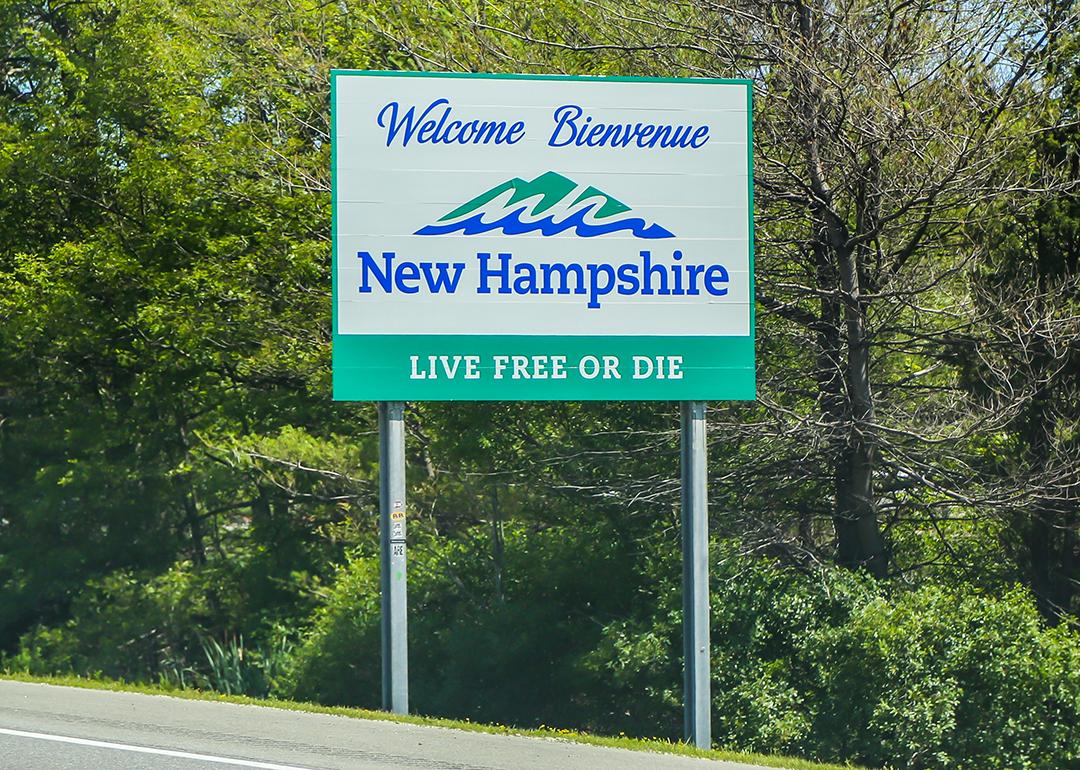
New Hampshire – “Live Free or Die”
- Origin: Revolutionary War Gen. John Stark wrote this as a toast to veterans in 1809, emphasizing that freedom is worth dying for; it was officially adopted in 1945.
Virginia – Sic Semper Tyrannis
- Translation: Thus Always to Tyrants
- Origin: George Mason recommended this in 1776 for the state seal. The phrase warns that tyrannical rulers will inevitably fall, and is possibly attributed to Marcus Brutus after Caesar’s assassination.
Massachusetts – Ense Petit Placidam Sub Libertate Quietem
- Translation: By the Sword We Seek Peace, But Peace Only Under Liberty
- Origin: The Massachusetts Provincial Congress adopted this motto in 1775 during the Revolutionary War. It is attributed to English patriot Algernon Sidney from his 1659 “Book of Mottoes.”
West Virginia – Montani Semper Liberi
- Translation: Mountaineers Are Always Free
- Origin: This motto reflects the independent spirit of West Virginia’s mountain settlers and their resistance to outside control.
Delaware – “Liberty and Independence”
- Origin: The state motto reflects Delaware’s role in the Revolutionary War and its status as the first state to ratify the U.S. Constitution in 1787.
Pennsylvania – “Virtue, Liberty, and Independence”
- Origin: Pennsylvania’s motto combines moral virtue with the revolutionary ideals that shaped the state’s founding.
New Jersey – “Liberty and Prosperity”
- Origin: The state motto balances personal freedom with economic opportunity, the core values of New Jersey’s colonial settlers.
Iowa – “Our Liberties We Prize and Our Rights We Will Maintain”
- Origin: This motto declares Iowa’s commitment to defending personal freedoms and constitutional rights.
Oregon – Alis Volat Propriis
- Translation: She Flies With Her Own Wings
- Origin: Judge Jessie Quinn Thornton wrote this motto in 1854, referring to the Oregon Territory’s 1843 vote to form a provisional government independent of the U.S. and Britain. It was readopted in 1987 after the motto was changed to “The Union” during the Civil War.
North Carolina – Esse Quam Videri
- Translation: To Be, Rather Than to Seem
- Origin: North Carolina’s motto emphasizes authenticity and genuine character over appearances.
Maine – Dirigo
- Translation: I Direct or, I Guide
- Origin: Maine adopted its motto in 1820, which is inspired by the North Star and Maine’s many lighthouses that guided ships, symbolizing leadership.
Alabama – Audemus Jura Nostra Defendere
- Translation: We Dare Defend Our Rights
- Origin: This motto was approved in March 1939, and reflects Alabama’s history in the War of Independence and Civil War.
Louisiana – “Union, Justice, and Confidence”
- Origin: The state motto represents Louisiana’s values of unity, fairness, and trust in governance.
Kentucky – “United We Stand, Divided We Fall”
- Origin: Kentucky’s motto comes from John Dickinson’s 1768 “The Liberty Song,” favored by the state’s first governor, and is especially significant considering Kentucky was a border state during the Civil War.
Theme 2: Unity and progress (12 states)
Unity and progress represent a forward-looking view, which 12 states acutely incorporate into their seals via their mottos.
Illinois – “State Sovereignty, National Union”
- Origin: This motto was born from debates during the War of Independence and Civil War about balancing state independence with federal unity.
North Dakota – “Liberty and Union, Now and Forever, One and Inseparable”
- Origin: The state inherited this motto from the Dakota Territory before North Dakota and South Dakota split in 1889.
Vermont – Stella Quarta Decima Fulgeat
- Translation: May the Fourteenth Star Shine Bright
- Origin: Vermont was the 14th state admitted to the Union in 1791.
Nevada – “All for Our Country”
- Origin: This state motto reflects patriotism and Nevada’s role in supporting the Union during the Civil War.
New York – Excelsior
- Translation: Ever Upward
- Origin: This motto expresses the hopes and ambitions of New Yorkers after the War of Independence
Wisconsin – “Forward”
- Origin: Wisconsin’s motto was chosen in 1851 during the revision of the state seal, reflecting progressive optimism.
Alaska – “North to the Future”
- Origin: Journalist Richard Peters chose this motto in 1967 during the Alaska Purchase Centennial to represent “Alaska as a land of promise” and northern opportunity.
New Mexico – Crescit Eundo
- Translation: It Grows as It Goes
- Origin: This motto symbolizes New Mexico’s continuous growth and development.
Kansas – Ad Astra Per Aspera
- Translation: To the Stars Through Difficulties
- Origin: This phrase was submitted by Sen. John J. Ingalls in 1861. It refers to Kansas’s long, difficult path to statehood due to slavery disputes, illustrated on the state seal with a farm beneath 34 stars.
Idaho – Esto Perpetua
- Translation: Let It Be Perpetual
- Origin: This motto wishes for Idaho’s eternal existence and prosperity.
Indiana – “The Crossroads of America”
- Origin: Adopted in 1937, the state motto highlights Indiana’s central location and importance in transportation.
Texas – “Friendship”
- Origin: Texas adopted this motto in 1930. It derives from the Caddo Indian word “taysha,” meaning “friends” or “allies,” which became the state’s name when Spanish explorers encountered the Caddo people in the 17th century.
Theme 3: Nature and resources (5 states)
Given the vast landscapes across the country, it’s only right that the following five states would include an homage to their natural beauty.
Montana – Oro Y Plata
- Translation: Gold and Silver
- Origin: This motto references Montana’s mineral wealth, matching its nickname “The Treasure State.”
California – Eureka
- Translation: I Have Found It
- Origin: “Eureka” is a Greek word that has appeared on California’s seal since 1849, celebrating the discovery of gold during the Gold Rush. It has been the official motto since 1963.
Michigan – Si Quaeris Peninsulam Amoenam Circumspice
- Translation: If You Seek a Pleasant Peninsula, Look About You
- Origin: This phrase celebrates Michigan’s beautiful peninsular geography.
Minnesota – L’Étoile du Nord
- Translation: The Star of the North
- Origin: The French motto “L’Étoile du Nord” highlights Minnesota’s northern location.
Hawai'i – Ua Mau ke Ea o ka ʻĀina i ka Pono
- Translation: The Life of the Land Is Perpetuated in Righteousness
- Origin: King Kamehameha III read this motto aloud on July 31, 1843, when Hawaiian sovereignty was restored after a brief British occupation; it was adopted as the state motto in 1959.
Theme 4: Industry & work (6 states)
Serving as the historical workhorses of the country, the following six states show their pride through their mottos.
Tennessee – “Agriculture and Commerce”
- Origin: This motto has been official since 1801, and recognizes Tennessee’s large agriculture sector and trade economy.
Oklahoma – Labor Omnia Vincit
- Translation: Hard Work Conquers All Things
- Origin: The state’s motto emphasizes the value of labor and perseverance; ironically, only 38% of Oklahoma residents could identify their motto in a .
Utah – “Industry”
- Origin: Utah’s motto became official in 1959, and is connected to the beehive symbol representing hard work, community cooperation, and pioneer values from the Book of Mormon word “deseret” (meaning honeybee).
Wyoming – “Equal Rights”
- Origin: Wyoming was the first territory to grant women the right to vote in 1869 and the first state to guarantee equal suffrage in its 1890 constitution, earning it the nickname "Equality State."
Georgia – “Wisdom, Justice, and Moderation”
- Origin: Georgia’s motto reflects balanced governance principles.
Nebraska – “Equality Before the Law”
- Origin: The motto for Nebraska emphasizes fair legal treatment for all citizens.
Theme 5: Faith and divine providence (8 states)
As some of the evangelical centers of the United States, the following eight states reflect this.
Ohio – “With God, All Things Are Possible”
- Origin: This motto was the winning suggestion by a 12-year-old boy in a 1950s contest. It survived a 1997 ACLU lawsuit challenging the separation of church and state when a judge ruled it was a generic religious reference.
Florida – “In God We Trust”
- Origin: Florida adopted the U.S. national motto, which was established in 1956.
South Dakota – “Under God the People Rule”
- Origin: South Dakota’s motto combines divine authority with democratic governance.
Arizona – Ditat Deus
- Translation: God Enriches
- Origin: This motto attributes Arizona’s natural resources and prosperity to divine blessing.
Colorado – Nil Sine Numine
- Translation: Nothing Without Providence
- Origin: This phrase acknowledges divine guidance in Colorado’s success.
Connecticut – Qui Transtulit Sustinet
- Translation: He Who Transplanted Still Sustains
- Origin: Connecticut’s motto first appeared on the 1639 colonial seal, making it one of America’s oldest mottos. It refers to the Puritan belief that God, who transplanted them to the New World, continues to sustain them, possibly inspired by Psalm 80.
Maryland – Fatti Maschii, Parole Femine
- Translation: Manly Deeds, Womanly Words (or Strong Deeds, Gentle Words)
- Origin: The Italian phrase is from the Calvert family, who were among Maryland’s initial colonizers.
Missouri – Salus Populi Suprema Lex Esto
- Translation: The Welfare of the People Is the Highest Law
- Origin: William Wells proposed this motto in 1847 when designing the state seal, inspired by Cicero’s “De Legibus.”
Theme 6: Resilience and defense (5 states)
Finally, resilience and defense are two cornerstones of America. The following five states demonstrate this through their unique mottos.
Mississippi – Virtute et Armis
- Translation: By Valor and Arms
- Origin: The state motto emphasizes courage and military strength.
Arkansas – Regnat Populus
- Translation: The People Rule
- Origin: This phrase affirms popular sovereignty and democratic governance.
South Carolina – Animis Opibusque Parati; Dum Spiro Spero
- Translation: Prepared in Mind and Resources; While I Breathe, I Hope
- Origin: South Carolina has two mottos on its state seal — one emphasizing preparedness and the other expressing hope and perseverance.
Washington – Al-ki
- Translation: By and By
- Origin: “Al-ki” is a Chinook word meaning “eventually” or “someday,” reflecting patient optimism — though it was never formally adopted by the legislature.
Rhode Island – “Hope”
- Origin: This motto was adopted in 1664 and was later formalized in 1875. It was likely inspired by the biblical phrase “hope we have as an anchor of the soul” (Hebrews 6:18-19). Colony founder Roger Williams also named islands in Narragansett Bay, including Hope, Patience, and Prudence, after virtues.
Decoding the spirit of the state seals
State mottos may be short, but they carry centuries of meaning baked within. These mottos serve as tiny phrases that capture the hopes, struggles, and character of the people who chose them. Whether rooted in revolution, resilience, or even reverence, each motto offers a unique glimpse into what mattered most to that state’s specific founders and what still resonates today.
was produced by and reviewed and distributed by Â鶹ԭ´´.