Districts nationwide continue to face school bus driver shortages
Districts nationwide continue to face school bus driver shortages
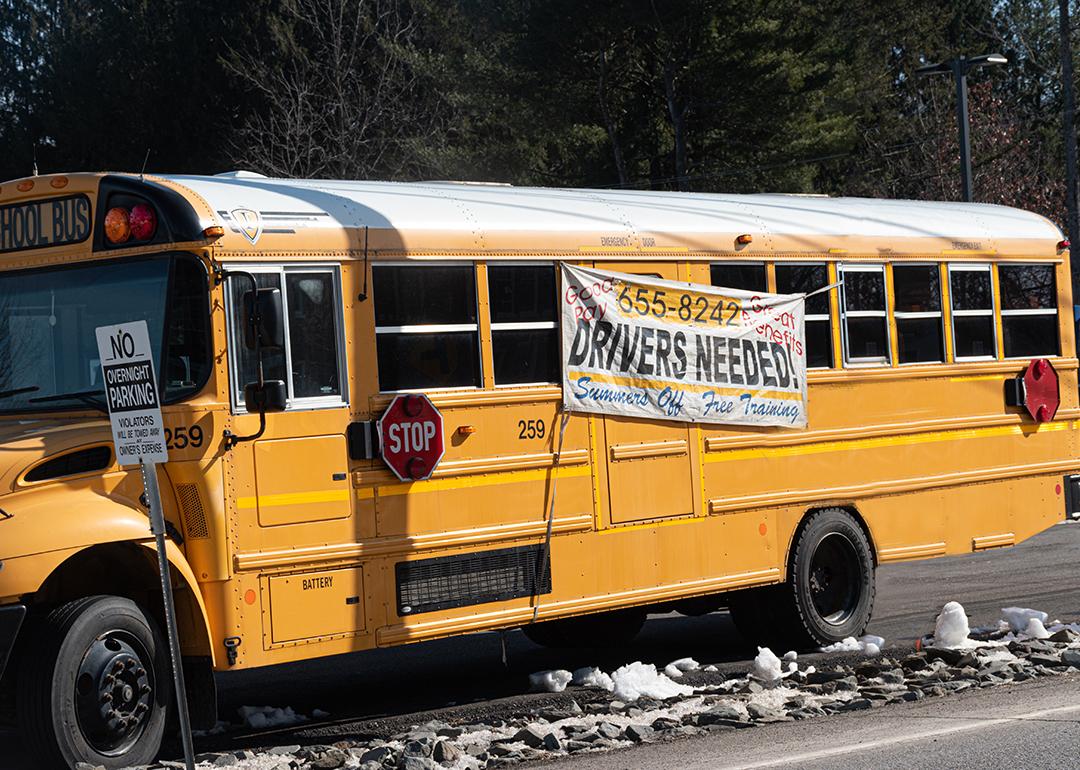
Compared to 2019, there are now 21,000 fewer school bus drivers in America. Here鈥檚 how that affects your family.
Maybe the bus didn鈥檛 come this morning. You got a last-minute text, scrambled to find another way to get your child to school, and they arrived 10 minutes late. If this sounds familiar, you鈥檙e not imagining things.
The shortage of school bus drivers in America has been getting worse for years, and it鈥檚 still not fixed, reports.
The numbers behind the shortage
There are still about 9.5% fewer school bus drivers than in 2019, which means around , according to a 2025 analysis by the Economic Policy Institute. This isn鈥檛 a leftover problem from COVID-19. It鈥檚 a bigger, and continual, issue for school districts.
conducted by HopSkipDrive found that 81% of school administrators still face a driver shortage, and 26% have had to cut or shorten bus routes. A survey conducted by several industry groups in 2021 found that described their shortage as 鈥渟evere鈥� or 鈥渄esperate.鈥� States like Maine, Missouri, and Vermont have been hit especially hard, .
About rely on a school bus to get to school. When the system is strained, families feel the impact.
Why is it so hard to find drivers?
It鈥檚 always been tough to hire school bus drivers. The main reason is the schedule. Most drivers work split shifts, with early mornings, a long break, and afternoon pickups. This makes it hard to get a second job, which matters since the median hourly wage is $22.45 as of August 2025, according to EPI. Even with a 4.2% raise last year, many drivers still have trouble making ends meet.
Getting a license is an additional obstacle. The CDL process takes about 12 weeks, and industry leaders say many people drop out because it鈥檚 long and complicated. Other commercial driving jobs in delivery, logistics, and freight pay more, have better hours, and don鈥檛 involve the management of student behavior. The competition for licensed drivers is already tough and only getting tougher.
: 37% of districts surveyed in a 2022 HopSkipDrive study cited retirements as a major reason for their low driver numbers. There just aren鈥檛 enough new drivers to take their place.
What are districts doing, and what does it mean for your mornings?
Districts are trying different solutions. Many have raised wages, offered signing bonuses, and paid for CDL training to bring in new drivers. In Massachusetts, .
But not all districts can afford these solutions. Where budgets are tight, it鈥檚 harder to make things work.
Schools Closing reports that some districts are testing 鈥� This means certain neighborhood routes are halted on a set day each week to give drivers a break and help reduce burnout. For parents, it means one day a week without a bus, with only the yearly schedule as notice.
EverDriven notes that , which leads to longer rides and more stops per trip. These changes stretch the system in ways parents notice most. Kids are being picked up earlier, sometimes before sunrise, even in neighborhoods that never had to deal with this before.
For parents, the bigger problem is the lack of predictability. What used to be reliable now changes every week, which makes it harder to manage work, childcare, and everything else.
In places where school buses can鈥檛 keep up, districts are trying short-term fixes. Some give transit passes to older students, test ride-share programs, or offer payment-in-lieu, where the district sends a check and families make their own arrangements.
But these solutions only work if you have a car, flexible work hours, or help nearby. If you don鈥檛, daily life can become overwhelming. And not everyone is affected the same way.
Who feels the impact most?
When school transportation breaks down, not everyone is affected equally. EPI鈥檚 analysis shows students with disabilities are hit hardest because they rely on special routes that don鈥檛 have easy backups. While some parents can switch to city buses or adjust quickly, these students can鈥檛. When their routes fail, the problems add up. Missed school days, missed meals, and gaps that get harder to fix over time. This is happening in places like Santa Fe, New Mexico.
were cut. In Kanawha County, West Virginia, . Some students aren鈥檛 getting to school until well into the first period.
What鈥檚 getting better
Even though the situation is challenging, districts are working to fix it. There may be small improvements, but the number of drivers is slowly rising. EPI鈥檚 2025 analysis found that about 2,300 jobs had been added in the past year, a 1.1% increase.
In districts that take the job seriously, improvements last. Communication is clearer, there are fewer eleventh-hour changes, and behavior policies are more consistent. Drivers aren鈥檛 left to handle discipline alone.
Technology is helping a bit. Routing software is making stops more efficient, reducing wasted miles, and helping the same staff cover more ground. Denis Gallagher Jr., SVP of operations at STA, . 鈥淪marter recruiting, stronger retention efforts, and creative scheduling have also made a difference. The districts making progress have something in common. They treat drivers as valuable people, not only numbers in a budget. That鈥檚 what makes the difference.
Looking at the bigger picture
School buses are still the safest way for kids to get to school. They鈥檙e nearly are riding in a school bus than in cars. No one wants to replace them. The real challenge is finding enough drivers.
The shortage is still around 21,000 drivers. Software and better routing alone won鈥檛 fix it. Real change depends on decisions by school boards and state leaders about driver pay and support.
Until then, mornings will remain chaotic. Somewhere, a parent is still rushing to find a way before the first bell.
was produced by and reviewed and distributed by 麻豆原创.