Microschools are seeing an enrollment surge this year
Microschools are seeing an enrollment surge this year
Kara Fox did not want to wait. A mom of two, she was frustrated by the fall semester at her children’s traditional private school near Omaha, Nebraska — particularly for her 12-year-old son, Gavin. “He just felt so hopeless already in the second quarter, before the end of the first semester,” said Fox, explaining that the rigidity of a conventional classroom and curriculum weren’t working well for her son, who has ADHD and is on the autism spectrum.
Fox tried to communicate with the school, urging changes and more personalization, but she found the teachers and administrators unresponsive. “They were unbendingly focused on their programs and agenda for fifth graders that they weren’t willing to accommodate for meeting him where he was mentally,” said Fox, who has a bachelor’s degree in early childhood education and served for over 20 years in the U.S. Air Force and Air Force Reserve.
She began to look for other educational options for Gavin and his younger brother, Gabriel, a second-grader. When she discovered , a K-12 microschool launched in 2022 by former public school teacher Hannah Holguin, Fox knew it was the perfect place for her children. “When I walked in, the environment — the spirit — was just so peaceful and happy,” she recalled. Fox pulled her children out of their private school in December, and immediately enrolled them in Masterpiece Academy, where they are technically considered homeschoolers but attend the onsite, half-day program five days a week, surrounded by peers and taught by experienced educators.
Fox is among a growing number of parents who decide to switch their children’s school midyear, something that is becoming easier to do as become more widespread, reports. Unlike many traditional private schools — which typically have set admissions and enrollment cycles, lengthy application processes and hefty tuition price tags — today’s emerging schooling models are usually low-cost, flexible and highly personalized. They often have rolling admissions, with students able to enroll throughout the year.
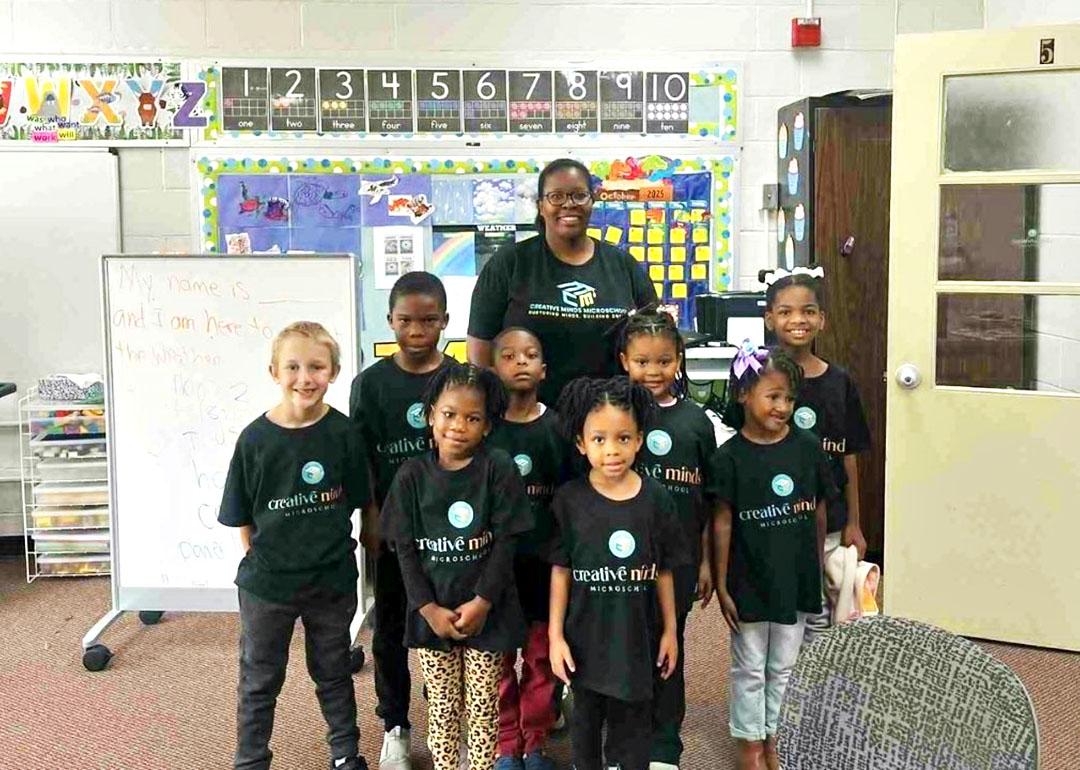
In states with generous school-choice policies that allow a portion of state-allocated education funding to follow families to their preferred learning environments, students can attend these innovative schools for free or with reduced tuition. That’s the case for most of the students enrolled at , a K-12 microschool in Wendell, North Carolina. It was founded in 2024 by Lisa Swinson, a longtime public school teacher who was working at the state Department of Public Instruction when she decided to become an education entrepreneur. “As I was helping people across the state, I knew that I needed to come back home to help local families because I was starting to hear a lot of conversations about people just needing something different,” said Swinson.
She was accepted into the , a one-year paid fellowship to support promising founders launching new schools, with a commitment to serving low-income students. Swinson’s school has grown from 10 students last year to 34 students today, along with three full-time teachers and an instructional assistant.
Creative Minds is a licensed private school with a full-time tuition of $7,600. Ninety percent of Swinson’s families attend with free or reduced tuition using the state’s Opportunity Scholarships, a school-choice program that became universal in 2023, enabling all North Carolina K-12 students to be eligible for private school vouchers. The remaining 10% of Creative Minds students are homeschoolers who attend the microschool three days a week at an annual tuition of $4,900, or full-time students whose parents pay full tuition out of pocket.
Swinson says that more families in her area are looking for alternatives to conventional schooling—both public and private. She welcomed seven new students to Creative Minds this month. “What I hear from parents is that we provide individualized instruction to their students.
“We individualize everything, from choosing electives, to how they go about learning, to what curriculum to use. Everything is very personalized,” said Swinson, who uses nationally-normed standardized tests to determine a student’s skill level upon enrollment, and then customizes a learning plan based on the child’s needs and interests.
Microschool founders across the U.S. are reporting midyear enrollment boosts, as families switch from conventional schools toward smaller, more personalized learning environments. At in Sarasota, Florida, founder Justine Wilson enrolled five new students this month, bringing her total K-12 enrollment to 70 students. She says that 97% of her students attend her program tuition-free using Florida’s school-choice programs, which became universal in 2023.
Even in states without robust private school choice programs, microschool founders are reporting midyear enrollment boosts. At the , a middle school microschool in Las Vegas, co-founder Christina Threeton welcomed several new students this January, as did Amanda Lucas, founder of in New Jersey.
Tom Arnett, a senior fellow at the Christensen Institute, has why families are attracted to microschools or similar learning models. “Our research shows that many families who switch schools are driven by the reality that school has become a persistently negative experience for their child,” said Arnett, citing a variety of reasons from bullying to boredom. “We also see many families who haven’t switched yet but are actively considering it. Microschools often resonate with these families because they offer a more human-scale environment that reduces friction rather than asking children to endure it.”
If parents and caregivers are dissatisfied with their child’s current school, they don’t need to wait until next year to make a change. The growth of microschooling, alongside the expansion of school-choice policies in many states, makes creative schooling options more abundant and accessible — enabling families to find the learning environment that is the best fit for their kids.
For Kara Fox in Nebraska, the midyear school-switch has been positive for her boys. “It’s much better because they have been able to just relax and be themselves,” she said. Fox encourages more families to consider changing schools sooner rather than later if they aren’t happy. “I wouldn’t wait. I would just do it. It’s so worth it because it’s your kids,” she said.
was produced by and reviewed and distributed by Â鶹ԭ´´.