Does social media make you think your relationship is toxic? 52% in national survey say yes
If you’ve ever scrolled through TikTok or Instagram and suddenly questioned whether your partner might be “toxic” or “gaslighting” you, you’re definitely not alone. According to ’s survey, “,” a whopping 52% of respondents have started doubting their relationships—wondering if they are “toxic”—and it’s all thanks to a new phenomenon called “therapy speak.”
The survey, conducted by LifeStance in partnership with Researchscape International, revealed how platforms like Instagram, TikTok, and X are impacting the way we view our romantic partnerships.
What Does “Toxic Relationship” Mean?
So, what does “toxic” mean in this context? A toxic relationship typically involves patterns of behavior that cause , mental, or even physical harm. This might look like a partner who constantly belittles you, exerts excessive control—such as demanding to know your every move—or manipulates you into doubting your own feelings. More subtly, toxicity can show up as emotional unavailability, poor communication, or a lack of mutual support, which can slowly erode the foundation of a relationship over time.
The rise of “therapy talk” adds another layer to this dynamic. According to the survey, 65% of respondents are now using terms like “gaslighting,” which refers to manipulating someone into questioning their reality, or “emotional labor,” which describes the often-unseen work of managing a relationship’s emotional needs, like always being the one to plan dates or resolve conflicts. With 43% of respondents only recently learning these terms—often from inaccurate or incomplete social media content, there’s a risk of misuse.
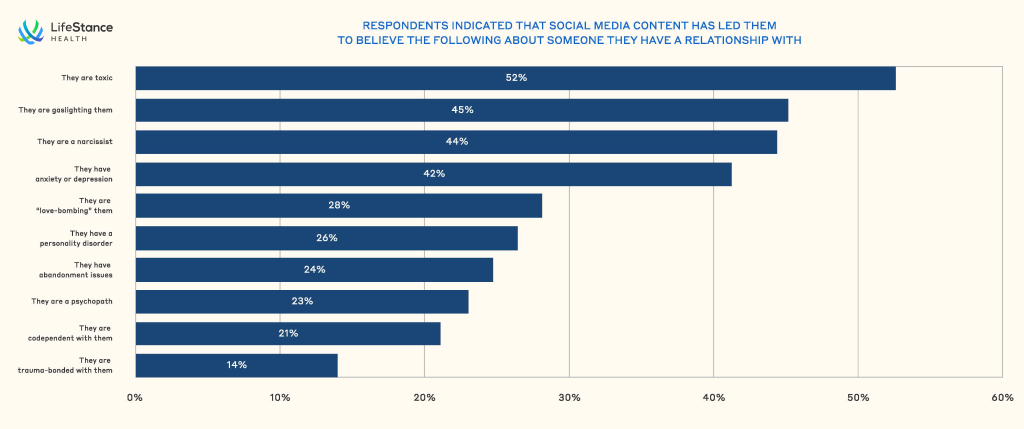
It’s tempting to throw around labels like “psychopath” or “narcissist,” but doing so without clinical context can lead to misunderstandings, unnecessary stress, and even damaged relationships. For instance, someone might label a simple disagreement as “gaslighting” or use “boundaries” as a way to avoid compromise, which can create unnecessary tension. While these terms can help identify real issues, they can also lead to overanalyzing normal relationship challenges, like occasional arguments or differences in communication styles.
This phenomenon has a dual impact. On one hand, social media can empower people to recognize genuinely harmful dynamics. For example, learning about “emotional labor” might help someone realize they’ve been carrying an unfair burden in their relationship, prompting a much-needed conversation or even a decision to seek support.
On the other hand, the overuse of “therapy talk” can amplify insecurities, making people question whether every small issue is a sign of toxicity. The survey’s findings suggest that while social media can raise awareness, it can also blur the line between healthy relationship struggles and truly problematic patterns.
Navigating this influence requires balance. Couples might benefit from discussing how social media affects their perceptions and focusing on their unique relationship dynamics rather than comparing themselves to online ideals. By prioritizing open communication and mutual understanding, partners can better distinguish between normal challenges and deeper issues that need attention.
Social media isn’t going anywhere—and as its use continues to grow, we can anticipate ongoing shifts in relationship dynamics. Understanding and adapting to these changes, while maintaining open and authentic communication, will be crucial in navigating the complexities of modern relationships.
Key takeaways
- Over half (52%) of social media users have questioned if their relationships are “toxic,” highlighting social media’s powerful influence.
- Terms once reserved for mental health professionals assisting with relationship issues, such as “toxic,” “gaslighting,” and “narcissist,” are now commonplace online, especially among younger generations.
- Social media raises awareness about relationship issues, but its overuse or misuse of technical terms without a professional diagnostic context can lead to misunderstandings and harm otherwise healthy relationships.
was produced by and reviewed and distributed by Â鶹ԭ´´.