What the U.S. Navy looks like today
In a Continental Congress meeting on , representatives voted to outfit two existing ships with carriage guns, swivel guns, and crews of 80 men, in a move that essentially created the U.S. Navy. Throughout the War of Independence, Congress added 50 ships to this newly formed Navy to keep up with Great Britain's presence on the high seas. Throughout our country's history, the Navy has had varying roles in our military strategy鈥攑laying a great deal in WWI and WWII and a much smaller role in more recent events like the War in Afghanistan or the Iraq War鈥攂ut its contributions to our ongoing freedom and overseas interests are undeniable.
That said, today's Navy looks wildly different from the one that existed hundreds of years ago. To better understand what the U.S. Navy looks like today, 麻豆原创 looked at the Department of Defense's. The Naval Vessel Register is a real-time list of all U.S. Navy ship battle forces. In the following slides, we break down the types and number of ships currently in service from the surface combatants to the submarines.
297 Ship Battle Forces
are commissioned United States Ship warships that are capable of contributing to combat operations, warfighting, or support missions. These boats are maintained by the Naval Vessel Register, and an accurate count (which ) is necessary to support reporting requirements. Each of the following boat classifications is included in the overall number of U.S. Naval Ship Battle Forces.
116 Surface Combatants
- Classifications:
--- 22 guided missile cruisers
--- 70 guided missile destroyers
--- 24 littoral combat ships
, or surface ships, are those that are designed to contribute to warfare on the surface of the water through their own weapons and armed forces. This broad category includes more specific classifications like cruisers, destroyers, frigates, and littoral combat ships. Well-known examples of surface combatants include (aka 鈥淥ld Ironsides鈥�), one of the first frigates to ever join the U.S. Navy in use during the War of 1812, and the USS Arizona, which sank during the attack on Pearl Harbor.
68 Submarines
- Classifications:
--- 14 ballistic missile submarines (nuclear-powered)
--- 4 guided missile submarines (nuclear-powered)
--- 50 submarines (nuclear-powered)
Self-propelled submersible vessels, or , are the second largest group of ships employed by the U.S. Navy. The most well-known naval submarine is perhaps , which was commissioned in 1943 and served on five war patrols before it sank by one of its own torpedoes. Before the malfunctioning torpedo ended its career, the submarine sank 33 enemy ships or 116,454 tons.
33 Fleet Support
- Top 4 classifications:
--- 12 expeditionary fast transports
--- 5 surveillance ships
--- 3 fleet ocean tugs
--- 3 expeditionary sea bases
Rather than engaging directly in combat themselves, aid combatants, submarines, and other vessels. Specific examples of these helper boats include command ships, material support ships (which deliver supplies), surveillance ships, salvage and tug ships, and sea basing ships (which help facilitate the transfer of vehicles on and off other naval ships). There are currently two command ships employed by the U.S. Navy: the USS Blue Ridge and the USS La Salle.
31 Amphibious Warfare Ships
- Classifications:
--- 11 amphibious transport docks
--- 11 dock landing ships
--- 7 amphibious assault ships (multi-purpose)
--- 2 amphibious assault ships (general purpose)
are naval vessels that are intended to land and support ground forces engaged in combat in enemy territory, like the Marines or the Army. These boats are generally designed to travel long distances and can carry large amounts of supplies and weapons.
29 Combat Logistics Ships
- Classifications:
--- 12 dry cargo and ammunition ships
--- 15 fleet replenishment oilers
--- 2 fast combat support ships
Ships without fuel are much less useful to the Navy and its operations than those that are fully loaded with coal, oil, or gasoline. But when you鈥檙e asking these vessels to engage in weeks or months of combat, they will inevitably run out of fuel at some point. That is where come in handy. These boats carry fuel replenishments to the rest of the Navy鈥檚 fleet, ensuring they will be able to continue their missions for as long as the country needs.
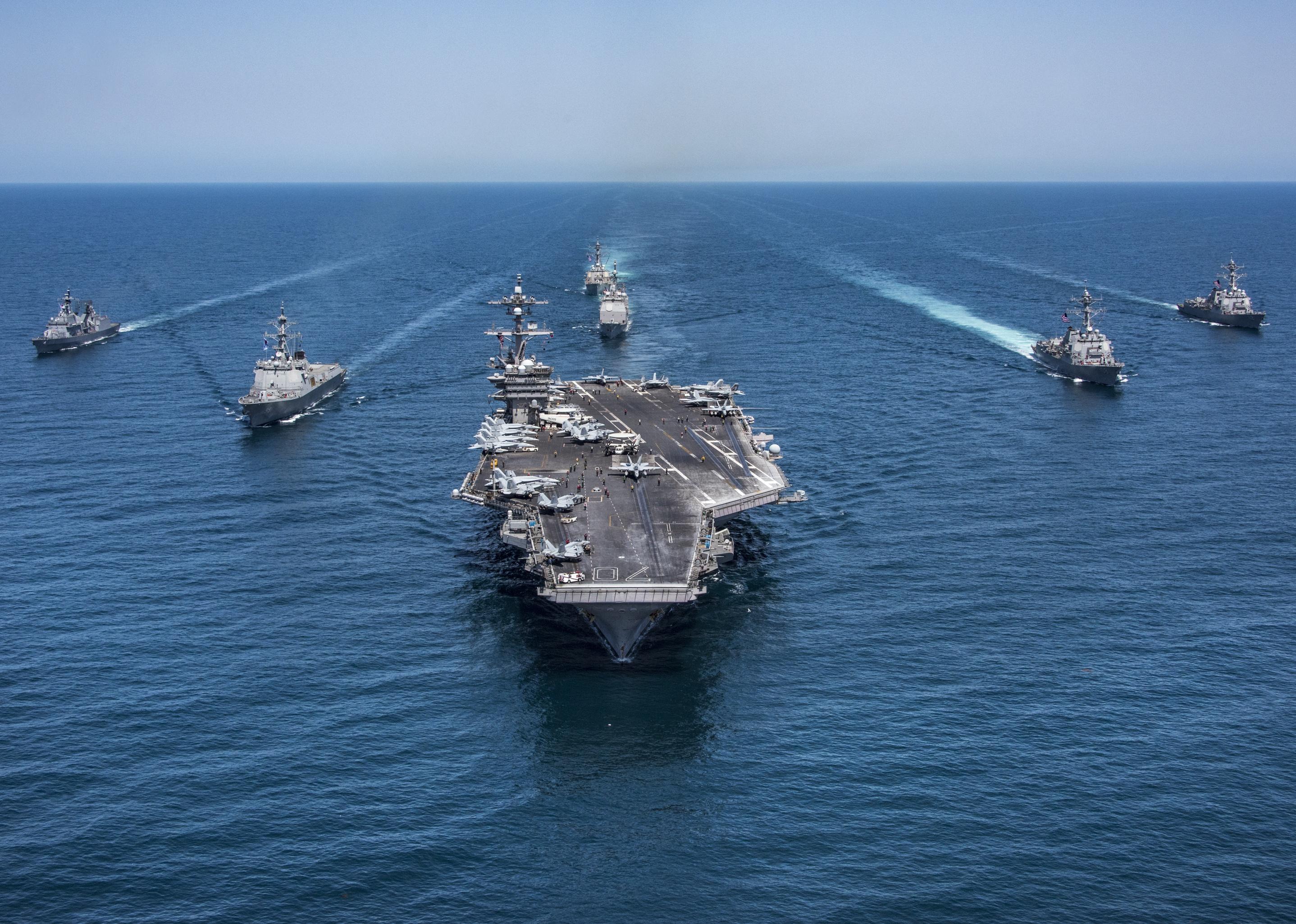
11 Aircraft Carriers
- Classifications:
--- 11 multi-purpose aircraft carriers (nuclear-powered)
One of the most decorated ships in U.S. Naval history, was an . Capable of carrying up to 90 aircraft at a time, which could be used in airborne, surface, sub-surface, and shore attacks, the vessel was one of the first to respond after the bombing of Pearl Harbor. Even more than that, the USS Enterprise survived heavy battles in Midway, Guadalcanal, Leyte Gulf, and Tokyo before it was retired in 2012.
8 Mine Warfare Ships
- Classifications:
--- 8 mine countermeasures ships
The U.S. Navy in wartime situations, planting the explosive devices on the surface of the water or at the bottom of the ocean to destroy surface vessels and submarines. Typically, surface combatants or submarines are used to lay or modify these devices. Mine countermeasures ships, on the other hand, are surface boats that can be used in pairs to neutralize mines laid by enemies so that naval ships can cruise unharmed.
1 Auxiliary Support
- Classifications:
--- 1 high-speed transport
The single currently in use by the Navy is a jack-of-all-trades. Its primary purpose is to carry troops, gear, and supplies from an American port to a foreign theater of war. However, it can also act as an aircraft carrier (even landing helicopters on its deck), a hold for a submarine, a floating hospital, and can even carry a large number of civilians in times of need. Certainly adding more of these types of ships to the country鈥檚 fleet would be a solid, and useful, investment, but design flaws have the government holding off on purchasing more (for now).