We’ve long known that music eases pain. Now, science is proving it.
We’ve long known that music eases pain. Now, science is proving it.
At the University Hospitals in Cleveland, Ohio, cancer patients can ask for an unusual medicine: Could a guitar player come and play a tune by their bedside, like the Beatles’ “Let it Be”?
“We have empirical evidence that shows music can help reduce a person’s pain perception,” , director of Expressive Therapies at University Hospitals Connor Whole Health. On average, Block’s studies have shown that music can reduce pain perception by 20%. He emphasizes that music therapy is not meant to replace pain medication, but pharmacology and music can work hand in hand. “We’re here to make the person’s experience better,” he says.
The music therapy program at the University Hospitals has been running for over 25 years, making it one of the oldest such programs in the nation, reports. It has consistently proven to reduce stress, anxiety, and pain.
“Music therapy is one of the most important supportive therapies we have,” says Block’s colleague, psychiatrist , at the University Hospitals Cleveland Medical Center. “Music therapy has been shown to hit areas of the brain that deal with cognition, emotion, and it has truly helped our patients.”
Music is one of the oldest healing tools on the planet, a panacea that transcends time and culture. The Greek god of medicine, Apollo, is also the god of music. Across the globe and throughout history, healers have relied on music: Native American tribes drum and chant in medical ceremonies; in , physicians played the flute and zithers to treat patients, convinced the vibrations could aid digestion, treat mental disturbances, and help with sleep. Around 500 B.C.E., Pythagoras and his followers prescribed specific melodies to calm depression and anger. Shamans have long utilized the rhythmic beats of drums, and Vedic and Chinese healers trusted the sounds of certain chimes or flutes to induce healing.
We have all experienced how our favorite jam can invigorate us, lift our spirits, calm our minds, or intensify our emotions. But more recently, scientists have found ways to measure music’s actual impact on our bodies and minds.
A recent by California Northstate University revealed that listening to music lowered patients’ pain levels after surgery and accelerated their recovery. These patients needed less than half the amount of morphine compared to those who didn’t listen to music. Additionally, their heart rates stayed in a healthier range, suggesting a profound physiological effect. “When patients wake up after surgery, sometimes they feel really scared and don’t know where they are,” , senior author of the study and a surgery professor at California Northstate University College of Medicine. “Music can help ease the transition from the waking-up stage to a return to normalcy and may help reduce stress around that transition.”
A new University of California, San Francisco, shows that when people experience high levels of pain, signal activity spikes in the orbitofrontal cortex, an area highly impacted by music. This might explain why music therapy can be effective for pain management. It gives the brain a vibrant new melody to focus on.
Researchers know it’s not just make-believe because dogs feel it too: In a study published in , dogs exposed to Mozart or Chopin achieved deeper sedation levels during surgery and required significantly less anesthesia than those in the control group.
“It’s a recent feature of Western society that we have separated these two, healing and music,” writes musician and neuroscientist Daniel J. Levitin in his recent book, He cites scientific advances that open a path to recombining the two fields. One of the most fascinating aspects of music therapy is its ability to directly influence brain chemistry. “Playing and listening to music can soothe us through the release of prolactin, can reset our mood through changing serotonin levels, and can motivate us to seek pleasure through modulating dopamine activity,” Levitin states. “Simultaneously, music stimulates neurogenesis and neuroplasticity, enhancing brain recovery and normalizing the stress response.”
Listening to music can be a welcome distraction, but its effects go deeper. Evidence has emerged that listening to music can partly restore normal neurochemical balance, even in difficult-to-treat conditions including trauma, Alzheimer’s, schizophrenia, and depression.
Neuroscientist Jeffery Dusek at the Samueli Institute has been studying relaxation response for 10 years at Harvard Medical School. “Our hypothesis is that music-based interventions can elicit the same response in the brain as relaxation, like lowering the blood pressure, et cetera,” he says. He has recently been tasked with directing a between pain researchers, music therapists, musicians, and hospitals, including University Hospitals in Cleveland and Mount Sinai in New York City, to figure out the exact mechanisms underlying music-based interventions. “Having studied yoga, meditation, acupuncture, massage, and mind body therapy in the hospital setting, there is something different with music therapy,” Dusek says. “Some folks are absolutely not interested in being touched, having needles stuck in them or meditat[ing], but when you offer music, very few patients say no.”
One could think of music as a workout for the brain, a symphonic exercise that strengthens neural connections. Levitin highlights movement disorders that respond particularly well to music therapy, including Parkinson’s, Huntington’s, and multiple sclerosis. In studies, Parkinson’s patients assigned to music therapy showed more significant improvements in daily activities and quality of life than those assigned to traditional physical therapy.
According to Levitin, listening to music activates long-term and short-term memory, movement, and emotion. “Older adults who took music lessons once a week and played just 30 minutes a day for six months showed robust increases in gray matter, and significant improvements in auditory memory,” he finds. Some patients with advanced dementia remember episodes from their lives or leap up to swing their hips when Abba’s “Dancing Queen” plays.
Among the reasons might be that in the , areas for speech processing overlap with areas that process music. Guitarist Glen Campbell continued to tour after he was diagnosed with Alzheimer’s. “He did not know what city he was in, but he was still among the best guitarists on the planet,” Levitin writes, Campbell’s guitar solos a timeless beacon amid the fog of memory loss.
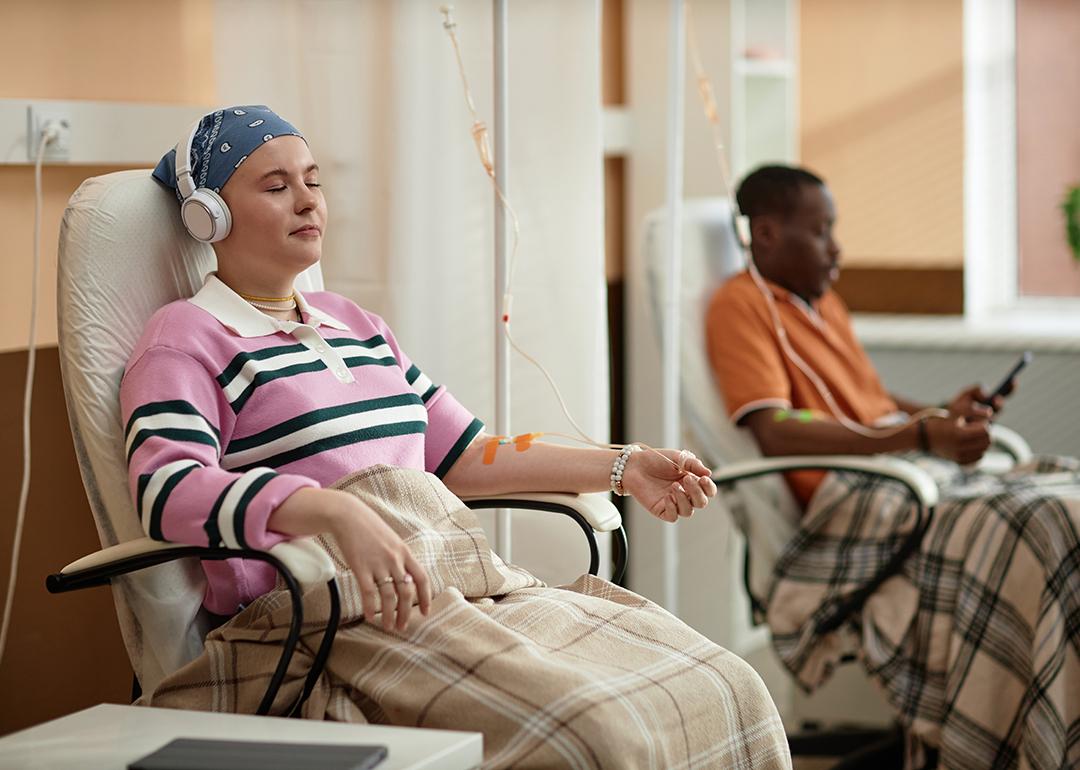
Even chemotherapy patients benefit from music, using it to reduce nausea and alleviate the emotional distress that accompanies cancer treatment.
The nonprofit sends volunteers to healthcare facilities nationwide, to “deliver the healing power of music” where it is most needed. Its musicians have performed for more than one million patients, spreading notes of hope and healing. “We try to use music as a tool to help people through challenging times,” CEO Pete Griffin. “We’ve all got those songs that make us feel better when we’re having a tough day, and to bring those songs into a place where people are feeling a lot of fear and nervousness and anxiety makes the biggest difference in the world.”
Walter Werzowa, an Austrian musician and researcher, has expanded on this idea with , a platform that curates therapeutic music playlists for conditions ranging from Alzheimer’s and depression to nausea.
Daniel Levitin has worked with Bobby McFerrin after his Parkinson’s diagnosis; Keith Jarrett, who suffered two strokes, leaving his left hand partly paralyzed; and Joni Mitchell after her brain aneurysm, selecting music from her favorite artists. After playing the selection for Mitchell the first time, her nurses called him to say it was the first time they’d seen her smile since coming home.
Though making music can’t prevent Parkinson’s or a stroke, it can mitigate some of the symptoms, allowing the spirit to soar amid adversity.
The question scientists and doctors hear most frequently is: Which tune has the most significant effect? The answer, consistently backed by research, is whatever the individual likes best, because certain music could also trigger traumatic memories or increase our fear.
When patients can choose to listen to their favorite music, the outcomes are always better than when the doctor or researcher makes the selection. Researchers aren’t about to start prescribing Mozart’s “Jupiter Symphony” for bladder surgery or the Rolling Stones’ “Beast of Burden” for depression. Just as some people enjoy jazz and others heavy metal, Snoop Dogg or Taylor Swift, some songs resonate with some and not with others.
“Music is the bridge,” University Hospitals’ Seneca Block has found. “In many cases, patients shut off when they’re hospitalized and close the walls around themselves. That’s where music therapy is really important, because music is a universal language, and that’s what’s so powerful because we use that tool in the medical setting to help people heal.”
was produced by and reviewed and distributed by Â鶹ԭ´´.