It's a bird. It's a plane. It's the police responding to a 911 call
It's a bird. It's a plane. It's the police responding to a 911 call
If you call 911 to report an emergency, the odds are increasing that
In late July, police departments in ; and announced the purchase of drones. More than 1,500 departments across the country now use them, "mostly for search and rescue as well as to document crime scenes and chase suspects," . Some agencies, like the New York Police Department, are , like public safety warnings during emergencies. It's a new space where .
looked at the increasing use of surveillance drones by police and the effect it is having on incident response time and protocol.
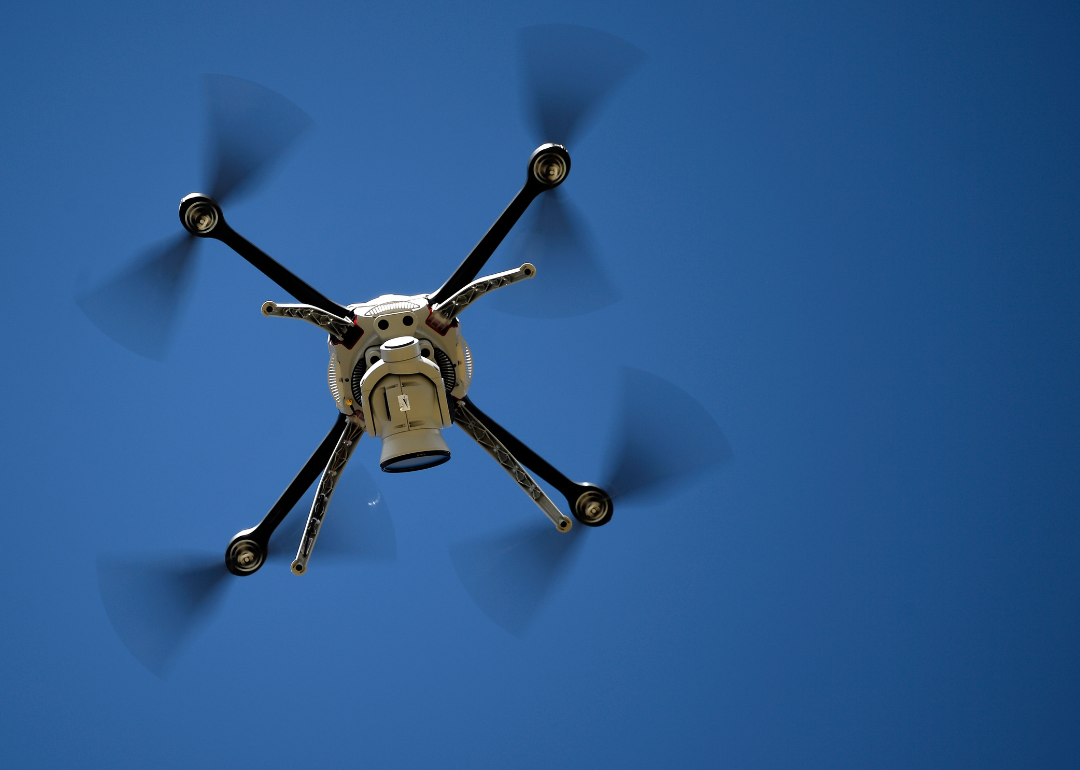
The drones U.S. police are using are much more like the consumer-grade type you might find at a big box store, than multi-million dollar, higher-tech military drones. Generally, police drones don't carry weapons and are used primarily for video surveillance. It is possible for small drones to deliver chemical irritants like tear gas, however, .
Perhaps the most well-known police drone program in the country is , which began its "drone as first responder" efforts in 2018. When 911 calls come in, the department routinely sends a , if any. Most police drones are not used as first responders, it's worth mentioning, but the approach is growing in popularity. In addition, the federal are likely to loosen in the near future.
According to it has sent drones to more than 16,000 calls in total, with an average response time of under two minutes. For reference, average in 14 of 15 other departments included in a review by data analyst Jeff Asher earlier this year.
While drones don't have the same capabilities as officers, the Chula Vista department and that their use can function as a de-escalation tactic. In one frequently cited example, 911 received a call about a man waving around a gun in front of a taco restaurant. A Chula Vista police drone arrived in 84 seconds, and before officers could make it onto the scene, the operator used the drone video to
"If they'd rushed into that with limited information about the call and he spun around because he's scared of the cops and points the lighter at their general direction, we can see how easily that could become a tragedy," a department official . Supporters also note that faster drone response times can aid investigations, and that can help police address staffing shortages, and respond to potentially dangerous scenes without putting a human officer in danger.
Civil liberty advocates are less enchanted. In a report published on July 27, American Civil Liberties Union Senior Policy Analyst Jay Stanley worries that these kinds of drone programs may normalize usage and "." He notes far more invasive turns that police drone usage could take, including warrantless surveillance of specific people, crime "hotspots" or even whole neighborhoods or cities. Stanley wonders if drone usage won't just become "another weapon in the war on drugs, in over-policing, in the targeting of Black, low-income and other vulnerable communities, and otherwise amplify the problems with the deeply broken U.S. criminal legal system."
Many of the cities using drones in policing are doing so from so-called "," which are as well. These units function as centralized hubs to connect the from things like stationary cameras, drones, license plate readers, and . Some centers can even at the homes of people who sign up.
Just what kind of transparency the public has into the kind of data these police efforts collect is still playing out. In July, who filed a public records request for footage from the Chula Vista drone program. Art Casta帽ares, publisher of La Prensa San Diego, asked for a month of video to "independently verify police officials' assurances that they do not use the drones to spy on residents."
The department denied his request, arguing that the video is "investigative" in nature and not subject to public records laws. The department , along with the reason for the 911 calls that initiated the investigation. In the days since, flights have been launched for reported robberies, domestic disturbances, and assault, but also public indecency, welfare checks, and "suspicious circumstances."
was produced by , a nonprofit news organization covering the U.S. criminal justice system, and reviewed and distributed by 麻豆原创 Media.