Student loan caps might worsen the national doctor shortage, critics worry
Student loan caps might worsen the national doctor shortage, critics worry
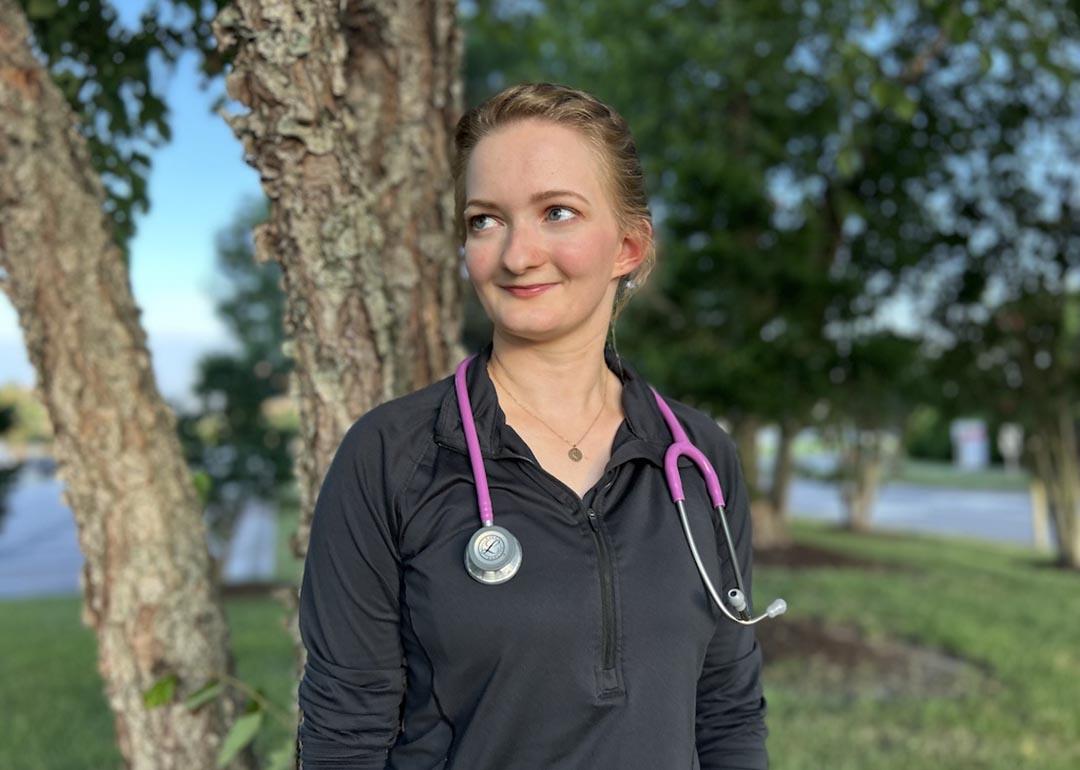
Twenty-eight-year-old Michaela Bonner has been working 12-hour shifts as an emergency medical technician in Norfolk, Virginia, for the past four years, while attending and paying for college to finish her prerequisites for medical school.
But now that President Donald Trump’s signature tax and spending law bars students from borrowing more than $50,000 annually in unsubsidized federal loans for medical school, Bonner is worried her dream of becoming a doctor is financially out of reach, reports.
“I get told, ‘Well, we really need you. We have a physician shortage, and you’ve done all this work leading up to this point,’ and that’s true as well, and it’s not that I want to quit,” Bonner said in a recent interview. “But there are no systems in place that I can rely on to support me now that I can’t take out the full cost of living through loans.”
The tax and spending law includes provisions that significantly alter the student loan process for higher education. The law halts current student loan repayment plans for loans that are granted on or after July 1, 2026. On that date, the law also terminates Grad PLUS loans, which have helped people pay for their higher education degrees and the total cost of attendance. Current borrowers will be grandfathered in.
The federal law gives current borrowers enrolled in loan repayment plans for students based on income — such as those plans known as SAVE or IBR — until July 1, 2028, to switch to a new plan. Interest collection will resume Aug. 1 for students enrolled in the Biden-era SAVE plan.
At the same time, medical or law school students hoping to get unsubsidized federal loans — in which the borrower is responsible for paying the interest at all times rather than the government — will only be able to borrow $50,000 per year, with a $200,000 lifetime cap. Those seeking advanced degrees in areas such as history or philosophy have a $100,000 lifetime cap.
The average yearly cost of medical school for the 2024-25 academic year ranged from around $42,000 to $72,000, depending on whether the school was private or public and whether the student was a resident or nonresident, according to the Association of American Medical Colleges.
congressional Republicans say that students need to be working harder to pay for higher education, like medical school, on their own. Others say the caps put the onus back on colleges and universities to rein in the rising cost of tuition. But critics of this legislation say the loan caps are only going to harm students, especially from lower-income backgrounds, and will exacerbate physician shortages.
In recent years states have tried to ease physician shortages by implementing various policy solutions. Since 2023, at least nine states have made it easier for doctors trained in other countries to get medical licenses. States have also in interstate licensing compacts, allowing nurses and physician assistants to travel across state lines to work, so long as they are licensed in one state within the compact.
For student loan relief, more than 20 states have enacted legislation to address student loan forgiveness, according to the National Conference of State Legislatures, a group that tracks state policies. passed a measure that will expand a cancelable loan program for physicians working in rural and underserved areas. also created the Rural Nursing Loan Repayment Program, offering nurses $25,000 in forgivable loans after three years of service in a rural area.
McKenzie Richards, a health care policy fellow at the conservative think tank Cicero Institute who has been studying the pace of physician shortages, told Stateline that the national physician shortage could potentially exceed 100,000 by 2034. At the end of 2024, that projected number was closer to 64,000 physicians.
Richards said states will be looking toward more policy solutions should the student loan changes exacerbate physician shortages.
“We know what’s going to be happening coming down the line in just five years, so I think policies that states can adopt to get out of this are really important to be looking at now,” she said.
“The hope is that by capping [federal loans], it will encourage schools to lower tuition prices,” Richards added. “Then maybe they need to be admitting more students, which would have a great downstream effect for getting more doctors through.”
Other students will be in the same boat, said Lesley Turner, an associate professor of public policy at the University of Chicago and an economist.
“This is going to hit some students worse than others,” Turner told Stateline. “Those [students] in more expensive programs tend to borrow more, and so for those students they will need to return to private student loans or other ways of financing their graduate education.”
Many students were already questioning their capacity to go to medical school before the student loan caps, said Shannon Jimenez, dean of the Arkansas College of Osteopathic Medicine.
“I expect that this bill, this cap, is going to push people out of primary care and into specialties to help pay off those higher interest rate loans,” Jimenez told Stateline. She added that caps will likely deter students from lower socioeconomic statuses from going into primary care — important in places like Arkansas, where she says there is a “maldistribution of physicians.”
“Many schools like us try to attract those students, because they’re more likely to go into primary care and serve in underserved areas. So it’s going to tie our hands in a lot of ways.”
Large states and more rural states will feel the gaps more deeply, said Richards, of the Cicero Institute. Louisiana, for example, is projected to be short almost 5,000 doctors from a variety of specialties by 2030, including close to 400 primary care doctors. Already more than a third of physicians are close to retirement age — similar to the situation in neighboring .
As for whether schools will just be able to lower tuition, Jimenez said, “it makes no sense.”
“We still function in a somewhat market-driven economy and have to compete with other schools around us, so our cost is based mostly on what we have to pay our faculty, and that’s not going to go down,” she said. The annual at her school is between $80,000 and $85,000.
Bonner, the EMT, holds a political communications degree from Regent University and is now studying biomedical sciences at Old Dominion University. She already has $20,000 in loans, she said, and for the rest of college tuition, she has paid out of pocket. Since she’s supporting herself, she hasn’t been able to save much.
She’d planned to take the medical school entrance exam next spring, but now worries about how she’d pay for living expenses while attending. “Medical school scheduling doesn’t allow for working, so you have to take out loans for living expenses,” she said.
“A lot of people, I feel, would be panicked if you had worked for eight to 10 years of your life and found out that all the systems that you were banking on in a really academically challenging space are disappearing,” Bonner said.
“I don’t see a path forward for certain, but I’m fighting to make one.”
was produced by and reviewed and distributed by Â鶹ԭ´´.