Gray divorce: How the splitting of older households is impacting the housing market
With longer life expectancy comes a longer 鈥渢hird act,鈥� and many people in their 50+ era just don鈥檛 want to stay in the same box society has confined them to. As a consequence, the so-called gray divorce is now the most prevalent, especially in the U.S.
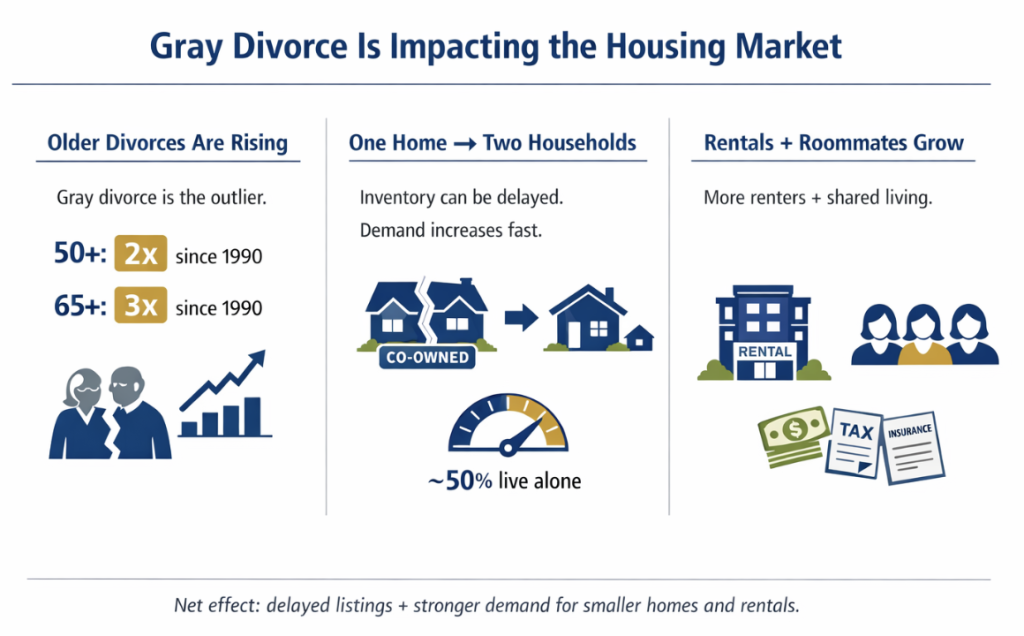
While overall divorce rates across the country are stabilizing or dropping, the 50+ demographic is the outlier. A report from the shows that divorce rates for those over 50 have doubled, and rates for those over 65 have tripled since 1990.
The reasons behind older couples鈥� decisions to divorce are valid; everyone should have the possibility to leave a marriage in which they feel unhappy or unfulfilled. However, the couples who split in their 50+ are also the in the country.
Their separation after acquiring and consolidating property has an unexpected impact on the housing market. Additionally, in this article, examines what can happen if gray divorces maintain a similar rate in the near future.
The Impact on Housing Inventory and Demand
Gray divorce is a double-edged sword for housing supply, unlocking inventory while creating new, urgent demand.
First, there鈥檚 the family home, which most older couples own. In the event of a divorce, the most logical move is to sell the house, which adds inventory to the market. However, according to partition trial specialists, the situation is not always straightforward.
These homes are often large, outdated properties, located in suburban areas, and don鈥檛 sell easily. To avoid selling at a loss, many older adults divorce but agree to keep the family home co-owned for a few years, hoping for a friendlier market.
This creates a "separated under one roof" arrangement, which can lead to interesting legal issues. Many older couples don鈥檛 understand that, once the divorce decree is finalized, they become business partners co-owning a property.
Five years later, when one former spouse wants to sell to fund their retirement facility and the other spouses refuse to move, this becomes a civil partition action.
In summary, a gray divorce doesn鈥檛 immediately put property on the market. However, it may increase demand.
According to , about half of U.S. adults who go through a gray divorce live alone after the divorce is finalized. This adds to an already bloated demand and creates a bit of unfair competition as divorced Baby Boomers are more financially stable than younger buyers.
Additionally, older buyers/renters are aggressively targeting condos, townhomes, and smaller single-story homes, which are the same entry-level houses that Millennials and Gen Zers are competing for.
Owners Turn into Renters
The other side of a gray divorce in is that one big family home doesn鈥檛 always translate into two smaller houses or apartments. More often than not, splitting the assets leaves neither party with enough cash to buy outright.
As a result, a significant portion of grey divorcees flood the rental market. Since they have some cash, they鈥檙e driving demand for high-end .
The Roommate Return
This trend is particularly popular among divorced, widowed, or single women in their golden years.
Since divorce can cut a woman's standard of living by nearly half, many older women opt to share a house with unrelated peers to combat the dual pressures of financial insecurity and social isolation.
In this living model, tenants share expenses (rent, maintenance, and utilities) and enjoy each other鈥檚 companionship. It鈥檚 also a good option for the women who manage to keep the family home after the divorce but can鈥檛 afford the property taxes, insurance, and upkeep.
So even if there鈥檚 no new inventory entering the real estate market, there are new options for renters.
There is also the scenario in which several older adults pool their resources to buy property as co-owners. This helps everyone build equity and offers a more reliable situation than renting. However, this is a slippery slope that can land everyone in a partition action if one of the owners wants to withdraw from the partnership.
Conclusion: It鈥檚 a Win for the Housing Market
When older couples split, both new properties and buyers enter the market. The large marital home becomes new inventory, while the divorcees look for smaller, more affordable condos, townhomes, and rental units.
Since Baby Boomers often have substantial equity, they become serious buyers, intensifying competition for entry-level homes and putting upward pressure on prices across the market.
was produced by and reviewed and distributed by 麻豆原创.