Top LEGO set from the year you were born
Top lego set from the year you were born
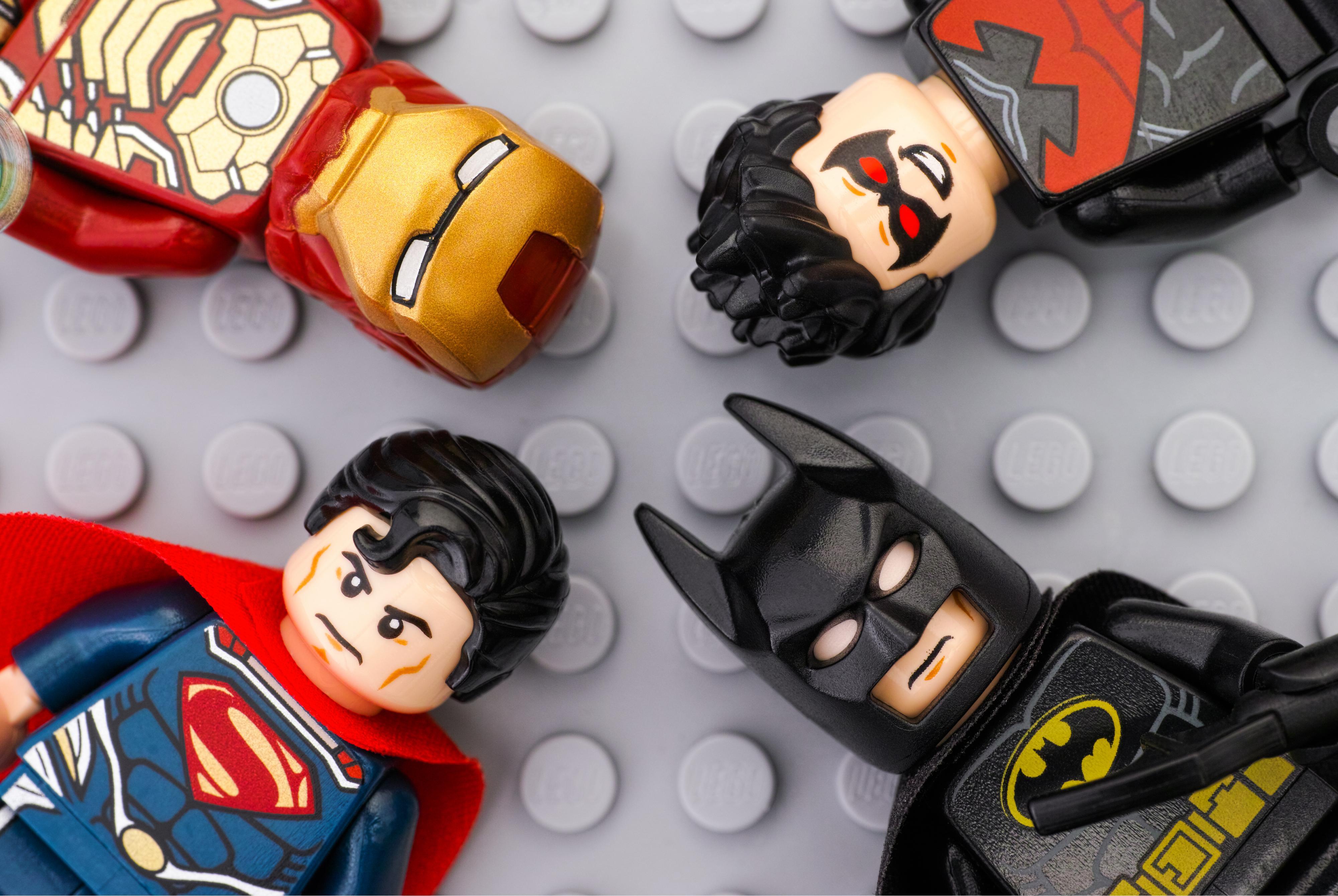
The toy bricks known as LEGOs have been a part of practically everyone's childhood—to this day, LEGOs are still a massive part of the toy industry, with children and collectors alike still seeking the newest, greatest LEGO sets available. Whether these sets create new worlds or are based on existing licensed properties, these tiny plastic bricks have unlocked creative potential from people of every generation.
We may take LEGOs for granted in this day and age, but the Danish toy company has a long, sometimes troubled history, with company founder Ole Kirk Christiansen and his son Godtfred working to get their ambitious toy company off the ground. Starting in the early 1930s, the LEGO company began building a legacy that would last for the next eight decades and beyond.
The LEGO website tells the comprehensive story of the company; with this knowledge, Â鶹ԭ´´ put together a list of important events in LEGO history from 1932 onward. After the company's first official LEGO brick set in 1949, the rest of the list and details the top-rated sets from each year. Learn how LEGO's products have evolved through time—did you have any of these famous sets?
RELATED:
1932: Ole Kirk Kristiansen starts his business in Billund, Denmark
Ole Kirk Christiansen was a master carpenter, who began a business in Billund, Denmark, selling wooden toys and household furniture items like ladders, ironing boards, and stools. Christiansen was joined by his son, then 12-year old Godtfred Kirk Christiansen.
1934: LEGO is named
After two years, the company started by the Christiansens is branded as “LEGO.” The name is formed by the Danish phrase "leg godt," which means “play well.” In Latin, the word means “I put together.”
1935: LEGO creates its first wooden duck
The first toy under the LEGO name was a wooden duck model on wheels. Godtfred Kirk Christiansen relayed a story where his father would chastise him for not applying enough varnish to the the ducks, expecting a high level of quality.
1936: LEGO gets a motto
Ole Kirk Christiansen’s motto, “Only the best is good enough,” is adopted by the company. Godtfred cut the motto out of wood and hung it in the company’s workshop.
1937: Godtfred Kirk Christiansen begins creating models
At age 17, Godtfred Kirk Christiansen began creating models of his own. Having learned the company values from his father, he set his sights on eventual leadership.
1938: Growth continues for LEGO
Nothing hugely notable occurred in 1938, however, it's clear the company was experiencing growth based on the information included in the next slide.
1939: The LEGO Factory has 10 employees
At this point in the company’s history, the LEGO Factory had 10 employees. In 1934, the company only had six or seven.
1940: Godtfred Kirk Christiansen becomes manager at LEGO
Godtfred Kirk Christiansen became a manager at his father’s company in 1940. This was partially due to his plans to study in Germany being halted by Germany’s occupation in Denmark.
1941: Business as usual for LEGO
There is no major news to report on from 1941 for the folks at LEGO.
1942: LEGO Factory burns to the ground
On March 20, 1942, a fire destroyed the LEGO woodworking factory. The major setback discouraged Ole Kirk to the point where he almost chose to not rebuild, but with the support from family and employees, the company resumed toy production by the end of the year.
1943: LEGO has 40 employees
Now housed in a new factory in the same place as the original, the workforce at LEGO grew to 40 employees. Only a year prior, the company had 15 employees.
1944: LEGO becomes a private limited company incorporated
LEGO called Legetøjfabriken LEGO Billund A/S, translated as The LEGO Billund Toy Factory Ltd.
1945: Automatic Pistol
Don’t expect a resurgence of these toy guns in the present day, but the company at one point made realistic-looking toy weapons. This was created to celebrate the end of the Second World War.
1946: LEGO buys a plastic injection-molding machine
LEGO entered the age of plastics, buying an injection-molding machine to produce its toys. LEGO became the first company in Denmark to buy the Windsor SH machine.
1947: LEGO ships six series products to India
LEGO first exported its products in 1947, shipping six series of wooden toy animals to India. During that year, the factory received its Windsor SH machine.
1948: LEGO has 50 employees
At this point, the workforce at LEGO had grown to 50-plus employees. The company also produced a game of Tiddlywinks, played by flicking small plastic discs at a target.
1949: Automatic Binding Bricks
The LEGO Group produced its first bricks in this year: the . These were the earliest form of the LEGO bricks we know today, and were sold exclusively in Denmark.
1950: Individual 2 x 4 Bricks
Another iteration of LEGO’s new plastic bricks, these were .
1951: Ferguson Tractor
Despite the initial success of the new LEGO bricks, they were not the best-selling products from the company at the time. That honor was claimed by the plastic Ferguson Tractor toy.
1952: LEGO expands
Under the continued leadership of Ole Kirk, the LEGO company expanded. A plant for the company was built, complete with employee cafeteria.
1953: LEGO Mursten
The Automatic Binding Bricks were renamed “LEGO Mursten,” which means “LEGO Bricks.” The company filed a trademark registration for the name “LEGO.”
1954: Windows and Doors
A year after filing a trademark, the word “LEGO” was registered in Denmark. Meanwhile, LEGO began producing .
1955: LEGO Service of Play
Launching the “LEGO Service of Play,” the company began exporting its products, beginning with Sweden. The was one of several sets created that year, with vehicles and supplementary elements that allowed children to create towns during a time where more Danes could afford cars.
1956: Traffic Police Set
LEGO established the “LEGO Spielwaren GmbH” foreign sales company in Germany in 1956. At the same time, LEGO began producing motorcycle and vehicle sets, including the .
1957: Light Bricks
Godtfred Kirk became managing director of LEGO in 1957, the same year the company invented the interlocking feature of LEGO bricks. LEGO bricks with lights allowed for sets like the .
1958: Letter Bricks
Ole Kirk passed away during this year and his son Godtfred succeeded him as the head of the company, continuing to churn out exciting new products. LEGO’s new allowed children to spell out words, and standard bricks were slightly redesigned to provide a more stable connection.
1959: Sloping Roof Bricks
The LEGO company expanded to several European countries in 1959: France, Belgium, Sweden, and Great Britain. Injection-molding machines were now automated, allowing LEGO to produce products like .
1960: Number Bricks
After another company fire, Christiansen made the decision to only sell LEGO plastic bricks and discontinue their wooden toys. Like the letter bricks, the produced in this year offered up fun possibilities for children.
1961: LEGO Town Plan Board
Continuing the “LEGO system of play,” the showed a system of streets and enabled children to create their own LEGO towns. The LEGO company also experienced its first workers’ strike.
1962: LEGO wheel invented
After years of development, the brick-making company came up with its own LEGO wheel. This allowed movement to be a greater part of LEGO toys.
1963: Farm Tractor
Thanks to the invention of the LEGO wheel, the company was able to produce sets like the , harkening back to its older toys. This year, Christiansen unveiled his 10 “product characteristics” for LEGO, putting an emphasis on fun, safety, and quality.
1964: Pre-School Beginners Set
LEGO has historically prided itself on producing toys that appeal to all ages, but this year, new model sets with instruction sets were presented as a challenge. To balance things out, the company also began producing larger bricks for smaller children, with sets like the .
1965: Doll Furniture
One of Christiansen’s 10 characteristics was that the products should appeal to children regardless of gender. Nevertheless, the company produced one collection to appeal to young girls in particular: the set. This was an unintentional throwback to the company’s early history of producing and selling wooden furniture.
1966: Motorized Train Set
The company began producing sets powered by batteries, as well as light bricks that provided a cheery glow to LEGO scenes. The that released in this year was an especially successful example of this new toy technology.
1967: Biplane
LEGO also began creating smaller wheels for vehicles, and took to the skies with sets like the .
1968: Jeep
LEGO had a variety of sets and products to offer by then, with building sets and vehicles galore. One new product was a , designed by Christiansen’s son—and founder Olek’s grandson—Kjeld Kirk Kristiansen (note the change in the spelling of the family’s last name).
1969: Duplo Building Set
Continuing the company’s progress in making jumbo bricks for smaller children, LEGO released the first . These bricks were designed for children under the age of 5.
1970: Gear Set
Deviating away from square and rectangular bricks, LEGO began to produce cogwheels. With the new , children learned to use these new mechanisms in building sets.
1971: Swiss Chalet
LEGO produced brick dollhouses that included furniture, and also made fancy European house sets, like the .
1972: Legoland
LEGO's United States business partnership with Samsonite, its North American distributor, came to an end. Under the brand "LEGOland," newer town sets like the were released.
1973: London Bus
LEGO established its Connecticut headquarters in 1973. Even with its new American branch, LEGO still produced Eurocentric sets like the .
1974: LEGO Family Set
Alongside lofty LEGO sets like Mount Rushmore, LEGO brought its products back to a cozy setting with the . The company also set up a branch in Spain.
1975: Space Module with Astronauts
LEGO came out with the several years after the first moon landing. Adding to the company’s Americanization: the adoption of English as LEGO’s official corporate language.
1976: Harley-Davidson 1000cc
A far cry from some of LEGO’s generic vehicles, the toy company began to create sets based on real models. This included the , the Norton Motorcycle, and the 1909 Rolls-Royce.
1977: DUPLO Town
The DUPLO division became an independent unit within the LEGO Group, operating in Denmark. The line included sets like the .
1978: LEGO Technic
The new LEGO Technic components allowed for more complexity, with different genres of building components in addition to bricks. This development enabled the company to expand its space brand with sets like the .
1979: Lunar Landing Plates
The LEGOland and space lines eventually collided, with sets like the . In the same year, Kjeld Kirk Kristiansen, the third generation of toy-producers, became CEO of the LEGO Group.
1980: Exxon Gas Station
Not only did LEGO design sets based on real-life vehicles, it based them on other real-life companies as well. As part of the LEGOland line, the play-fueled kids’ play-cars.
1981: Fabuland
The Fabuland line was developed for small children, with a variety of anthropomorphized animal characters like Perry Panda, Chester Chimp, and the most famous of the bunch: .
1982: 50 Years of Play
LEGO released a book entitled to celebrate the company’s founding in 1932. The company celebrated with a jubilee in its hometown of Billund.
1983: DUPLO Baby
DUPLO products were designed for even younger ages this year, mainly consisting of rattling toys. DUPLO for early learning.
1984: LEGO Castle
LEGO’s Castle line was launched in 1978, a counterpart to its futuristic space-themed lines. In 1984, the company launched its massive .
1985: LEGO trains
LEGO continued to have success with its space, LEGOland, and Castle lines. New vehicles were in the works as well, especially new trains like the .
1986: Light and Sound
Godtfred Kirk Christiansen resigned from his position as Chairman of the LEGO Group in 1986, with son Kjeld succeeding him. During this year, LEGO continued to innovate with a new line of Light and Sound sets, like the .
1987: Monorail Transport System
Continuing one of LEGO’s initiatives to create sets based on transport and infrastructure, the biggest set in 1987 was the . Containing Light and Sound elements, this set represented a breakthrough in toy design technology.
1988: DUPLO Circus
DUPLO continued to launch more complex sets with its larger blocks, including a plane and a . Meanwhile, LEGO held its first annual LEGO World Cup building championship in Billund.
1989: LEGO Pirates
Shifting away from its Castle line, LEGO began producing pirate-themed sets with figures displaying new features like eyepatches and facial hair. These sets included the , a large pirate ship.
1990: LEGO Technic Control Centre
Godtfred celebrated his 70th birthday this year, which saw the historic release of the . This technology enabled users, especially robotics programming students, to build programmable mechanisms, like a robotic arm, graph plotter and mobile crane.
1991: LEGO Ships
With a new Harbour theme for LEGOland, LEGO relaunched its line of ships. These included large cruisers and sets like the .
1992: LEGO Technic Air Tech
The LEGO Technic line advanced even further, incorporating pneumatic elements. This culminated in the : a truck with a working claw.
1993: LEGO Ice Planet
Under the Space banner, LEGO began a new line of LEGO Ice Planet sets. The most complex set was the , a large ice planet base.
1994: SuperCar
LEGO Technic continued to evolve, with the being a prime example. Featuring its own transmission and suspension, it was a wonder to child and adult collectors alike that a toy could feature these kinds of engineering.
1995: Shuttle Launch Pad
LEGO continued its LEGOland Space line with the massive set. Godtfred Kirk Christiansen passed away at the age of 75 this year.
1996: LEGO Western
LEGO launched a line of cowboy and Western-themed sets in 1996. These included large, complex sets like forts and towns, as well as .
1997: LEGO Island
Jumping into the world of video games, LEGO released the PC video game The game encouraged players to explore a wide-open island environment in non-linear fashion.
1998: LEGO Alien Buggoids
The Space line introduced robotic bug creatures called Buggoids in 1998. This line included sets like the , Celestial Stinger, and Hornet Scout.
1999: Rockraiders
At the end of the century, LEGO premiered its Rockraiders line. Depicting miners trapped on an alien planet, creativity-inspiring sets like depicted their efforts to escape.
2000: LEGO Star Wars
Coinciding with the release of “Star Wars Episode I: The Phantom Menace,” LEGO released sets based on scenes from the film, like the . The LEGO Star Wars brand would eventually launch into its own highly collectable franchise of building sets and video games.
2001: Bionicle
The Bionicle line of LEGO figures came with its own complex lore, with animated films to follow. The first such figures were the Toa, with characters like .
2002: LEGO Harry Potter
Like “Star Wars,” the “Harry Potter” franchise had its own LEGO resurgence, with sets released in 2002. One significant set was , an important glimpse into the Hogwarts School of Witchcraft and Wizardry.
2003: LEGO Adventurers
While LEGO sets based on licensed and original franchises alike were being produced, LEGO still focused on original brick-based lines, like Adventurers. One popular theme was the Orient Expedition, with sets like the .
2004: LEGO Creator
After suffering a financial deficit, Kjeld Kirk Kristiansen appointed Jørgen Vig Knudstorp as the company’s first LEGO Group CEO outside the family. In 2004, the LEGO Creator line inspired children create a litany of characters, like and robots.
2005: LEGO Vikings
Never short on ideas, LEGO introduced a new Viking line in 2005. These ambitious, large-scale sets included the which featured a dragon attack.
2006: LEGO Mindstorms
Like previous LEGO Technic sets, LEGO Mindstorms emboldened purchasers to create and program their own robots. The set came with servo motors, sensors, and more advanced pieces.
2007: Millennium Falcon
LEGO celebrated its 75th anniversary in relatively good shape. That year, the company released its largest-ever LEGO model: a replica of the from “Star Wars,” comprised of 5,195 pieces.
2008: LEGO Indiana Jones
LEGO began producing LEGO Indiana Jones sets to coincide with the release of “Indiana Jones and the Kingdom of the Crystal Skull.” These sets depicted scenes from the movie, including the .
2009: Fire Brigade
LEGO continued to add to its creative lineup, but hearkened back to its past with the set. With the company’s founding year 1932 displayed, this was considered an advanced model for older children and adults.
2010: LEGO Prince of Persia
While not necessarily its most successful movie tie-in, LEGO produced sets based on the film adaptation of the classic video game “Prince of Persia.” The line included sets like the , depicted in the film “Prince of Persia: Sands of Time.”
2011: Alien Conquest
Space came to Earth in Alien Conquest, released in 2011. This line featured alien-based sets like the . In 2011, the LEGO Group became the third-largest toy manufacturer in the world.
2012: LEGO Friends
The LEGO Friends line was designed to appeal to girls aged 5 to 8. With sets like , the Friends line was a family-friendly alternative to other dolls marketed to girls in this age group.
2013: LEGO Mindstorms EV3
The LEGO Mindstorms line celebrated its 15th birthday with a third generation: . These sets included new technology for users to build and program robots.
2014: The LEGO Movie
The first LEGO feature film, “The LEGO Movie,” was directed by Phil Lord and Christopher Miller, and featured numerous original and licensed characters. One popular set based on the movie was , owned by a character voiced by actor and comedian Charlie Day.
2015: LEGO Dimensions
In 2015, LEGO launched another video game. Using a portal, players place their physical LEGO Dimension figures and control them in the game world.
2016: LEGO Nexo Knights
The LEGO Nexo Knights was a more fantastical take on the older Castle lines, featuring a variety of fantastical creatures and . The Nexo Knights line brought elements of various LEGO lines together. At LEGO Headquarters, a corporate shuffle resulted in fourth-generation owner Thomas Kirk Kristiansen becoming chairman and Bali Padda taking on the role of CEO.
2017: The LEGO Batman Movie
A spin-off of “The LEGO Movie,” “The LEGO Batman Movie” depicted a humorous CGI-animated version of the legendary DC superhero. Unsurprisingly, the most popular LEGO set based on the film was the .
2018: LEGO Ninjago
The LEGO Ninjago line continued its massive popularity in 2018, having its own theatrical film release the previous year. The company launched new, complex and popular sets like the to great success.