Americans are overconfident about understanding their blood pressure鈥攁nd may avoid getting needed treatment
was produced by and reviewed and distributed by 麻豆原创.
Americans are overconfident about understanding their blood pressure鈥攁nd may avoid getting needed treatment
Stunning as it may sound, nearly half of Americans ages 20 years and up鈥攐r more than 122 million people鈥攈ave high blood pressure, according to a . And even if your numbers are normal right now, they are ; more than three-quarters of Americans age 65 and older have high blood pressure.
Also known as hypertension, high blood pressure is a major risk factor for heart disease and stroke.
Most Americans don't know the normal or healthy range for blood pressure鈥攜et strikingly, they think they do. And that is cause for serious concern. That's according to research from W盲ndi Bruine de Bruin, a professor of public policy, psychology and behavioral science at USC, and Mark Huffman, a professor of medicine at Washington University in St. Louis, who shared their findings with .
The professors surveyed more than 6,500 Americans about their knowledge of blood pressure. They were recruited through the , a nationally representative sample of U.S. residents.
The study, published in January 2023, found that 鈥攂ut only 39% actually knew what normal or healthy blood pressure is.
False confidence, deadly consequences
Such false confidence can be harmful because it may prevent people from seeking care for high blood pressure. After all, if you think it's normal, why bother talking to your doctor about your blood pressure?
Part of the reason for this overconfidence begins in the doctor's office. Typically, a nurse brings over a blood pressure cuff, straps it on your upper arm and takes a reading. The nurse may announce the result, remove the cuff and record it for the doctor.
When the doctor arrives, the session may well move on to other matters without a word about the blood pressure reading. This likely happens because your doctor wants to focus on how you're feeling and why you're there. But as a result, you may leave your appointment thinking your blood pressure is fine, even if it's not.
About 70% of Americans will . What's more, only 1 in 4 patients with hypertension . And because high blood pressure usually has no symptoms, .
To lower your risk of heart attacks and strokes, it's critical to understand your blood pressure readings. This is especially true for patients with conditions such as heart disease, kidney disease and diabetes.
What the numbers mean
Blood pressure . The first number is your ; it measures the pressure in arteries when the heart beats. The second number, your , measures the pressure in your arteries between heartbeats.
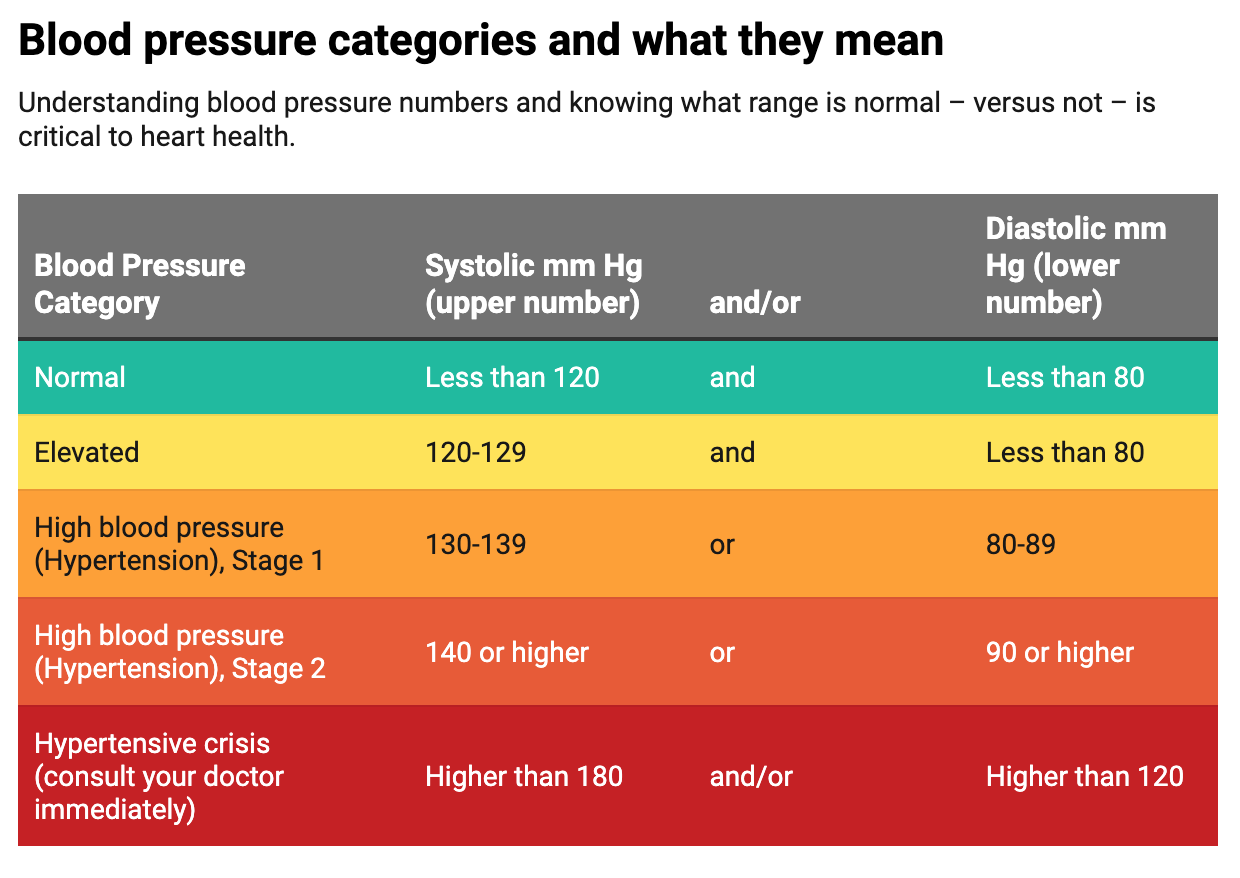
is less than 120/80 millimeters of mercury (mm Hg) for adults. This is a unit of measurement that stems from early blood pressure monitors, which looked at how far your blood pressure could push a column of liquid mercury. For most patients, lower tends to be better.
Stage 1 hypertension, which is the lower stage of high blood pressure, begins at 130/80. Stage 2 hypertension, which is the more severe stage of high blood pressure, begins at 140/90. Both numbers are critically important, because every increase of 20 millimeters of mercury in systolic blood pressure, or 10 in diastolic blood pressure, doubles a person's chances .
10 tips for healthier blood pressure
To avoid false confidence, ask about your blood pressure at every doctor's visit, and find out what the numbers mean. If your blood pressure is above the normal or healthy range, then the American Heart Association recommends the following 10 tips.
- Talk with your doctor. , ask your doctor about strategies for lowering it, and how you can track your blood pressure at home.
- Eat a heart-healthy diet. Vegetables, fruit, whole grains, low-fat dairy products, skinless poultry and fish, nuts and legumes, and olive oil . Red meat, saturated and trans fats and ultraprocessed foods are unhealthy for your heart.
- Cut back on salt, which increases blood pressure. The Dietary Guidelines for Americans recommend 鈥攖hat's less than one teaspoon鈥攂ut the U.S. Food and Drug Administration reports that the , roughly 50% more than recommended. Even if you don't add any salt to your meals, you may still get too much from . One serving of canned chicken noodle soup . One Big Mac from McDonald's .
- Limit your alcohol use. Whether it's beer, wine or spirits, . It's , but if you do, observe the limits recommended by the . For women, that's one drink per day at the very most. For men, it's two drinks per day at most. One drink is 12 ounces of beer, 4 ounces of wine, 1.5 ounces of 80-proof spirits or 1 ounce of 100-proof spirits.
- Be more physically active. Just two and a half hours per week of physical activity . For example, that's a 30-minute walk five days a week. You might also switch up your physical activity by swimming, lifting weights, doing yoga or going dancing.
- Maintain a healthy weight. Even losing a few pounds can . Ask your doctor about a healthy approach to weight loss.
- Manage stress, which is bad for your blood pressure. While stress relief , bringing down your stress level can help you feel better. The Mayo Clinic recommends , including learning to say no sometimes, spending time with family and friends and meditating.
- If you smoke, vape or both: Quit now. Both are bad for and . Quitting smoking may reduce your heart disease risk to as people who never smoked. And the benefits of quitting start right away. A recent study found that after just 12 weeks, people who quit than when they were still smoking. The Centers for Disease Control and Prevention has that can help you quit.
- Take medication, which is often recommended for people with stage 2 hypertension, and for some with stage 1 hypertension, including those who also have heart disease, kidney disease or diabetes. Most patients to normal or healthy levels. A recent meta-analysis demonstrated that lowering systolic blood pressure by 5 mm Hg through medication , irrespective of baseline blood pressure or previous diagnosis of cardiovascular disease.
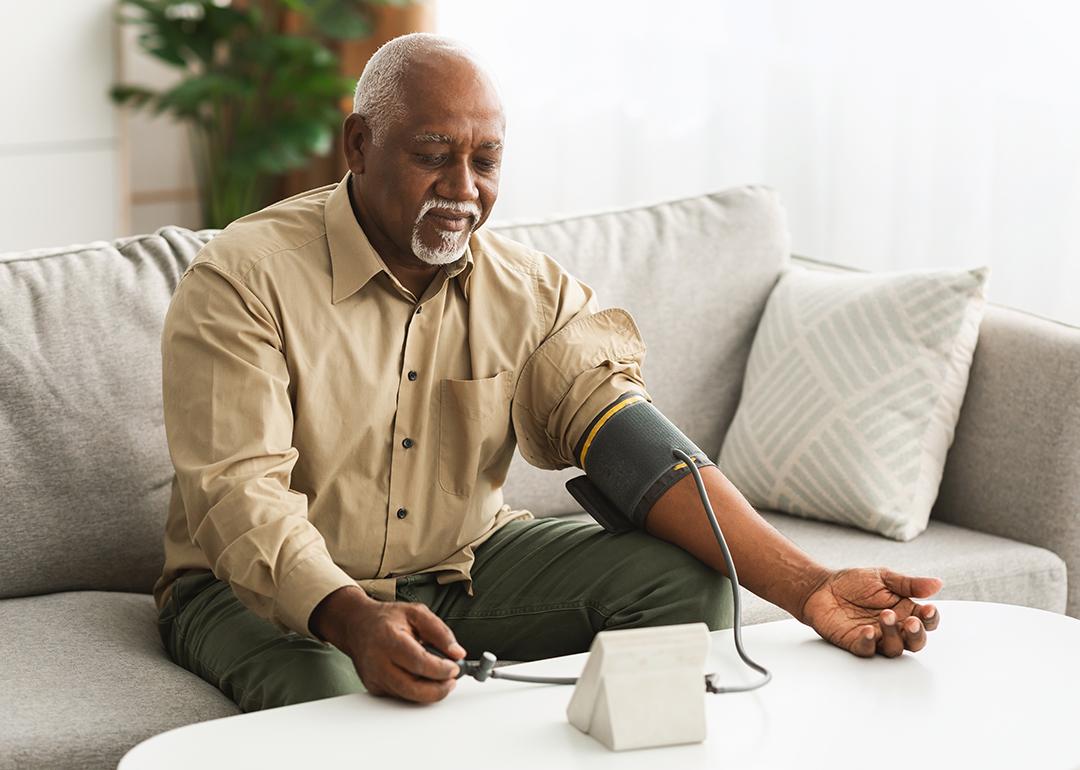
- Track your blood pressure at home. The American Heart Association recommends an that goes on your upper arm. A record of readings taken over time can help your doctor adjust your treatments as needed.
High blood pressure is a silent killer. Being proactive and knowing your numbers can be a lifesaver.