
Small business holiday trends to watch in 2025
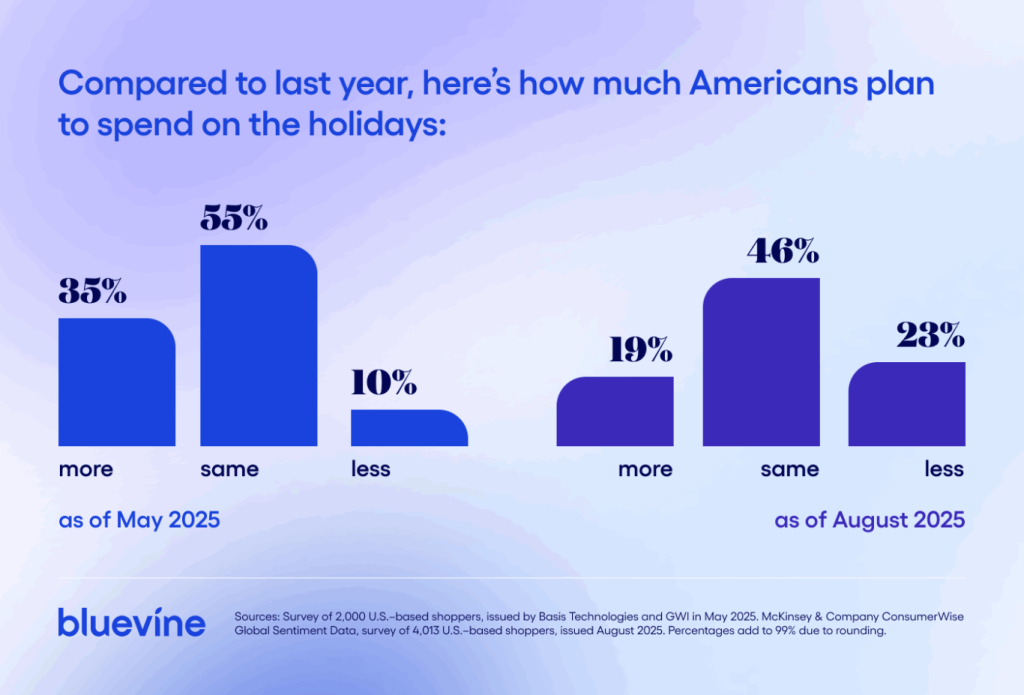
2024 was a rebound year for small businesses. Not only did performance exceed expectations across the board, but 79% of respondents in ’s conducted in November 2024 entered 2025 confident that their businesses would beat expectations again. Their customers, on the other hand, have felt far more cautious about their economic future, but they also aren’t planning to spend less this holiday season—in fact, the average American household on holiday expenses in 2025 than in 2024, according to Simon-Kucher's summer 2025 survey.
Yes, while shoppers from all income brackets reported they’d be cutting back on nonessential spending, plan to match or increase last year’s holiday budget, McKinsey's August 2025 ConsumerWise survey found. This percentage climbs with household income, as plan to do the same, per Optimove's July 2025 survey of higher-income households.
What’s going on? While survey respondents may be honestly reporting overall cutbacks, most still plan to celebrate holiday traditions like gathering and gift-giving, and will be more generous in spending on gifts than on themselves, according to surveys from and . This means that, while overall holiday spending is projected to grow in 2025 (relative to last year), according to Simon-Kucher, your customers will be spending more selectively, and seeking out sales, deals, and value more intentionally than ever before.
To help you navigate the long and delicate holiday season ahead, Bluevine compiled insights from 12 different customer analytics reports to help you understand your customers’ mindsets, take advantage of peak sales periods, and execute a holiday marketing strategy that will steer your business confidently into 2026.
Key insights
- Americans plan to spend as much as they did on last year’s holidays, but more intentionally.
- Tariff anxiety will drive some early spending as shoppers rush to beat price increases.
- Customers will increasingly ask AI for gift recommendations this year and beyond.
Key actions
- Capture high-value customers before Cyber Week, which will dominate seasonal sales.
- Provide options to last-minute and post-Christmas shoppers to establish loyal customers.
- Optimize your business website for recommendation by AI language models.
2 trends shaping customer spending in 2025
Inflation anxiety wanes, tariff uncertainty takes its place
Although inflation has continued to cool in 2025, is raising concerns about the availability and price sensitivity of gifts. The latter is this year’s most common anxiety among shoppers, with 51% of shoppers “very concerned” about the effect of tariffs on prices, and 42% still “very concerned” about inflation, according to Optimove.
While tariff concerns eased slightly over the summer, 77% of shoppers still believe their holiday spending will be at least “a little” affected by tariffs, according to Simon-Kucher’s survey. The survey also found that 31% of these potential customers will adapt by shopping early to beat price hikes, while 53% will wait for seasonal discounts.
This suggests a longer holiday season than ever before, one in which sales may feel more or less continuous throughout the fourth quarter. Such price cuts were highly effective during last year’s holiday season— showed that shoppers’ economic anxiety and increased response to discounts accounted for an extra $2.25 billion in online spending during sales.
Businesses and customers alike are becoming more comfortable with AI
, 61.3% of small business owners hold a favorable view of AI tools. For reasons that include potential job losses, frustrating customer support programs, privacy concerns, and a general loss of humanity, customers are much more skeptical of businesses using AI. However, their trust greatly increases when asked about specific business use cases, according to . So if you into your holiday marketing, be transparent about how you’re using it, and only use it to support your employees’ existing creativity and expertise.
If you’re considering using AI this holiday season, keep in mind that trust and sentiment toward AI range significantly across demographics—those 50 and older trust it less than younger generations, and men trust it up to 30% more than women (depending on how it’s used). Women are also 26.8% more likely to object to the use of AI-generated human models in ads, Attest research found.
Of the people who regularly use large language models (LLMs) like , 68% trust the information they receive, and about half of U.S.-based users believe they’ll use an LLM to research gift ideas this year, according to surveys from Simon-Kucher, Optimove, and Attest. This increase in trust, combined with search engines’ addition of AI-generated result summaries, may cause a significant decline in traffic to your —if it hasn’t already—making your direct marketing channels all the more important.
Holiday spend trends from 2024 and 2025
Here’s what and this year’s projections reveal about when and where customers like to shop for the holidays:
Did you know?
Holiday shoppers spent $18.2 billion on buy now pay later (BNPL) purchases in 2024, more than any previous year. Cyber Monday 2024 set the standing daily record for BNPL spending: $991.2 million, according to Adobe Analytics.
Cyber Week: Peak sales
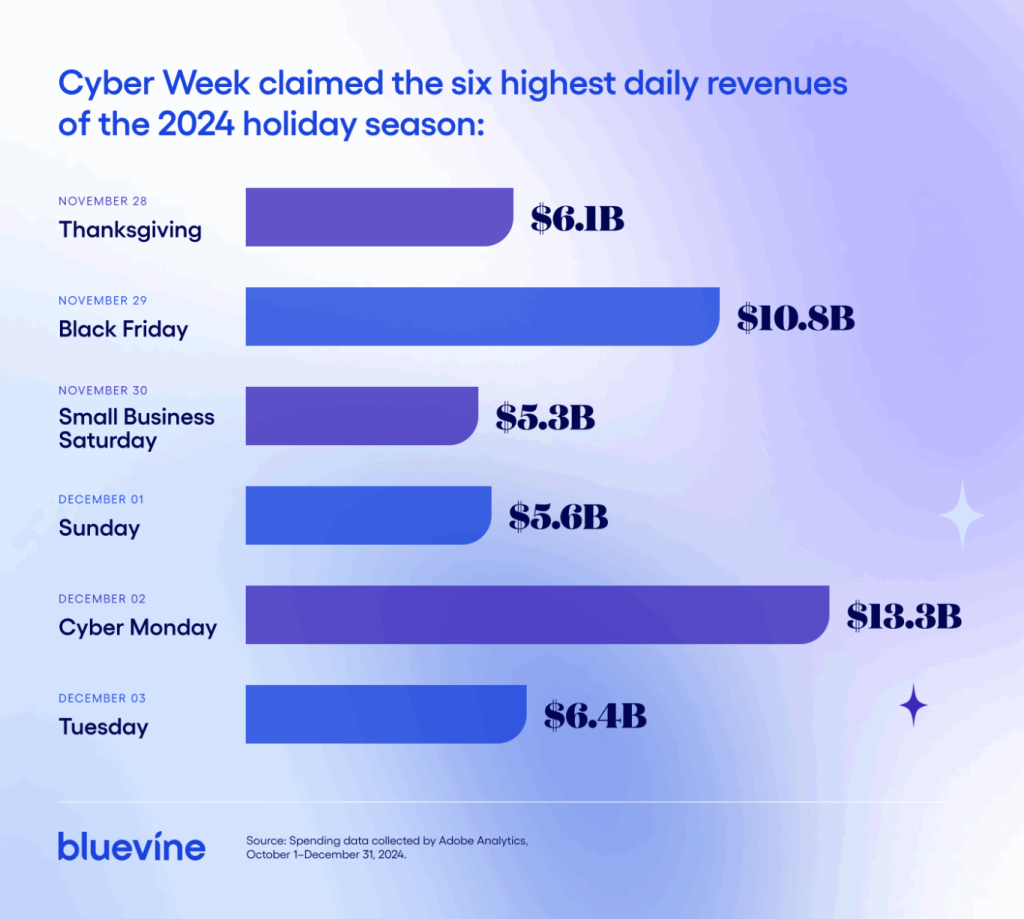
Americans may start shopping earlier this year, but 59% will wait for Black Friday or Cyber Monday to make major purchases, and 38.4% of all spending is planned for Cyber Week alone, respectively, according to data from Optimove and PwC. This is exactly what happened last year, when daily revenue remained steady until the weekend before Thanksgiving. The five days of Cyber Week and the day after Cyber Monday were the six biggest spending days of the entire 2024 season, Adobe Analytics found.
In 2024, mobile ordering hit its highest share of online revenue, at 54.5% of online orders in November and December. However, the conversion rate for desktop orders was almost double that of mobile on Black Friday 2024 and 50% higher on Cyber Monday, per Adobe Analytics. Customers may be spending less time shopping on mobile than when browsing on desktop, or they may be more accustomed to filtering out advertisements on mobile.
If your business targets younger shoppers, then consider ramping up your direct , as 35% of Gen Zers and 26% of millennials plan to buy gifts directly through social media this year. The for gift buying are (52%), Facebook (51%), TikTok (47%), and YouTube (40%), according to Basis Technologies and GWI's May 2025 report.
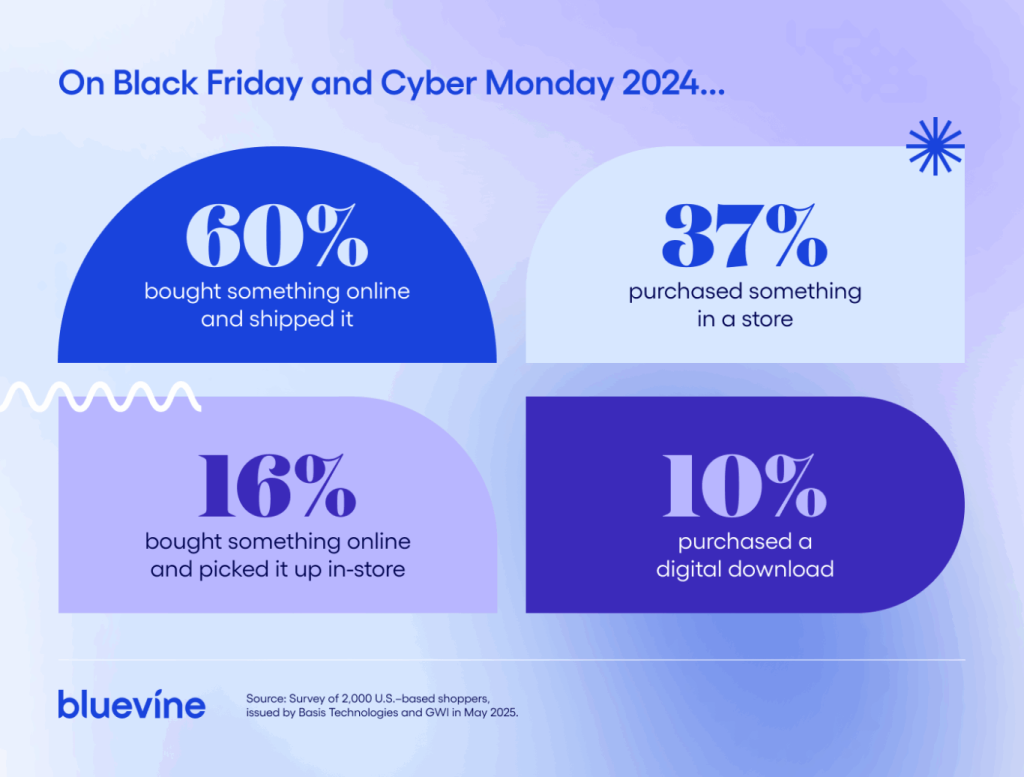
Overall, here were the most popular options for Black Friday and Cyber Monday purchases in 2024:
December and Christmas: Welcome all last-minute shoppers
This year, PwC reported that 19% of holiday spending is planned for Dec. 2–25, a smaller share than for Nov. 1–27. In 2024, daily revenue steadily fell through December until it spiked on the 20th through 23rd, per Adobe Analytics. Expect the same price hikes from last-minute shoppers to begin on the last Friday before Christmas, Dec. 19, 2025.
As Christmas draws near, having will become increasingly important. Last year, standard shipping was the most-used option throughout the holiday season. Expedited shipping was the least-used, but its share of orders increased nearly fivefold from Dec. 1 to its peak on Dec. 19. Curbside pickup increased sharply in the 10 days before Christmas, peaking on Dec. 23 at 37.8% of all orders, according to Adobe Analytics.
Christmas and after: Returns, redemptions, and renewal
Mobile hit its peak share of on Christmas Day, accounting for 65% of internet purchases, Adobe Analytics found. This may relate to one of the conspicuous trends in this year’s holiday reports: the ascendancy of the gift card. Gift cards have a number of benefits for the modern shopper: They circumvent the need for gift ideation while preserving gift-giving as a tradition and can be an affordable way to cut back on whole purchases. In fact, gift cards are the most popular planned purchase this year: McKinsey found that34% plan to spend more of their holiday budget on gift cards than any other category (including the second-place answer, groceries). Fifty-two percent of Americans plan to give at least one gift card to their friends, per PwC.
The holiday season by no means ends on Christmas—in fact, the following week is fertile ground for businesses to reach a particular type of customer: gift-givers who, now that their holiday travels and traditions are over, are ready to redeem gift cards or gift money on something for themselves:
- The new year symbolizes a fresh start for many. Customers might make end-of-year purchases to get ahead on resolutions, evolve their identity, or leave a less favorable year behind them, the Mailchimp and Canvas8 report found.
- Despite subsiding inflation, net consumer sentiment is down 35% since November 2024, according to McKinsey. As people continuously cut back on personal expenses, PwC found that a dose of “retail therapy” after the holidays becomes all the more alluring.
6 steps to maximize holiday sales
As a small business owner, your size makes you uniquely suited to navigate this year’s longer and more conscious holiday season—you’re more flexible than big businesses, and your messaging can disseminate faster and feel more genuine. Based on the data above, here are six strategies you can implement this year and beyond to entice customers at each step of the season, build a lasting community around your brand, and tap into marketing .
1. Start sales early, but pace your holiday messaging
When holiday shoppers were asked about their biggest frustration last year, “” was the most common response,” per the Basis Technologies-GWI report, and “rising prices” remain this year’s biggest concern, McKinsey found. Most of this year’s shoppers are preparing to spend as much or slightly more than last year, but expecting to afford less, meaning gifts will be bought more intentionally and over a longer holiday shopping season than in years past, according to a .
Some of these shoppers will try to outpace price hikes by shopping early, and your best chance of reaching customers throughout the season is with sales, preferably storewide. That being said, your early sales don’t need to be holiday or Christmas–themed. Customers in recent years have complained on social media about “Christmas creep,” the alienating experience of seeing Christmas items or messaging before Halloween, per Mailchimp and Canvas8’s report. Instead of pushing Christmas messaging too early, motion toward early shoppers using fall-, Halloween-, and Veteran’s Day–themed sales until Cyber Week and .
Keeping in line with this year’s plans to shop early, 88% of shoppers would prefer to receive their holiday offers before the major holidays, but 36% want to receive fewer marketing messages overall, according to Optimove. When reaching out to customers, more messages won’t always cut through the noise. Mailchimp and Canvas8’s report suggests creating a wide audience funnel by pursuing many channels, focusing specific attention on low-traffic and higher-cost channels like or to differentiate your brand.
Did you know?
From summer 2024 and summer 2025, PwC found that internet searches for “discount” and “coupon code” increased by 11%.
2. Cultivate a community, especially for high-value customers
Fifty-two percent of Americans this year plan to buy from local brands, according to the Basis Technologies-GWI report, and 22% plan to spend most of their holiday budget at small and locally-owned businesses, CivicScience found. You can convert these prospective buyers—especially local ones—into by positioning your brand image to align with their values and reward them for doing business with you. For example, according to Mailchimp and Canvas8’s findings, one way to achieve this is to alert your VIP customers via SMS, email, or social media to an exclusive sales event or product preview ahead of Black Friday or Small Business Saturday. Supplement your digital strategy by hosting a holiday–themed catered to your local customer base.
In addition, Reddit found that a growing segment of the American public now considers brand values a deciding factor of where to shop:
- 55% are more likely to buy from a brand that demonstrates care for their employees
- 42% believe brands should clearly state their values
- 41% would stop doing business with a brand that doesn’t align with their values
- 40% seek out sustainable brands and products
- 10% didn’t buy a product they liked last year because they don’t support the brand.
While online shopping will continue to dominate this season, 54% of Americans intend to shop both online and in-store this year, according to McKinsey, so if you have a brick-and-mortar storefront, take advantage of its strengths. Nearly half (48%) of in-person shoppers visit stores to interact with the products, so provide them with interactive displays and trials. Sales (38%) were the second most common lure, according to PwC’s Holiday Outlook survey, so advertise holiday sales clearly on your storefront and website, and consider store-exclusive deals.
3. Pitch your business as a solution to gift idea fatigue
One of the most common holiday shopping frustrations last year was “difficulty coming up with gift ideas” (19%), according to the Basis Technologies-GWI report, and Reddit’s survey found that 36% of respondents say they struggle to find unique gifts for people they’ve known a long time. The internet age has made it easy to choose what to buy—guides, specialty subreddits, and comparative reviews form a consensus of which products are best. This has made certain personal purchases easier, but the ubiquity of these gift guides has created new difficulties, like choice overload, not knowing which sources to trust, and trouble finding unique products.
Small and local businesses tend to be left out of these guides, which leaves you with the opportunity to solve your customers’ gift idea fatigue. In fact, 52% of holiday shoppers in 2024 said they prefer retailers who’ll help them choose a unique gift, Basis Technologies-GWI’s report found, so don’t be afraid to ask questions and suggest products to your customers. In addition, if you and created brand ambassadors through great products, responsive customer support, and a resonant brand voice, your customers will share their positive impressions among friends and on social media.
4. Tap into travelers and other seasonal behavioral segments
Your customers may shop differently during the holiday season compared to the rest of the year. Try organizing your target segments into demographics based on behavior and motivations instead of demographics—you may find new . Start with some of the categories below:
- Holiday preppers — Some shoppers base part of their identity on being well-prepared for the holidays, Mailchimp and Canvas8’s report found. This group will turn out for your pre-Cyber Week sales, along with customers who come early to beat tariff price hikes. They may prefer a calmer shopping experience compared to the holiday rush.
- Curators — As it’s become harder to find unique gifts, some customers are willing to go the extra mile. These shoppers are looking for quality gifts that their recipients won’t know about. Pitch your uniqueness and craftsmanship to these customers.
- Optimizers — These customers will spend time looking for the best product in a category, going beyond the online mass-audience gift guides to try products for themselves. Interactive product demos in-store or at an in-person event can help you reach these customers.
- Procrastinators — The opposite of your holiday preppers, these customers will do the bulk of their holiday shopping Dec. 19–23. They’re more likely to use expedited shipping and in-store pickup for online orders, and may come to your store to avoid shipping delays, so make sure you have enough inventory on hand.
- Holiday travelers — 44% of Americans expect to travel during the holidays this year, but this likelihood scales with youth: PwC found that Gen Z and Millennial respondents are about 29% more likely than Gen X and more than twice as likely as Baby Boomers to travel. If your community sees a lot of seasonal travelers, reserve some of your messaging and events for them.
5. Close out December with flexible shipping and customer support options
In the week before Christmas, the availability of expedited shipping and in-store pickup becomes extremely important for your late shoppers. Providing different carrier options makes customers feel more comfortable making late purchases.
The week after Christmas, you’ll receive a wave of customers ready to redeem gift cards, purchase complements to a gift they received, process a return, or receive product support. You can massively lower your support load by offering automated or self-directed return options via your website, and you can encourage customers to return by recommending the perfect products to gift card redeemers.
You’ll also want to prepare a range of customer support options, as each channel has its pros and cons. Phone calls remain the preferred option, so make it fast and easy for customers to reach a human support professional. Preference for other channels varies across generations. Baby Boomers prefer speaking with an in-person representative (60%), while younger generations are more likely to email or live chat with a human representative, according to PwC research.
6. Start implementing an AI content strategy
AI won’t replace search engines this year, but it’ll be a major supplement for shoppers in 2025 and beyond: 49% of U.S. shoppers are likely to use a LLM like ChatGPT to research gift ideas this year (a six-point increase from 2024), with men significantly more likely than women to do so. Thirty-two percent of Americans under 40 use AI at least half the time they do an internet search, and 40% of users consider AI-generated responses more trustworthy than search engine results, Attest’s report found.
While the algorithms behind ChatGPT, Claude, Gemini, and Grok remain opaque, it seems that also improves its chances of being cited by LLMs and search engine AI overviews. To prepare your business, implement relevant keywords into the following elements of your business site, especially on any holiday campaign landing pages:
- Meta titles and descriptions
- Descriptive headings
- Short overviews and summaries of site sections
- Bulleted product and sale highlights
- FAQs
- In addition, keep your Merchant Center updated with any new products and promotions. Lastly, AI language models train on social media sources (especially Reddit) over almost any other source—by following all the tips provided in this guide, your happy customers will advocate for your brand online, boosting your chances of being represented in AI-generated responses.
was produced by and reviewed and distributed by Â鶹ԭ´´.