How tribal gaming has changed over time and impacts tribes today
This story originally appeared on OLBG and was produced and distributed in partnership with 麻豆原创 Studio.
How tribal gaming has changed over time and impacts tribes today
With the history of systemic racism, lack of federal investment, and lack of property rights to build wealth, Native American communities have long been at an economic disadvantage. Today, there are across the country, and revenue from gaming has allowed these tribal communities to fund social services, housing, education, health care, and more. Examples include everything from tribal to local infrastructure projects.
But the casino revenue鈥攚hich totaled a record 鈥攈asn't always been around. Before the first tribal casino opened in 1979 (long before online betting was an option), people had to fly to places like Las Vegas or Atlantic City to play legally.
compiled details on the history of tribal gaming using research from across the internet, including,, and. Data was also pulled from the.

Tribal gaming dates back to a 1970s court case
A 1976 U.S. Supreme Court case established the freedom of tribal governments to operate independently, a unanimous decision that permanently changed the gaming industry in America and the financial fortunes of countless Native Americans.
The events that led to began with a $29.85 tax bill levied on Chippewa couple Helen and Russell Bryan's trailer home on the Leech Lake Indian Reservation in northern Minnesota. A handful of public interest attorneys prevailed in the case, regarded by many as the on the well-being of tribal members in decades.
Unable to pay the tax and desperate to avoid foreclosure, the Bryans sued. In a class action suit, their attorneys argued that property on Indian lands should not be taxable and that the U.S. government should not have regulatory powers over tribes. An appeal to the Minnesota Supreme Court failed, but the U.S. Supreme Court sided with the Bryans.
The expansive High Court decision, among other things, allowed tribes to operate casinos outside the purview of or taxation by federal, state, or local governments.
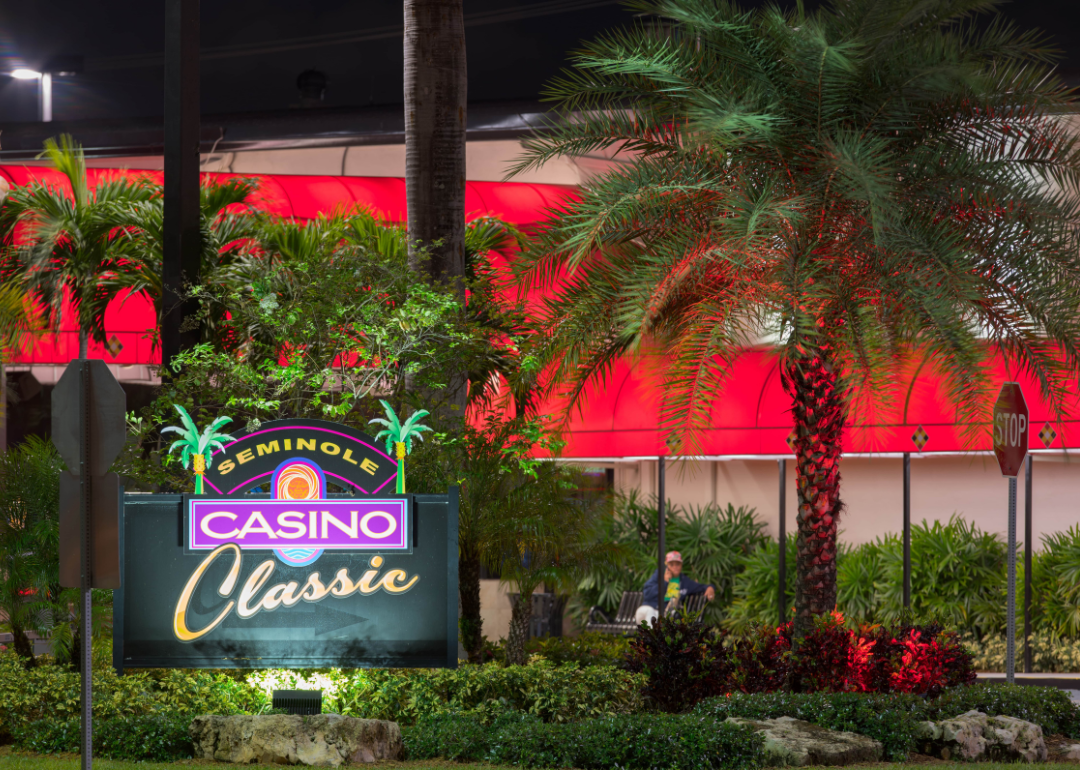
The Seminole Tribe opened the first tribal casino in 1979
Many new industries start small and face challenges鈥攂oth are true of tribal gaming. This first tribal gaming spot was a high-stakes bingo parlor in Florida that was only open for a matter of days.
Defying that required bingo parlors to be nonprofits open only two days a week with $100 maximum jackpots, the Seminole Reservation high-stakes parlor that debuted in 1979 prompted Broward County Sheriff Bob Butterworth to shut it down immediately. The Seminoles took him to court on the grounds of tribal sovereignty, and two years later, a federal circuit court ruled in their favor in .
Like Indian gaming itself, the small metal building used for the bingo parlor has since expanded dramatically to become the in Hollywood, Florida, now offering more than 1,000 slots and table games, four restaurants, and weekend entertainment.

A Supreme Court ruling expanded tribal gaming in the 1980s
A SWAT team in Indio, California (near Palm Springs) in 1983. No one was hurt, but the raid did lead to a momentous court case that established the right of tribes to operate gaming establishments freely.
The small, impoverished Cabazon tribe and the nearby Morongo Band of Mission Indians joined forces to fight for their rights. After two appeals, the Supreme Court sided with them in a 6-3 decision four years after the SWAT raid. The decision in affirmed and broadened the rights of tribes over states' rights.
The 1988 Indian Gaming Regulatory Act established the first federal regulations
Inevitably, with Indian gaming exploding nationwide by the late 1980s, Congress passed a set of rules governing all gaming operations on Native American lands and established the to oversee and enforce the act.
The NIGC also ensures gaming integrity while guarding against organized crime infiltration. Building on the precedents set by Bryan v. Itasca County and California v. Cabazon, the act established sets of regulations for three classes of gaming: traditional Indian/social games, bingo/nonbanked card games, and casino games.

The Fort McDowell Tribe stood up against federal agents in 1992
Even after the Supreme Court greenlit tribal gaming in 1987 and Congress established the Indian Gaming Regulatory Act, opposition by federal agencies remained. This was made crystal clear with the FBI's attempt to in Phoenix on a spring day in 1992.
Word spread quickly among tribal members, who formed vehicle blockades to prevent an FBI-orchestrated convoy of moving vans from confiscating 349 gaming machines. The standoff ultimately lasted for 10 days, with about from several states and Canada joining the blockade before then-Arizona Gov. Fife Symington agreed to a gaming compact鈥攊ronically, on the day before Thanksgiving.
The installation of slots and video poker machines earlier that year brought in money for jobs, health care, and other services for many in the largely impoverished tribe, which precipitated their vigorous response to the FBI action. The tribe has since added a hotel, golf courses, and other visitor attractions on their land.
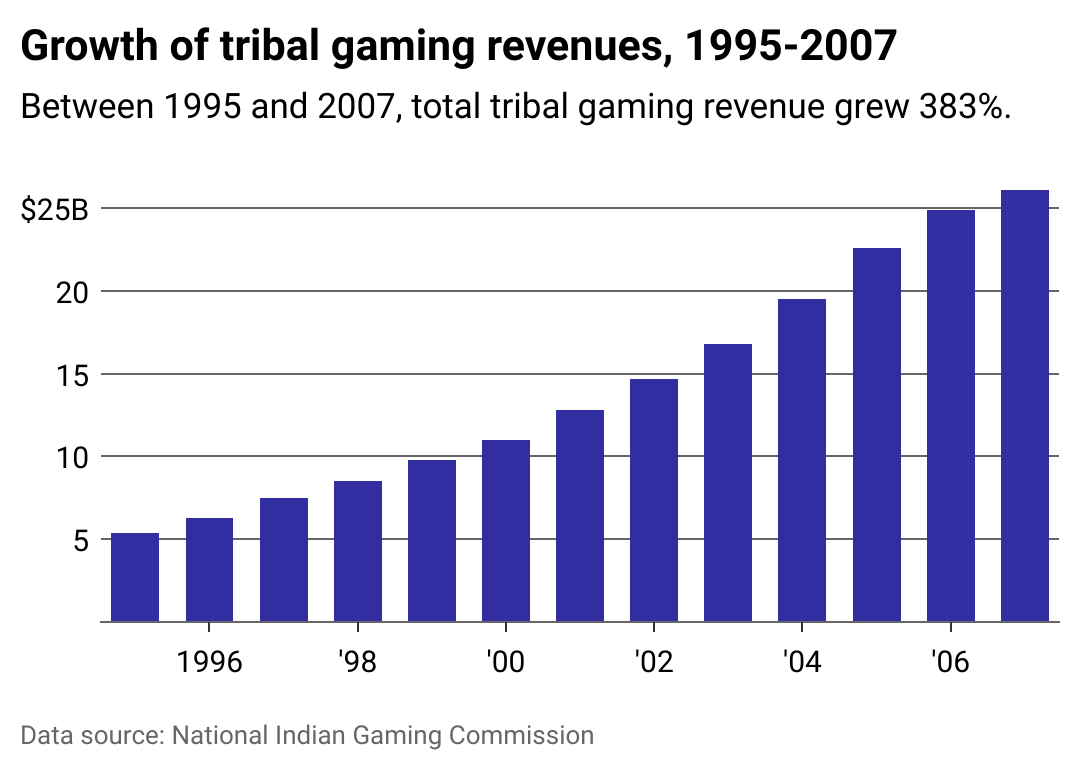
Tribal gaming boomed by the billions at the turn of the century
After the legal challenges to tribal gaming were won in the 1970s and 1980s, the industry grew as rapidly as a pile of chips when every player has a full house.
From 1995 to 2006, the industry snowballed from $5.4 billion to $26.1 billion per year. That growth curve finally showed signs of flattening when it compared to 14.6% the previous year. And the annual growth from 2010 to 2019 was a modest 3.4% (), though the growth continued yearly.
The steady growth during the quarter-century between the mid-1990s and the 2020 pandemic can be attributed to , including the proliferation of large tribal casinos and the number of slots and other games of chance offered at those mega-casinos.
COVID-19 hit tribal casinos hard
Tribal casinos and the hotels, restaurants, and spas that often accompany them were devastated by the COVID-19 pandemic. in the U.S. during the early stages of the pandemic were on Native American land.
Besides costing many casino-related jobs held by tribe members, who filled about half of those jobs, the lost revenue has meant that funding for many tribal projects鈥攕uch as schools and medical clinics鈥攍argely dried up.
The government did not offer the first round of Payment Protection Program loans to small businesses to tribal casinos, adding further financial pain. All told, nearly related to tribal casino operations were at least temporarily lost to the pandemic.
Tribal gaming reaches new heights
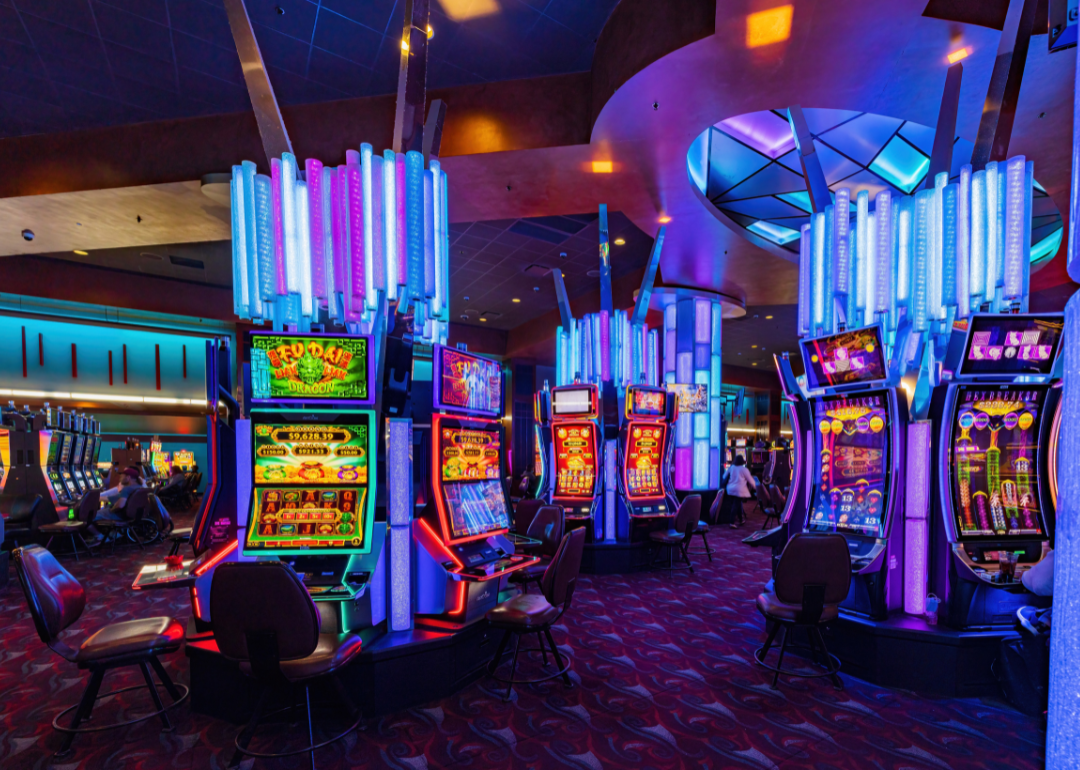
The easing of COVID-19 restrictions and fears is bringing customers back to tribal casinos that have survived. And they're coming back in spades. Following a steep drop in revenues in 2020, tribal gaming rebounded to hit an in 2021, up and 13% from the last pre-pandemic year of 2019.
Despite this rosy picture, tribal casinos face myriad challenges in the years ahead, including , competing with new nontribal casinos increasingly being allowed by tax revenue-seeking local and state governments, and the burgeoning online betting industry. But with the funding of so many Indian services at stake, you can bet they will do whatever is needed to avoid going backward. For example, in October, two Oklahoma tribes and one California tribe a partnership with a New York gaming company to launch a sports betting app.