Your home has a 1 in 4 chance of being at severe risk from extreme weather
Your home has a 1 in 4 chance of being at severe risk from extreme weather
Extreme weather disasters 鈥� made larger, longer, and more intense by climate change 鈥� are taking a heavier toll on the possession that many Americans consider to be their most important asset: the home.
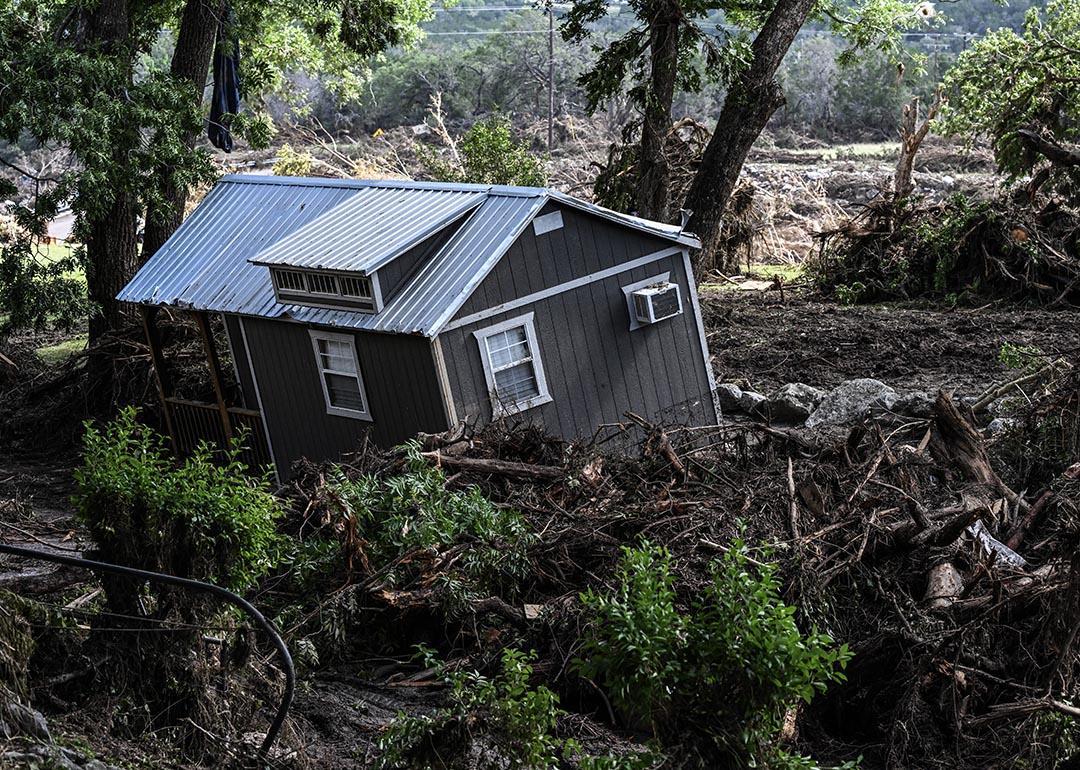
A slew of big events, including deadly in California and Oklahoma, in Missouri and Kentucky, and in Texas, have already destroyed some so far this year and caused more than $20 billion in direct damage. That鈥檚 in addition to an unending parade of smaller extreme weather events.
These compounding extremes aren鈥檛 just being felt by homeowners 鈥� they鈥檙e changing the financial calculus that underpins the companies that insure them.
examined a published in September by Realtor.com, a brokerage platform, found that slightly more than 1 in 4 U.S. homes, representing nearly $13 trillion in value, are vulnerable to 鈥渟evere or extreme climate risk.鈥� The biggest danger by far is hurricane-related wind damage, with some 18% of homes vulnerable; followed by flood risk, with 6% of homes vulnerable; and wildfire risk, with 5.6%. The report used data from a nonprofit climate risk assessment group called the First Street Foundation, which incorporates the effects of climate change into its modeling to identify how much of the country鈥檚 housing stock is at risk.
The report also analyzed how private insurance companies and the federal government, which insures most of the country鈥檚 flood-prone properties, are shifting to accommodate the rising costs of providing financial protection in a world altered by climate change. It found that homeowners in low-value, high-risk insurance markets 鈥� that is, places where homes are worth less than the national average but are most exposed to climate-driven extremes 鈥� are being hit hardest. In these zones, insurance premiums are rising precipitously and becoming an increasingly unaffordable share of the costs of owning a home.
鈥淭he monthly mortgage rate is already very high, and on top of that you have home insurance, and on top of that you may have other flood and fire insurances,鈥� said Jiayi Xu, an economist at Realtor.com and author of the report. The rising costs across the board compound an gripping the nation.
This double-whammy effect is becoming most apparent in parts of Florida and Louisiana, two states that frequently experience hurricanes. Xu used an equation that represents insurance affordability called a premium-to-market-value ratio, which calculates the cost of insurance against the overall value of a home. The ratio is highest in Miami and New Orleans 鈥� 3.7% and 3.6%, respectively. That means someone who owns a $500,000 house in Miami, for example, is paying $18,500 a year in insurance premiums. Nationally, the average ratio is around 0.8%.
In addition, the report called out Oklahoma, the heart of Tornado Alley, and Texas, also prone to hurricanes and flooding. The 10 housing markets where insurance costs are highest can be found in those four states.
Realtor.com isn鈥檛 the only real estate platform that has begun to invest in risk mapping and analysis in recent years. , , and other similar companies are starting to conduct their own statistical analyses or include climate risks in real estate listings. That, too, said Daniel Aldrich, director of the Resilience Studies Program at Northeastern University, is a sign of the times.
鈥淏y putting out these climate reports, Realtor.com is saying, 鈥榃e鈥檙e the smart choice for serious buyers,鈥� while also getting ahead of what will probably become mandatory disclosure requirements down the road,鈥� said Aldrich, who was not involved in the report. While no national climate risk exposure standards exist, more than two dozen states have , and new in California took effect this summer. Other states are .
But that鈥檚 not the only reason brokerage platforms are starting to offer these services. 鈥淭here鈥檚 real money in this data, and these companies know it,鈥� Aldrich said. 鈥淥nce you鈥檝e built the infrastructure to analyze climate risks, you could theoretically sell that same data to banks, investors, and government agencies, turning what started as a marketing report into a whole new business line.鈥�
This story is published with support from the CO2 Foundation.
was produced by and reviewed and distributed by 麻豆原创.