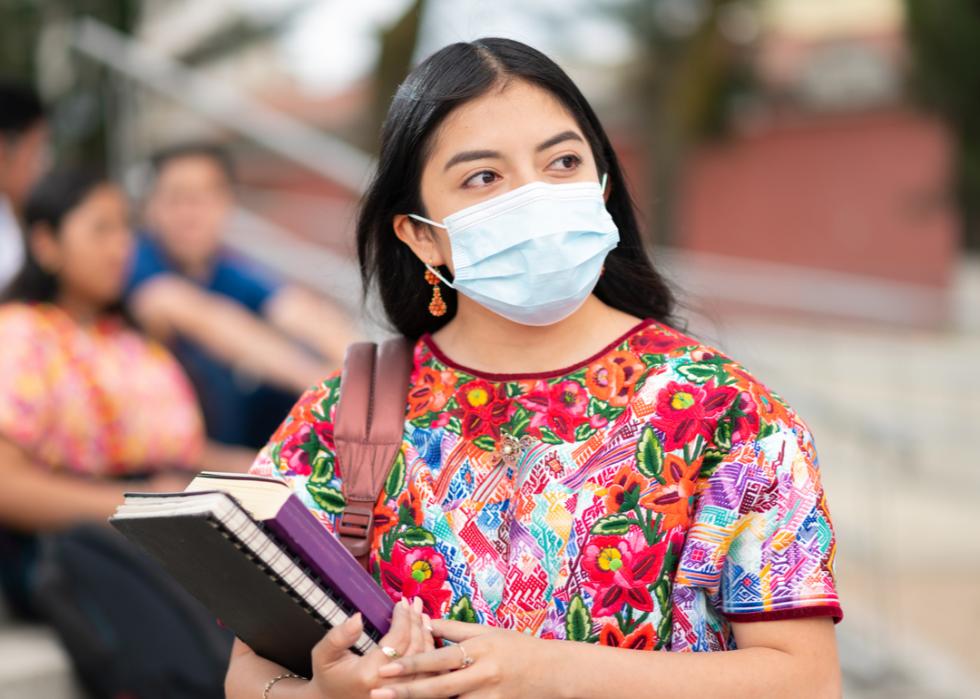
Abortion laws around the world

Written by:
October 15, 2021
TairA // Shutterstock

Abortion laws around the world

Across the world, abortion is a controversial and emotional topic. Pro-choice activists are adamant that abortion is a fundamental human right that gives women control over their own bodies and reproductive futures. Their conservative opponents are equally obstinate, with many believing that life begins at conception, and that aborting a fetus is tantamount to murder.

And in countries all around the world right now, abortion laws are shifting rapidly. In some conservative countries and provinces鈥攍ike Turkey and the American state of Texas鈥攍ongstanding protections of the right to an abortion are being curtailed. In other countries with dominant Catholic religious traditions鈥攕uch as Argentina and Ireland鈥攁ctivists have waged and won years-long campaigns to make access to abortion the law of the land. In the case of one such country, Mexico, activists have hypothesized that the country's new legalization of abortion may end up making it a destination for women from Texas, who previously had greater access to abortions than Mexican women, but no longer do.

麻豆原创 compiled a list of abortion laws in 15 countries around the world from news and government reports. Keep reading for a look at the shifting tides of abortion access around the world in 2021.


1 / 15
Maples Images // Shutterstock

Poland

In 2021, Poland made international headlines for instituting a . Although the majority of Poles support access to abortion, the country鈥檚 conservative government is aligned with the Catholic church, which opposes abortion. Upon the ruling that access to abortion would only be permitted in the cases of rape and incest, huge crowds of Poles took to the streets to protest. Poland already had highly restrictive abortion laws, and an estimated 200,000 women leave the country each year to seek access to abortion elsewhere.

2 / 15
SALMONNEGRO-STOCK // Shutterstock

Mexico

Until 2021, having an abortion in Mexico was considered a crime. The Supreme Court decriminalized abortion in September of that year, but pro-choice activists warn there is a long road ahead to ensure open access to abortions in the country. The same month in the United States, however, restrictive abortion laws went into effect in Texas, across the border, raising the prospect of for American women looking for abortions, in a reversal of longstanding trends.

3 / 15
WAYHOME studio // Shutterstock

United States

In September 2021, the Supreme Court a piece of Texas legislation that bans abortions in the state after six weeks. Pro-choice activists in Texas鈥攁nd their allies across the nation鈥攄ecried the move as a de facto near total ban on abortions, as many women do not even know they are pregnant at six weeks. The court鈥檚 decision may set up a showdown over abortion rights on a national level at the Supreme Court, as current conditions in Texas cut against the landmark ruling guaranteeing abortion access across the country, Roe vs. Wade.

4 / 15
PR Image Factory // Shutterstock

Japan

Abortions are legal in Japan up to 21 weeks and 6 days of pregnancy. One key difference between abortion laws in Japan and much of the rest of the world is that Japan requires the father of the baby to give consent before a pregnancy is terminated, although by bringing a man along who is not the father but has agreed to pretend he is. Japan is only in the world that require third-party consent, and activists are pushing the country to end this requirement.

5 / 15
frantic00 // Shutterstock

Russia

Russia has one of the world鈥檚 highest abortion rates. President Vladimir Putin is attempting to stop Russia鈥檚 high rate of termination in an attempt to redress the country鈥檚 population decline. Russia currently pays for abortions under the country鈥檚 medical insurance program. Putin鈥檚 government鈥攁long with the country鈥檚 conservative church leaders鈥攁re trying to for women who choose to continue the pregnancy.

6 / 15
aslysun // Shutterstock

China

China is moving to in order to increase its falling birthrate. The country鈥檚 birth rate has fallen to its lowest level since 1961, which concerned government officials enough to reverse China鈥檚 decades-long one-child policy in 2015. The announcement that China would attempt to limit abortions via improved contraceptive access or restricted abortion access or both has worried some women in the country, who fear they may be left without control of their reproductive futures should the state ban abortions entirely.

7 / 15
Spectral-Design // Shutterstock

Argentina

Until 2020, abortion was only legal in Argentina in the case of rape and incest. But at the end of 2020, Argentina鈥檚 congress voted to legalize abortion up to . The legislation鈥檚 success was attributed in part to a massive protest movement of Argentinian women and their allies, whose years-long campaign culminated in the new law. Legalization is a blow to the country鈥檚 religious establishment, the Catholic church, which opposes abortion access.

8 / 15
PhotoSky // Shutterstock

South Africa

Abortion was legalized in South Africa in 1996, during the country鈥檚 transition from apartheid to democracy. A expanded access by allowing trained nurses to administer abortions. However, despite the strength of existing laws protecting the right to an abortion, there is a significant access divide in the country, with women in rural areas experiencing difficulty in finding a willing provider compared to their urban counterparts.

9 / 15
Christie Cooper // Shutterstock

Australia

Expanded access to abortion in Australia has been a piecemeal effort, as various states across the country moved to decriminalize the procedure. The most populous state, Sydney, voted to allow abortions , overturning a 119-year-old law prohibiting it. In 2021, to overturn the prohibition of abortions, making the procedure legal across the entire country.

10 / 15
pio3 // Shutterstock

Italy

Italy鈥檚 highly Catholic culture has led to restrictive abortion laws in the country. Although legal for the first 90 days of pregnancy, acquiring an abortion in Italy is a cumbersome process. Providers are allowed to opt out of providing abortions due to 鈥渃onscientious objection,鈥 which leaves many women and girls scrambling to find providers in the required time frame. This difficulty was exacerbated , when borders were sealed and women could not travel outside the country to find a willing provider.

11 / 15
Bojan Milinkov // Shutterstock

Saudi Arabia

In Saudi Arabia, abortion is allowed only in cases where the mother鈥檚 life is at risk, or to protect her physical or mental health. Rape and incest exceptions are taken on a case-by-case basis, and can be allowed under the aegis of potential harm to a woman鈥檚 mental health. Despite the restrictions, that women actually have greater access to abortions in Saudi Arabia than they do in American states like Alabama and Georgia, where politicians decry Islamic law in countries like Saudi Arabia as hostile to women鈥檚 rights, while curtailing them even further at home.

12 / 15
Ipek Morel // Shutterstock

Turkey

Although abortion has been legal in Turkey since 1983, the procedure is becoming increasingly difficult to access. The country鈥檚 conservative president, Recep Tayyip Erdogan, has said that he believes abortion is a crime, and . Public hospitals are allowed to refuse to provide abortions based simply on the president鈥檚 point of view, making it difficult for many women to afford abortions at private clinics, and thus access abortions at all.

13 / 15
aminkorea // Shutterstock

South Korea

In 2021, across the country. Before this landmark ruling legalizing abortion, an estimated 50,000鈥500,000 dangerous illegal abortions were performed in the country each year. Women caught trying to get illegal abortions were subject to punishments of up to a year in prison.

14 / 15
Max4e Photo // Shutterstock

India

In 2021, India passed a law significantly expanding access to abortions. The Medical Termination of Pregnancy Amendment Act of 2021 extends the grounds on which abortions will be permitted to include therapeutic, humanitarian, eugenic, and social grounds, allowing for near-universal access. India鈥檚 is to decrease the country鈥檚 maternal mortality rate.

15 / 15
Mick Harper // Shutterstock

Ireland

Ireland legalized abortion across the country in a . The Catholic nation imposed a near-total abortion ban in 1983 that gave the mother and fetus equal legal rights. Thirty-five years later, voters rejected this provision by nearly 2-to-1, and a law was passed the following year establishing the country鈥檚 state-run abortion service providers.

Trending Now