Debunking common misconceptions about every state
In a country as huge and diverse as the United States, it's easy to fall into the trap of over-generalizing about states and their residents or to be biased because of preconceived notions. Keeping track of the attitudes, local cultures, climate, and other aspects of each state can be overwhelming—or simply overlooked.
Popular culture and the media also can play roles in reinforcing stereotypes about parts of the country where you haven't been. You might even find that when you visit a different state you thought you were familiar with, your previously held beliefs about it and its people are wrong.
Take California, for instance, where the first image for many is sunshine, palm trees, and drop-tops; but in reality, the third-largest state by area is home to a multitude of geographies, climates, and ecosystems, from mountain ranges and deserts to vast farmlands in the middle of the state. Perhaps thinking about Michigan, and its first capital Detroit, conjures solely post-Recession ideas of massive foreclosure and abandonment; but more recently the city has seen positive developments regarding property value. How about New Jersey, the fourth-smallest state by area and third admitted to the Union? Many non-residents who have only driven the Turnpike or flown through Newark wouldn't believe how beautiful the Garden State's open spaces and historic agricultural lands can be.
To gain a better understanding of common misconceptions about the 50 states and begin debunking them, Â鶹ԭ´´ surveyed our readers and used a variety of historic and cultural sources to identify misconceptions about every state in the country. While some misconceptions are based on politics (whether the states are red or blue), others have to do either with the state's culture, landscapes, climate, or their main sources of exports or income.
Read on as Â鶹ԭ´´ debunks common misconceptions about every state.
Alabama
- Misconception: Alabama is all farmland and cotton fields.
The Southern state of Alabama is known for its cotton fields and ample farmland, but there’s more to the state's landscape. Nearly and the northern areas of the state are hilly and mountainous. Also, , according to World Atlas.
Alaska
- Misconception: Alaska is covered in snow.
Most people think of Alaska as a state that is so cold, that it is almost uninhabitable, but Alaska’s environment is diverse. For instance, the Inside Passage region of Alaska has a coastal rainforest. Also, some of Alaska’s cities are warmer than Midwestern cities. During the winter, coastal areas are more temperate—the temperature seldom falls below 20 degrees Fahrenheit. Snow mainly falls in the state’s .
Arizona
- Misconception: Arizona is one big desert.
The first image that comes to mind when you think of Arizona may be a massive desert or the world-famous Grand Canyon—but that topography makes up only about half of Arizona. The state is also home to mountains, plateaus, and the biggest ponderosa pine forest in the United States. As the sixth-largest state by area, Arizona has been called a “,” thanks in part to its diverse landscapes and its miles of shoreline created by its large man-made lakes.
Arkansas
- Misconception: Hernando de Soto buried treasure in the Ozark mountains.
This might come as a major disappointment to many, but the Spanish explorer Hernando de Soto did not bury any gold or silver in the Ozark mountains. Nor is the geology of the region ideal for gold or silver mining. Unfortunately, the rumors have resulted in archaeological sites being destroyed, especially during mining attempts in the 19th and 20th centuries. ? Zinc and lead.
California
- Misconception: California's weather is perfect year-round.
California is one of the top tourist destinations in the United States because of its sprawling shorelines, immaculate beaches, and mild weather. But the state is also highly prone to frequent and destructive wildfires because of the infamous Santa Ana winds, aptly nicknamed "devil winds." Not only are the strong, but they're also dry and originate inland.
Colorado
- Misconception: The majority of Colorado residents use weed.
The majority of residents in Colorado , according to data from the Substance Abuse and Mental Health Services Administration. SAMHSA reports that only 14.01% of Coloradans say they use weed, which is well under the majority.
Connecticut
- Misconception: Connecticut is all picturesque towns like in "Gilmore Girls."
The hit TV series “Gilmore Girls” made Connecticut look like it was full of quaint and quiet towns and small communities. However, the state capital, Hartford, has a and many industrial areas that are far from the Instagram-perfect towns you might see watching “Gilmore Girls.”
Delaware
- Misconception: Companies don't have to pay taxes if they incorporate in Delaware.
Delaware is considered a tax shelter—which is a , resulting in lower taxes. The state also has no sales tax, but this doesn’t mean a business pays no tax at all. A business that incorporates in Delaware, but conducts its business outside of the state may only have to pay a flat-fee franchise and LLC tax ($100 and $250, respectively).
Florida
- Misconception: Florida is hot all year.
While North Florida’s climate is humid and subtropical, South Florida has a tropical climate. This means there is potential for the in North Florida and in winter, the temperature can drop below 40 degrees Fahrenheit.
Georgia
- Misconception: Georgia has the lowest minimum wage.
While Georgia state law technically does set the minimum wage at $5.15 per hour, this amount is tied with Wyoming. Also, the federal Fair Labor Standards Act mandates that most employees be covered under the , according to PolitiFact's Miriam Valverde.
Hawaii
- Misconception: Most Hawaiians live on "The Big Island."
“The Big Island” of Hawaii, or the largest volcanically active island in the Hawaiian archipelago, is not the state's most densely populated island. O'ahu is by far the most densely populated island with , nine times more than Big Island.
Idaho
- Misconception: Idaho's top export is potatoes.
While Idaho prides itself in its high-quality russet potatoes, its top 25 exports do not include potatoes. The are electronic tech goods, such as memory chips, according to 2018 data.
Illinois
- Misconception: Abraham Lincoln was from Illinois.
Despite the widely held belief that Abraham Lincoln was from Illinois, he was born in Hodgenville, Kentucky. Lincoln came from a poor family who lived in Kentucky and then in Indiana. Lincoln moved to Illinois as an adult where he worked as a surveyor, postmaster, and shopkeeper before entering politics.
Indiana
- Misconception: Indiana is all flat.
Along Lake Michigan in the north, sandhills mark the Indiana shoreline. Glaciers from the Ice Age left behind rocky, rolling land and dozens of smaller lakes, according to . The southern half of the state is more hilly in comparison and has underground caves and streams.
Iowa
- Misconception: Iowans are particularly conservative.
Despite what their voting patterns indicate, Iowans might not be as conservative as you might think: just 37% of state residents are conservative, according to , making Iowa the #20 . A 2018 by Progress Iowa revealed that a majority of both Democrats and Republicans do not want Republican elected officials to do many of the things they said they would, such as cutting taxes for corporations and the rich.
Kansas
- Misconception: People from Kansas are ultra-religious.
If you believe Kansas is the most religious state in the country, think again. Kansas isn't even in the , according to 2017 data from Gallup—it’s the 12th. Mississippi is the most religious state, followed by Alabama and Utah.
Kentucky
- Misconception: Homebrewing moonshine is legal in Kentucky.
You need a , like in any other state, to homebrew moonshine in Kentucky. The first time you get busted for homebrewing moonshine, you will face a fine of $250 and up to 90 days in jail. After that, your fine will go up to $500 and up to .
Louisiana
- Misconception: Louisiana is all swampland.
There’s more to the coastal state of Louisiana than swamps. Only the of the state consists of wetlands, more commonly called “swamps.” Over the past two centuries, wetlands in the United States have been drained, dredged, or filled with concrete for various development projects. Louisiana is one of 22 states that has , which act as natural barriers against flooding and coastal erosion.
Maine
- Misconception: All of Stephen King's books take place in Maine.
Stephen King has written at least 99 books to date but only about ; King apparently found that other parts of the country can be creepy, too. For instance, “The Shining” was based in Vermont, and characters in “The Stand,” although from Maine, had traveled to New York, Vermont, and other states.
Maryland
- Misconception: Maryland is synonymous with Washington D.C.
While there have been discussions on , the state is far from synonymous with the U.S. capital. The misconception arises from the fact that D.C. was founded in 1790 on and Virginia before it was designated as the nation's capital.
[Pictured: Maryland State House]
Massachusetts
- Misconception: Massachusetts has the most aggressive drivers.
Massachusetts does not even make it to the list of the top 10 states with the most aggressive drivers. According to the Auto Insurance Center, Indiana has recorded the highest percentage of fatal accidents related to Colorado ranked second, and South Carolina third.
Michigan
- Misconception: Detroit, Michigan, is a ghost town.
Detroit did file for bankruptcy in July 2018, but that helped the city get rid of , which opened the doors for new investment. While Detroit is not completely out of hot water—nearly half of all children live under the poverty line—people are actively moving to the city. Residential 12% in 2018 alone.
Minnesota
- Misconception: Everyone in Minnesota talks like they do in "Fargo."
"Fargo" exaggerated the Minnesota accent with phrases like “you betcha” and “uff-da.” In reality, Minnesotans laugh at the inaccuracy of that representation of their accent, according to an .
[Pictured: Frances McDormand in "Fargo."]
Mississippi
- Misconception: All of Mississippi is rural backwoods.
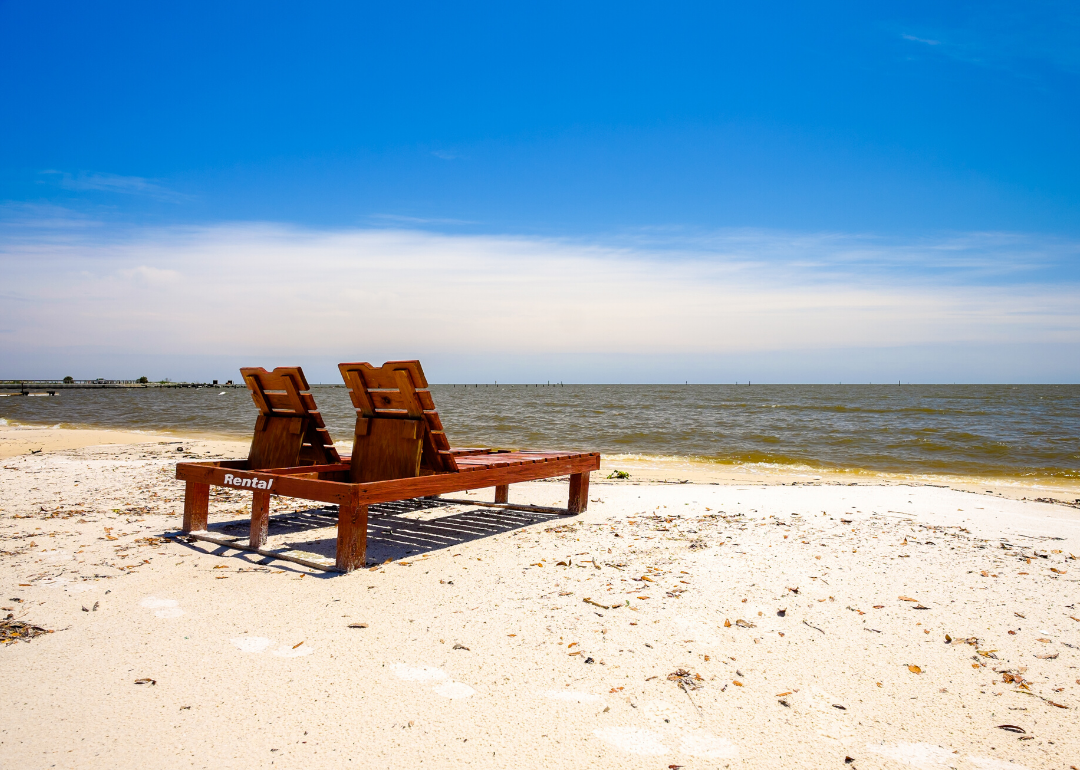
The “Mississippi...Believe It” ad campaign mentioned the inaccuracy of the backwoods perception. say, “Yes, We’re Backwoods. And Fertile Ground...And Deep Seas...And Extraordinary Wildlife.” Thanks to the state’s mild climate and ample rainfall, Mississippi is rich in biodiversity and has several postcard-perfect beaches.
Missouri
- Misconception: Catfish big enough to eat people live in Missouri's rivers.
The makes an important note about flathead catfish, one of the two species in Missouri: Yes, they try to eat anything that will fit in their enormous mouths; but they can only "eat a fish up to 60 percent of their body length." So, while the state record is 100 pounds, the greatest length is just about five feet, meaning they could swallow at most a three-foot-long fish. And blue catfish, the other species, is the largest in North America, but only has ever reached just over five feet in length. And don't worry—both are primarily interested in, and typically eat, fish.
Montana
- Misconception: Montana's manufacturing industry is dying.
Manufacturing is, in fact, a growing industry in Montana; the state instituted a " " in 2019 to raise awareness. According to , 25,000 Montanans are hired by manufacturers as per the records of the Montana Chamber of Commerce.
Nebraska
- Misconception: Most people from Nebraska live in cornfields.
Omaha is almost as large as Miami, and made CityLab’s list of the of the decade in terms of population. While the state does have a lot of cornfields, also boasts rolling hills, expansive plains, and sandhills.
Nevada
- Misconception: Prostitution is legal across Nevada.
Nevada has , according to The Nevada Independent. It's only legal at specific, licensed brothels in 10 counties. Even those who have worked in the licensed brothels are divided on how effective Nevada’s model is. The state’s brothels have been in business since the 19th century; only 20 operate today.
New Hampshire
- Misconception: New Hampshire is full of libertarians.
It is true that New Hampshire has hosted many and the Porcupine Freedom Festival held every summer attracts at least 1,500 libertarians. But the ideology is far from a political majority, as Slate’s Kevin Townsend and have found.
New Jersey
- Misconception: New Jersey is all sprawl and highways.
Nearly one-third of all the land in New Jersey is protected and preserved as open space and farmland. This was why the state’s land conservation community was stunned in 2014 when plans were announced to build pipelines across preserved open space and farmlands in Hunterdon and Mercer counties. On Sept. 10, 2019, the U.S. Third Circuit Court of Appeals decided that pipeline company reserved by the state.
New Mexico
- Misconception: New Mexico doesn't get snow.
There are certain parts of New Mexico at high altitudes, commonly known as the “high desert.” And it does snow, including at a . The state has at least 10 ski resorts.
New York
- Misconception: New York City is New York state's capital.
New York City is known as the financial capital of the country and it gets all the attention for its skyscrapers, thriving tourism, and media industry. But that doesn’t make it the capital of New York state—it’s Albany, upstate.
[Pictured: Albany Capitol Building]
North Carolina
- Misconception: Sir Walter Raleigh, the namesake of North Carolina's state capital, was an early explorer of the state.
While Sir Walter Raleigh sponsored the Roanoke Colony, he didn't go there himself for the first settling. But that did not stop officials form naming the state capital, Raleigh, after him. According to , Raleigh sailed to America in 1578 with his half-brother, Sir Humphrey Gilbert.
North Dakota
- Misconception: North Dakota has no true “cities.”
Of six towns that have been named Fargo in the United States, the one in North Dakota has the largest population with 113,658 residents. The city boasts as it is surrounded by sprawling landscapes and farms, according to TED Blog’s Greg Tehven, who also notes its “innovators, artists, researchers, entrepreneurs and other professionals, many of whom have moved here from all over the world.”
Ohio
- Misconception: Cleveland is Ohio's biggest city.
Columbus has twice the population of Cleveland, with . The second-most densely populated city in Ohio is Cleveland, with 388,072 residents.
Oklahoma
- Misconception: Oklahoma is all flat farmland and dust.
The state is home to , like Turner Falls, the Ouachita Mountains, Quartz Mountain, and many beautiful national parks. To add to that, Oklahoma has 55,000 miles of shoreline and the highest number of man-made lakes in the country.
Oregon
- Misconception: All Oregonians are liberals.
This overgeneralization plays to a well-worn stereotype about the Pacific Northwest state. It ignores the fact that for Oregonians who don't live in urban areas like Portland or Eugene, the chances were more likely they . Though a found that for the first time, Oregon is more liberal than conservative.
Pennsylvania
- Misconception: The Amish only live in Pennsylvania.
Members of the Amish Church live across 24 states, and some sects of the Amish Church can also be found in Europe, Latin America, and Canada. Although in Pennsylvania, Ohio, and Indiana, others have moved to Canada and Central America, while others have settled in other states in the country.
Rhode Island
- Misconception: Rhode Island is part of Long Island, New York.
Rhode Island is part of New England and is the smallest state in the country by area at only . It is 48 miles from north to south and 37 miles from east to west.
South Carolina
- Misconception: South Carolina life is just like "Southern Charm."
prefers to drive pickup trucks and live in the country, contrary to some portrayals in reality TV. The state has a thriving , thanks in part to South Carolina’s location at the foothills of the Appalachian Mountains. The state also has the Atlantic Ocean coastline, warm summers, and mild winters.
South Dakota
- Misconception: South Dakotans ride bisons.
The state does have a healthy and robust population of bison, but they are treated with respect and nobody rides them. The reason? The animals are protected in state parks after managing to survive extinction in the 1800s when they were hunted and killed. Today, bison are seen as a in North America.
Tennessee
- Misconception: Everyone in Tennessee listens to country music.
While country music is the most popular genre in 12 states, Tennessee isn't one of them—Tennesseans like Indie music. Based on 2017 data, in Alabama, Arkansas, Idaho, Nebraska, New Hampshire, Ohio, Pennsylvania, Utah, Virginia, Wisconsin, West Virginia and Alaska.
Texas
- Misconception: Most Texans live on ranches.
This stereotype ignores the fact that Texans are a lot more urban than you might think. Most of the population is centered in its four large metro areas (Houston, Dallas, Austin, San Antonio), And, according to the , 87% of all of Texas’ population growth in 2015 occurred in those centers. The data revealed that between 2013 and 2014, the population of metro Houston, for instance, increased by 156,000 people.
Utah
- Misconception: Polygamy is legal in Utah.
Despite its Mormon population, Utah is stricter on polygamy than other states. Utah Gov. Gary Herbert in 2017 signed a law that if they are found guilty of other crimes like fraud or domestic abuse, according to CBS News. Following that move, hundreds of people took to the streets to protest, maintaining that this was yet another attempt to “infringe on their rights to plural marriages”.
Vermont
- Misconception: Vermont's #1 export is maple syrup.
While it is true that Vermont is the , that is not the state’s main export. Many Vermont residents’ main source of income comes from like computers that account for revenue of $1.9 billion.
Virginia
- Misconception: Pocahontas married John Smith, of Jamestown, Virginia.
Pocahontas married John Rolfe, who got rich off of tobacco. The reason for the widespread belief that Pocahontas fell madly in love with John Smith is because people of the dominating culture found that to be flattering to themselves, according to , author of “Pocahontas and the Powhatan Dilemma.” She noted that the idea that Pocahontas was the “Good Indian” who admired the white man makes people in white American culture feel good about their history, and so the misconception continues.
Washington
- Misconception: Seattle, Washington, is the rainiest city.
Only Seattle locals will tell you that it does not rain as much as people living outside the city believe. Seattle is not the rainiest city in the United States. It , nor do any Pacific Northwest cities in terms of heavy rainfall.
West Virginia
- Misconception: West Virginia was a state in the Confederacy.
West Virginia was formed when Unionists broke away from Confederate Virginia during the Civil War in 1861, becoming the only one to separate from a Confederate state. In other words, it was part of Virginia, and thus only became a distinct state after separation.
Wisconsin
- Misconception: Wisconsin's top export is cheese.
Wisconsin is famous for its cheese. It is nicknamed “America’s Dairyland” but that doesn’t mean cheese is one of its major exports. It is also the leading U.S. producer of cranberries grown on . But, the state’s main exports are
Wyoming
- Misconception: People from Wyoming ride horses to school.
It is a fact that Wyoming has the in the country, but they aren't used for everyday transportation. The locals still heavily rely on vehicles like cars and buses to get around and leave the horses on their farms, bringing them out in the streets only in the event of a parade, according to .