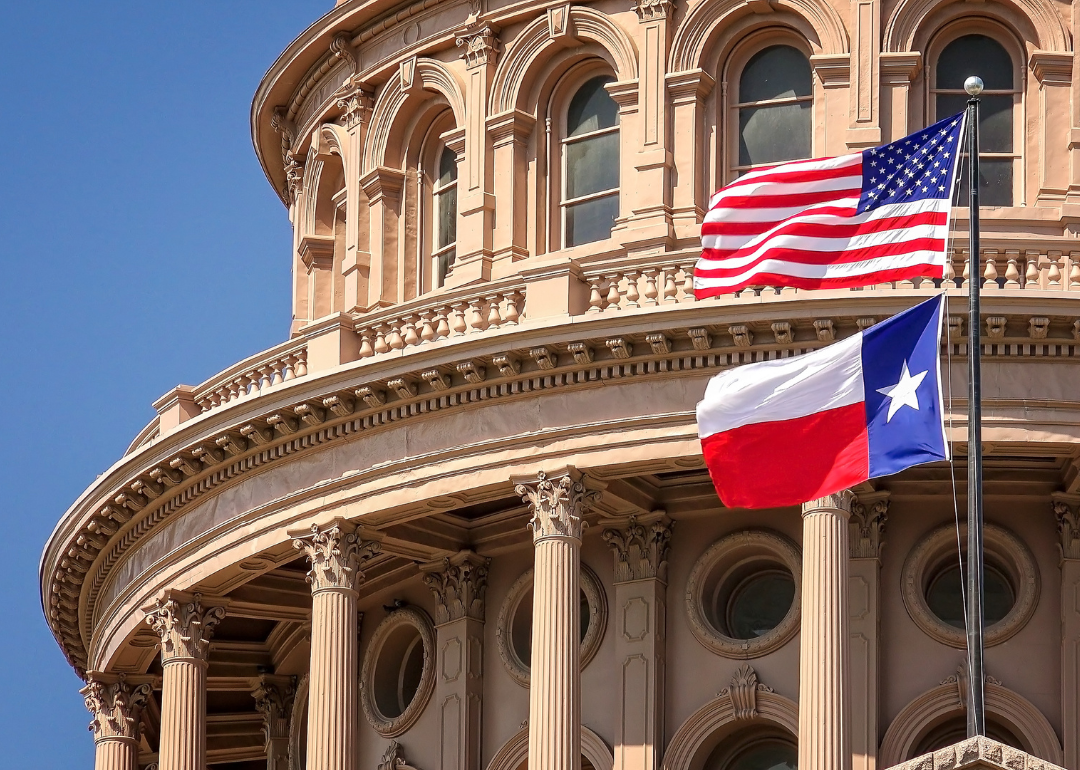
States ranked by their entry into America
It's amazing to see how much America has grown in of the Declaration of Independence. From 13 original colonies to 50 individual states that serve as one cohesive nation, the United States of America is filled with people of all types from coast to coast who are proud to be Americans.
While some Americans live on a peninsula jutting out from the southeastern tip of the country (Florida) and others live in a (Alaska), it is those differences in location and population that make the nation as a whole greater than its individual states.
The story of how each state entered the Union is the story of America itself, filled with battles, diplomatic compromises, and a desire for democracy and freedom that unites all citizens of this great nation. This list is ranked by each state's entry into America and sorted by the date each state was recognized—be it through ratification as part of the 13 original colonies, or as one of the 37 subsequent territories to achieve statehood over the years.
Read through to discover exactly how the United States were formed to be a more perfect union via geographic and demographic diversity.
RELATED:
#1. Delaware
Date entered Union: Dec. 7, 1787 (ratified)
Delaware earned its when it was the first colony to ratify the U.S. Constitution on Dec. 7, 1787. It originally existed as a colony and , but announced its independence of both Britain and Pennsylvania in 1776. The name of the state comes from the Delaware River, which was initially named in 1610 in honor of Thomas West, the governor of the Virginia colony, who was .
#2. Pennsylvania
Date entered Union: Dec. 12, 1787 (ratified)
The second official state in the newly formed United States was Pennsylvania, , who created the colony as a safe place for Quakers to live and practice their religion without persecution. Penn was granted the charter for his colony in 1681, and it grew to be . The Commonwealth of Pennsylvania played a considerable role in American history. were created and signed in Philadelphia, the state’s capital.
#3. New Jersey
Date entered Union: Dec. 18, 1787 (ratified)
While New Jersey , it was first known as part of New Netherlands, a Dutch territory established in 1609. During the Revolutionary War, New Jersey proved to be a crucial battleground: More than 100 battles were fought there, including the pivotal Battle of Trenton. Not only did New Jersey become the third state to ratify the Constitution in 1787, but they were also the .
#4. Georgia
Date entered Union: Jan. 2, 1788 (ratified)
The state of Georgia began as a colony in 1732 when it was founded by James Oglethorpe, who intended the land to be a haven for the poor and previously imprisoned debtors. The youngest of all the colonies, Georgia served as a buffer between the Spanish-dominated territories of Florida and the other British colonies. Like the rest of its colonial brethren, Georgia became a state when it ratified the Constitution just after New Year’s Day in 1788.
#5. Connecticut
Date entered Union: Jan. 9, 1788 (ratified)
Connecticut was founded by English Puritans who came not from Britain itself, . Major figures from the Revolutionary War, such as Nathan Hale and Gen. Israel Putnam, called Connecticut home, and the state was key in providing supplies to Washington's armies. that proposed America's bicameral legislative system via the "Connecticut Compromise" and cleared the path for the Constitution to be approved and, eventually, ratified.
#6. Massachusetts
Date entered Union: Feb. 6, 1788 (ratified)
One of the most important colonies during the American Revolution, Massachusetts was home to Paul Revere’s famous ride, the Boston Tea Party, and . The state still celebrates its Revolutionary history with a legal holiday , which is observed on the third Monday of April every year. The colony became an official state/commonwealth when it ratified the Constitution in February 1788.
#7. Maryland
Date entered Union: Apr. 28, 1788 (ratified)
The colony of Maryland was first granted to the Baron of Baltimore in 1632 and was named for Queen Henrietta Maria, the spouse of King Charles I. In 1750, two surveyors were charged with creating boundaries for the colony to separate it from Pennsylvania. The resulting Mason-Dixon Line, named for the surveyors, also became the boundary between the free states and the slave states in the 19th century. In April of 1788, Maryland ratified the Constitution to become the seventh American state.
#8. South Carolina
Date entered Union: May. 23, 1788 (ratified)
South Carolina officially became a state in May 1788, almost six months before its northern neighbor North Carolina achieved statehood. and officially split in 1729 when the Carolina Colony was formally dissolved. Once it became a state, South Carolina adopted a state flag that features the palmetto, a tree that figured into the historic Battle of Sullivan’s Island that is .
#9. New Hampshire
Date entered Union: Jun. 21, 1788 (ratified)
Originally chartered in 1620 as part of the Charter of New England, New Hampshire was granted its own charter in 1629. Before becoming a state, New Hampshire had a fascinating and didn’t have a formalized provincial government of its own until 1741. Nearly 50 years later, the Granite State became formally recognized through their ratification of the Constitution.
#10. Virginia
Date entered Union: Jun. 25, 1788 (ratified)
When Virginia ratified the U.S. Constitution in 1788, the state was comprised of much more land. That's because it included the area that is currently West Virginia. Before it was a state, was the first area of the soon-to-be nation that was permanently settled by the British.
#11. New York
Date entered Union: Jul. 26, 1788 (ratified)
Initially chartered in 1664, New York originally included a vast amount of land that to create what is now New York, New Jersey, Delaware, and Pennsylvania. After declaring independence from England, . President George Washington took the first oath of office in New York City in 1789, just a few months after New York officially became a state.
#12. North Carolina
Date entered Union: Nov. 21, 1789 (ratified)
One of the last states to ratify the U.S. Constitution was North Carolina, which approved the document after not one, but two state conventions aimed towards ratification. ended with the group neither ratifying not rejecting the document. found more success and North Carolina joined the United States in November of 1789.
#13. Rhode Island
Date entered Union: May. 29, 1790 (ratified)
The smallest state in the union was also the last of the colonies to join the rest of the group. Nearly two and a half years after similarly small state Delaware led the charge, Rhode Island finally followed suit and ratified the Constitution. The final vote for ratification was 34 in favor with 32 opposed, and that the actual moment of ratification was 5:20 p.m.
#14. Vermont
Date entered Union: Mar. 4, 1791 (admitted)
The first state to be admitted into the United States—rather than joining through constitutional ratification—was Vermont. The state when they rejected claims by both New Hampshire and New York for their land and almost joined Canada as part of Quebec. The process of admission was somewhat contentious, and Vermont was only admitted to the U.S. after the disputed land claims were settled. Ultimately, .
#15. Kentucky
Date entered Union: Jun. 1, 1792 (admitted)
The land that is now Kentucky was first given to Virginia as part of its original charter from England. In the 1780s, of trying to gain independence from Virginia. It took 10 conventions and a major dispute with Spain over access to the Mississippi River, but they were able to achieve full statehood at the beginning of June in 1792.
#16. Tennessee
Date entered Union: Jun. 1, 1796 (admitted)
Tennessee began as an extension of North Carolina, but the when they realized they weren’t getting the protection they needed from hostile native tribes. In 1789, after North Carolina became a state, they forfeited Tennessee back to the federal government. Less than a decade later in 1796, Tennessee became the first federal territory to be granted statehood by Congress.
#17. Ohio
Date entered Union: Mar. 1, 1803 (admitted)
While March 1, 1803 is the official day of Ohio's statehood, it wasn't recognized as such until 1953. Back in the 1800s, , which meant that they were never a state in the eyes of the federal government. The oversight was corrected by the 83rd Congress, and the land that was formerly part of the Northwest Territory officially became Ohio (retroactive to March 1803).
#18. Louisiana
Date entered Union: Apr. 30, 1812 (admitted)
The French claimed Louisiana as their own until the United States bargained with Napoleon Bonaparte and purchased the region for $15 million (over $300 million today) in 1803. Exactly nine years later, for Louisiana to become a state on April 30, 1812. It has the distinction of becoming the first state west of the Mississippi River and the .
#19. Indiana
Date entered Union: Dec. 11, 1816 (admitted)
On May 7, 1800, . One remained the Northwest Territory, which soon became Ohio, and the other was the Indiana Territory. In the 16 years that followed, Congress divided Indiana into sections again—the other part became Michigan—and Indiana petitioned to become a state a year after the War of 1812 ended.
#20. Mississippi
Date entered Union: Dec. 10, 1817 (admitted)
after the Spanish ceded control of the land. By 1813, the territory had expanded significantly to include the area that's now Alabama. It remained that size until it became a state four years later in 1817 when the western part of the territory as the State of Mississippi and the eastern portion as the Alabama Territory.
#21. Illinois
Date entered Union: Dec. 3, 1818 (admitted)
The major issues of the day when Illinois became a state in 1818 revolved around slavery. and Alabama would follow suit in 1819, which meant that Illinois had to be a free state to balance things out. Due to its borders on Lake Michigan and the Mississippi River, Illinois became a major hub of commerce and transportation.
#22. Alabama
Date entered Union: Dec. 14, 1819 (admitted)
After the Mississippi Territory split upon Mississippi's statehood, it was only a matter of time before the newly formed Alabama territory applied for statehood. where 44 delegates gathered between July 5 and Aug. 2, 1819 to compose a constitution to qualify for statehood. That constitution was accepted in December of that year, and Alabama received official recognition as a state.
#23. Maine
Date entered Union: Mar. 15, 1820 (admitted)
Like Alabama, Maine didn’t exist for long on its own before statehood. , and the decision for Maine’s statehood centered mainly around slavery and balancing free states and slave states. Maine’s admission into the union was part of the “,” which allowed for two states (Maine and Massachusetts) to be granted statehood because they were on opposite sides of the slavery issue.
#24. Missouri
Date entered Union: Aug. 10, 1821 (admitted)
Missouri was admitted to the union nearly a year after Maine, but it was part of the same “” that allowed both states to become recognized due to their opposing statewide views on slavery. The state was originally delivered to the United States via the Louisiana Purchase. Due to its location on both the Missouri and Mississippi Rivers, of coordinating and encouraging American commerce.
#25. Arkansas
Date entered Union: Jun. 15, 1836 (admitted)
, the land that is now Arkansas came to the U.S. through the Louisiana Purchase. , and by 1826, including steamboats and brickyards were flourishing in the region. In 1836, Arkansas achieved statehood as a state that favored slave ownership.
#26. Michigan
Date entered Union: Jan. 26, 1837 (admitted)
As the United States was forming and expanding westward, Michigan was originally part of the Indiana Territory. After 1816, Michigan started moving towards statehood, but . After the Treaty of Washington was signed in 1836, which had the tribes turning over nearly 14 million acres of land, Michigan was formally accepted into the United States in January 1837.
#27. Florida
Date entered Union: Mar. 3, 1845 (admitted)
Eight years passed before another group of states were granted statehood, and the first of those was Florida. Spain had ruled the state since 1565, but in 1819, with Spain and took over control of Florida. In 1845, Florida became a state—one that accepted slavery, and five years later, with nearly 40,000 slaves of African descent.
#28. Texas
Date entered Union: Dec. 29, 1845 (admitted)
Manifest destiny was in full swing by the time Texas became a state just days before the end of 1845. about annexing Texas because some viewed it as a provocation of Mexico, which had previously claimed Texas. While Texas was officially admitted to the United States in 1845, with Mexico and also a major debate over the lands that would become New Mexico, which Texas claimed as their own.
#29. Iowa
Date entered Union: Dec. 28, 1846 (admitted)
, which set up a system of governance for the territories that included Iowa. In the intervening years, the land that Iowa now sits on was part of the Michigan Territory and then the Wisconsin Territory before becoming its own Iowa Territory as more and more settlers crossed the Mississippi River. In 1846, almost exactly a year after Texas was recognized as a state, Iowa earned its star on the American flag.
#30. Wisconsin
Date entered Union: May. 29, 1848 (admitted)
The British maintained control of what is currently Wisconsin when the War of 1812 officially gave the popular fur trading area to the United States, which technically had included it as part of the Northwest Territory as of 1787. When America realized the value of the goods of Wisconsin, specifically fur and minerals, forts were constructed to protect the area. After a contentious war with the Native American tribes on the land, a Wisconsin Territory was officially declared in 1836 and statehood was granted to Wisconsin in 1848.
#31. California
Date entered Union: Sept. 9, 1850 (admitted)
When California was admitted to the union in 1850, America could finally claim that its freedom stretched from sea to shining sea. to California’s statehood, as it quickly became one of America's most valuable geographic commodities. Prior to achieving statehood, California was part of Mexico, and the Golden State was given to America after in 1848.
#32. Minnesota
Date entered Union: May. 11, 1858 (admitted)
Minnesota would have become a state much sooner than May 1858, but surrounding Kansas’s bid for statehood. The land was originally inhabited by Native American tribes until the French took up residence in the 17th and 18th centuries. After the Treaty of Paris and the Louisiana Purchase, the United States took possession of Minnesota, and a population boom after 1850 led the way for statehood in 1858.
#33. Oregon
Date entered Union: Feb. 14, 1859 (admitted)
Oregon was a favorite destination for who followed the Oregon Trail in order to spread their religious ideals to the native peoples that lived there. encouraged even more settlers looking for a new place to practice their way of life. Nine years later, the population had increased dramatically, and Oregon was granted statehood, although was quite atrocious.
#34. Kansas
Date entered Union: Jan. 29, 1861 (admitted)
One of the as it tried to navigate the explosive politics of the time, specifically in regards to slavery. The anti-slavery settlers were met with opposition from pro-slavery groups from Missouri, and intense fighting ensued. Ultimately, Kansas was admitted into the union in 1861, .
#35. West Virginia
Date entered Union: Jun. 20, 1863 (admitted)
While Virginia became a state back in 1788, its western cousin didn’t achieve statehood until 1863. as Virginia voted to secede from the United States. A pro-Union splinter government was formed, and that became the basis for the state of West Virginia, which was admitted to the Union—as opposed to the Confederacy—in June of 1863.
#36. Nevada
Date entered Union: Oct. 31, 1864 (admitted)
Before it became a magnet for gamblers around the world, Nevada was embroiled in some severe statehood shenanigans. , Nevada was granted statehood—and three electoral votes—just days before the 1864 election. There was no time to wait for the state’s newly drafted Constitution to be physically sent to Congress, so the document was sent via telegraph in what is now known as one of the longest and costliest telegrams ever sent.
#37. Nebraska
Date entered Union: Mar. 1, 1867 (admitted)
The Territory of Nebraska was first created by the Kansas-Nebraska Act of 1854. , but there was disagreement over the state Constitution. When Lincoln was assassinated and President Andrew Johnson took office, he vetoed Congress over designating Nebraska as a state after some debate about clauses in their Constitution, but and made Nebraska a state on March 1, 1867.
#38. Colorado
Date entered Union: Aug. 1, 1876 (admitted)
Colorado’s first try at statehood was also marred by a President Johnson veto, but President Ulysses S. Grant was more than happy to for the rectangular state. The Territory of Colorado was originally established as a free territory just 15 years earlier by President James Buchanan in 1861. When it came time to apply for statehood, the Colorado Constitution was actually : English, Spanish, and German.
#39. North Dakota
Date entered Union: Nov. 2, 1889 (admitted)
Back in 1861, to include both modern-day Dakotas as well as parts of Montana and Wyoming. Regional differences and corruption caused the northern and southern populations of Dakota to resent each other, and each side began making preparations for their own independent statehood. On Nov. 2, both North and South Dakota were admitted into the United States.
#40. South Dakota
Date entered Union: Nov. 2, 1889 (admitted)
After the formation of the Dakota Territory, . As such, they started trying to form an independent state quickly, but those efforts failed until 1889 when both halves of the territory were admitted as separate states. While the date of admission is the same for both North and South Dakota, there's no true record of which one is actually the 39th state and which is the 40th state because the documents before signing them.
#41. Montana
Date entered Union: Nov. 8, 1889 (admitted)
Just six days after North Dakota and South Dakota achieved statehood, Montana joined the club. The state started as the home of many Native American tribes like the Crow, the Blackfeet, and the Cheyenne before Lewis and Clark undertook their famous expedition in the early 1800s. (Missouri, Nebraska, Dakota), created a large enough population to demand its own statehood.
#42. Washington
Date entered Union: Nov. 11, 1889 (admitted)
The last piece of West Coast expansion fell into place with Washington’s admission into the United States in 1889. After much debate over the summer of 1889, that followed a heavy debate on railroad regulation and the regulation and sale of tidelands. Several months later, Washington was officially admitted to the United States as the fourth of four Western states granted admission in November 1889.
#43. Idaho
Date entered Union: Jul. 3, 1890 (admitted)
The late 19th century solidified American expansion through the northwest corner of the United States by formally recognizing the last state to complete the nation’s border with Canada. Idaho’s admission into the union in 1890 created a solid border and as the state’s new politicians not only leaned Republican but actively legislated to decrease the influence of Mormon settlers who voted overwhelmingly Democratic. instead of July 4 because they wanted their star added to the U.S. flag immediately. Historically, stars are only added on the 4th of July, which would have meant waiting a full year before Idaho was recognized on the flag.
#44. Wyoming
Date entered Union: Jul. 10, 1890 (admitted)
Plains Indians lived in Wyoming for centuries before white settlers moved in and before long, a full territorial government was in place. The region was well-known for its progressive stance on female suffrage as women were allowed to vote in the territory as early as 1869 and was elected as state superintendent of public instruction back in 1894. Wyoming achieved statehood in 1890 after concerning both women's rights and water ownership.
#45. Utah
Date entered Union: Jan. 4, 1896 (admitted)
Utah was under Mexican control in 1847 when the first Mormon settlers came to the state. After the Mexican-American War, Utah became the property of the United States. as early as 1849 when they sent a representative to Washington, D.C. While they were rejected at the time, Utah was finally admitted into the union in 1896 after they conformed to the requirements of the Enabling Act of 1894, which set out the conditions for Utah to attain statehood.
#46. Oklahoma
Date entered Union: Nov. 16, 1907 (admitted)
The first new state admitted to America in the 20th century was Oklahoma, an area with a long and storied history when it comes to America’s relationship with the native tribes that first lived in the nation. The territory was originally : the Oklahoma and Indian Territories, created after the Trail of Tears forced legions of Native Americans off of their land and into what is now Oklahoma. even in the United States, President Theodore Roosevelt signed a bill combining the entire territory into just one state: Oklahoma.
#47. New Mexico
Date entered Union: Jan. 6, 1912 (admitted)
The State of New Mexico traces its history all the way back to the 1500s when Spanish explorers claimed the area and fought intense opposition from native Apache tribes. When Mexico achieved , New Mexico became a Mexican province until 1846 when Americans took over the land during the Mexican-American War. The Santa Fe Railroad was launched in 1879, and the territory flourished soon after, .
#48. Arizona
Date entered Union: Feb. 14, 1912 (admitted)
People in Arizona had been since the days of the Civil War, but they weren't granted full state rights until President William Howard Taft signed the official documents in 1912. In the Civil War days, Arizona was actually on track to become a state in the Confederate States of America. Decades later, in 1903 when Congress recommended combining Arizona with New Mexico, but Arizonans were heavily opposed.
#49. Alaska
Date entered Union: Jan. 3, 1959 (admitted)
The United States from Russia back in 1867 for just $7.2 million dollars. Alaskan statehood when the Cold War started to gain steam, as Alaska is from Russia. To strengthen America’s national security, President Dwight D. Eisenhower signed the official proclamation granting statehood to Alaska on Jan. 3, 1959.
#50. Hawaii
Date entered Union: Aug. 21, 1959 (admitted)
It’s hard to believe that Hawaii will be celebrating their 60th statehood anniversary next year. The small island nation in 1810 under King Kamehameha I and formally became a U.S. territory in 1898 after decades of struggle between native Hawaiians and white settlers. The Hawaiian government started applying for statehood almost immediately afterward and, after many failed attempts, .