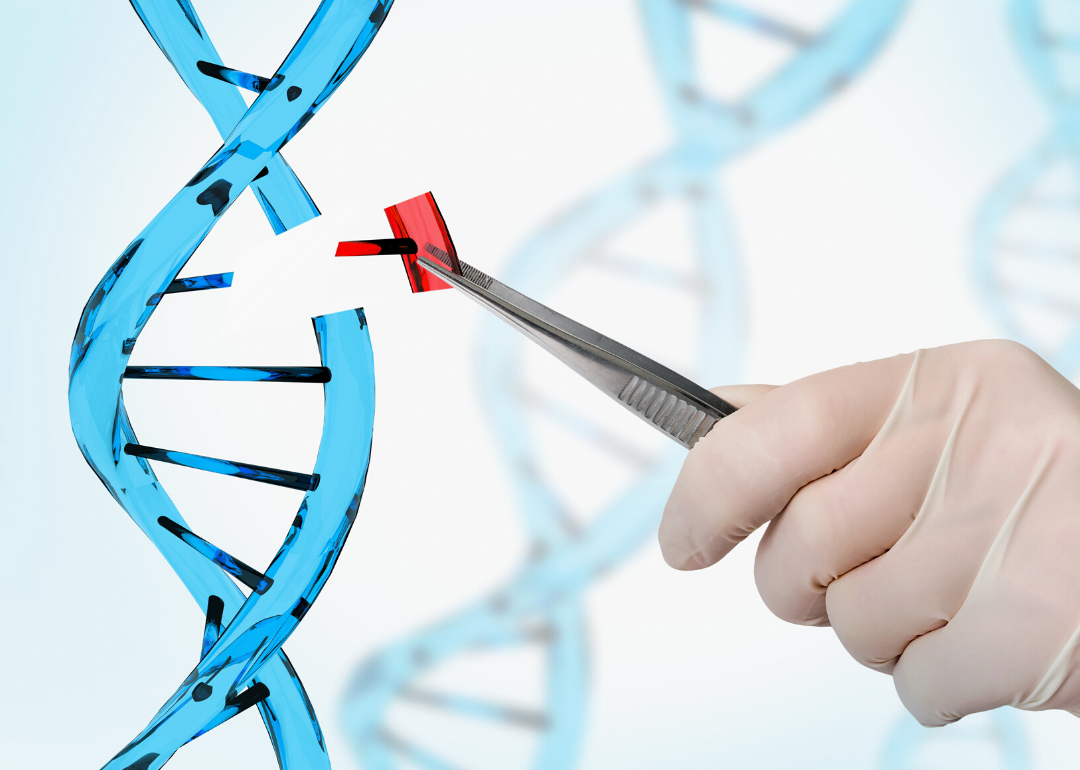
50 notable medical advancements of the decade
50 notable medical advancements of the decade
Medical advancements have come further and faster in the last century than in any other period of human history. Consider that prior to the 1860s, "germ theory"—the belief pathogens can cause disease—had not been posited and that penicillin wasn't discovered until 1928, and it becomes more stunning that we now have full face transplants, methods for regrowing organs and teeth, and move and write. Major medical breakthroughs continue to speed up, too. More than 200 years passed between the first blood transfusion and the discovery of different blood types (explaining why transfusions sometimes resulted in death); but in less than 40 years we saw and studies by the on five continents to find an immunization for what was so recently considered a death sentence.
In light of so many breakthroughs, Â鶹ԭ´´ scoured scientific papers and news sites to compile a list of 50 achievements that changed medicine in the last decade alone. While some fascinate more than others, all of the strides noted are undoubtedly life-changing. Some advancements include taking a step back, such as hormone replacement therapy (HRT): One of the most effective treatments for menopause to date has been linked to heart fat, tempering the previously coveted therapy. Other advancements have streamlined treatment, such as 5-in-1 vaccines becoming 6-in-1 and traditional daily HIV medications now being offered in fixed combination and weekly doses.
Medical breakthroughs in marijuana have made great strides, while and other animals. If these advances made in the last decade are indicative of what's to come, then one can only imagine what the next 10 years will hold.
Read on to find out 50 notable medical advancements of the last decade.
Medical marijuana
Since California became the first state to legalize medical marijuana in 1996, the drug has seen rapid state-by-state legalization in the past decade thanks to leading to a . The drug, which was initially used by patients with HIV/AIDS, cancer, and chronic pain, is now used to treat fibromyalgia, epilepsy, Alzheimer's, and post-traumatic stress disorder (PTSD). the positive effects the drug has had on ailing animals.
Bionic limb advancements
, including a hand with up to 24 different grips that can , represent a major breakthrough in the field of prosthetics and the exciting future of artificial body parts. Amputees can, for example, now precisely pack suitcases with the advanced prosthetic.
Smart pills
Developments in technology have done wonders for medicine. The , which contain tiny embedded sensors that communicate via smartphone with users about whether they’ve . Smart pills can also give doctors a better understanding of a pill’s usage and effectiveness in patients. In the future, smart pills could y by detecting abnormalities in a person’s gastrointestinal tract.
Full face transplants
The was done in 2011. Since then, Cleveland Clinic in 2018 performed a to date; and Boston’s Brigham and Women’s Hospital completed one for the oldest patient and first African American.
AI health care
From detecting counting an individual's daily steps on smartwatches, doctors know more about illness than ever before because of artificial intelligence. in 2019 proves to expose lung cancer more accurately than radiologists with up to eight years of experience. AI health care will continue to thrust forward preventative and diagnostic medicine, .
Stem cell research and development
, the research of stem cells—which can replicate and manipulate— in 2014 and assisted in Some of the most recent research by the University of Copenhagen revealed how exactly
Acute stroke intervention
, including one approved by the Federal Drug Administration (FDA) in 2019 from startup company Perfuze, are changing the long-term impact of strokes. The National Institute of Neurological Disorders and Stroke that are proving to save patients from both death and lifelong disabilities.
Regrowing body parts
Regrowing body parts has long been a dream of scientists, and is moving closer to reality with the help of nature. In 2018, a European team released the which could help unlock the answers to limb regrowth.
Non-toxic, surgical super glue
The has given rise to a non-toxic super glue separate from other surgical adhesives. After researching slug slime, Jianyu Li, a Harvard materials scientist, and his team created a resin in 2017 from a similar type of sticky compound found in the algae plant. With further research and trial, the new-found glue could be used to repair cartilage, or even patch a hole in the heart of an infant.
3D-printed breast implants
Until now, women who underwent breast augmentation chose from saline or silicone implants, but that is changing with startups like Lattice Medical. Started by material scientist Julien Payen, the company which assist in the regeneration of the adipose tissue. Clinical trials on humans begin in 2021.
Smart contact lenses
Microsoft developed a in 2012, and now Purdue biomedical/mechanical engineering assistant professor, Chi Hwan, believes placing is the next step. Meanwhile, Michigan electrical and computer engineering assistant professor, Zhaohui Zhong,
Patient-specific 3D printing
Patient-specific 3D printing puts out models of organs that allow physicians to better understand surgeries they are about to perform. While plan to produce more than 1,000 duplicate human organs by the end of this year, a 2019 study revealed that a was less invasive than using a commercial tube in surgery.
HIV cocktail in weekly pill
After complicated dosing of single HIV/AIDS drugs led to missed doses and less effective treatment, fixed-dose combinations answered the problem in 2013, when ” In 2018, that holds up to one week of HIV/AIDS drugs in one weekly dose
Circumcision helps prevent HIV
More than 4 million Tanzanian men were circumcised in 2019 to prevent contracting HIV. With coercive evidence, including three randomized control trials, . Though circumcision reduces the risk of attracting the virus, physicians continue to promote the use of condoms to prevent it altogether.
Stroke patient deep brain stimulation
because of deep brain stimulation (DBS) in 2017. The medical advancement lends hope to stroke victims and was the result of a 10-year Cleveland Clinic study that implants electrodes to affected parts of the brain. Since there are no foreseen limits to her gain,
Virtual and mixed reality medical education
Medical education can be taught through both virtual and mixed reality, giving student doctors simulated experiences very close to the real thing. , noting virtual reality is entirely computer-generated, and augmented reality is computer-generated mixed with sound and mannequins.
Targeted lung cancer therapy
Though target therapies—molecular targets that stop the spread of cancer—have helped thousands of patients for years, the recent discoveries of advanced lung, advanced breast, and acute myeloid leukemia target therapies are significant. While the drug Trastuzumab , Afatinib and cetuximab stop EGFR, a substance that helps colorectal and lung cancer grow. Additionally, Dabrafenib and vemurafenib stop the mutated BRAF gene from spreading melanoma.
Possible HIV vaccine
The breakthrough in HIV/AIDS diagnosis and treatment since the 1980s is unprecedented, Medical experts determine that if vaccines for smallpox and polio are possible, then wiping out the human immunodeficiency virus by the vaccine could also be possible. The HIV Vaccine Trial Network, , revealed this October its with an initial inoculation.
Disease detection by voice
A Mayo Clinic in 2016 that detects heart disease is just the beginning of auditory medical advancement. MIT is following suit as they attempt to by studying the volume, pitch, tone, and rhythm of veterans’ voices. Thus far, Dr. Charles Marmar has detected up to 30 characteristics that could detect the disorder and injuries.
Continued evidence autism not connected to vaccines
that the measles, mumps, and rubella (MMR) vaccine is not responsible for an increased risk of autism. Additionally, debunked the long-standing myth that vaccines caused the disease in adolescents who receive immunizations.
Visor for stroke diagnosis
can detect a stroke with up to 92% accuracy, making the medical breakthrough a game-changer in neurological disease. The visor, manufactured by Cerebrotech Medical Systems beginning in 2018, The device, which requires little training, can be used by emergency medical personnel, which reduces human error in diagnosing.
Detecting disease by smell
in 2016 that scientists were “racing to create tests” to detect disease by the smell of urine, sweat, and breath. Thus far, preeclampsia, lung cancer, kidney and liver failure, multiple sclerosis, infectious and gum disease, mono, diabetes, and some psychiatric illnesses . Retired nurse , making earlier diagnosis possible in the debilitating disease.
Liquid biopsy for 8 cancer types
In 2018, , a liquid biopsy that can detect up to eight types of cancer, five of which till then had no screening test available. While the trial continues to be studied, the final estimated costs for the CancerSEEK biopsy are expected to be around $500.
Nanobots
could be on the health care horizon. While MIT Media Lab co-founder for some time that tiny nanobots might swim through the bloodstream detecting disease, in 2015, Swiss Federal Institute of Technology mechanical engineer Brad Nelson was creating E. coli bacteria-shaped nanobots, which are propelled by magnetic fields.
6-in-1 vaccine
Since the 2008 development of the which immunes adolescents six weeks to 4 years old to diphtheria, tetanus, whooping cough, polio, and invasive disease, a was announced in 2014. Meanwhile, Pentacel is predicted to bring in approximately $2.34 billion in pharmaceutical sales by 2020, proving the medical advancement is also a financial success.
Gene-edited twins
Though widely considered unethical and dangerous, sparked severe controversy. In an interview with the , Jiankui explained how he and bioengineering professor Michael Deem successfully helped create a set of twins after researching the experiment on mice. The AP reports that while several scientists reviewed materials provided by the Jiankui, they cannot determine whether the embryo editing was a success or caused harm.
Down syndrome blood test
A was developed in 2014. Tufts Medical Center pediatric geneticist Diana Bianchi, who led the study, said the non-invasive blood test, administered on 1,914 pregnant women, can ease the minds of pregnant women seeking extensive prenatal testing. Though the new type of blood test is a breakthrough, Bianchi said all pregnant women still need to follow up with the traditional amniocentesis to test for Down syndrome.
Mitral and tricuspid valve percutaneous replacement and repair
, with catheters now assisting in mitral and tricuspid heart valve replacement and repair. It has opened the door for less invasive, and more effective, cardiac procedures.
Teeth regeneration
Rather than fill a cavity, , which, if possible, have scientists confessing it may be the most significant advancement in dental care in half a century. In 2018, bioengineer Paul Sharpe at King’s College in London proved in mice trials that mobilizing stem cells in the dental pulp can propel a tooth’s natural healing ability. Meanwhile, is aiming to “regenerate a molar root, and put a crown on top.”
Drug-eluting stent advancement
In 2003, the FDA approved the first drug-eluted stent (DES), and in 2017, significant headway was made, with one specific trial showing the shunts were as Though DES has been around for some time, famous contends the advancements will only improve.
Evidence-based medicine
A 2018 report suggests that though evidence-based medicine (EBM)—which is research and fact-based treatment used to derive health care decisions based on patient nuance—is not highly regarded, it has, in fact, advanced. EBM presently has an annual international conference surrounding all advancements made in the field.
Artificial ovaries
Women left infertile due to cancer London Women’s Clinic medical director Nick Macklon called the breakthrough an “exciting development” even though the successful trial was conducted on mice. that three female mice with artificial ovaries became pregnant and produced milk after mating.
Hormone replace therapy (HRT) heart risk discovery
As one of the most effective menopause treatments, hormone replacement therapy (HRT) has helped women for decades. Now, The Mayo Clinic , including the largest trial to date, revealing that Prempro, an estrogen-progestin mix, increases the risk of heart disease, blood clots, stroke, and cancer.
New cystic fibrosis treatment
The most advanced cystic fibrosis medication to date released in October, a “breakthrough therapy.” With the potential to treat up to 90% of sufferers , Trikafta is the , which can safely be given to patients at least 12 years old.
New sepsis inflammation medicine
Inflammation from sepsis, that can cause tissue damage, organ failure, or death, can now be treated at the Feinstein Institutes for Medical Research. Identifying that a microRNA molecule inhibits inflammation can also help in creating a treatment for hemorrhagic shock, as well as ischemia/reperfusion injuries, according to Wang.
A potential cure for peanut allergies
Roughly 32 million people in the United States and until recently, the only treatments were Stanford scientists discovered could have allergy sufferers eating peanut protein in as little as two weeks. While further testing on etokimab is needed, the drug and has shown the ability to lessen the effects of peanut allergies in children through exposure to increasingly larger doses.
Gut bacteria treatment
Henrik Bjørn Nielsen, science department head of company Clinical-Microbiomics, in 2017 said established so many clinical trials in the last decade. The Cleveland Clinic has been to study the links between heart disease and gut microbes.
Meltaway cataract treatment
Cataracts, which are the are currently only treated through invasive surgery by removing the clouded lens of the eye and implanting a new one. the clumping of proteins in the eye, called amyloids, could be broken up. While treatment for cataracts in humans through eye drops may be a few years away, advancements could also lead to which are also caused by amyloids.
Artificial pancreas device system
Before the were required to test their blood glucose levels multiple times per day and regulate with insulin shots. The MiniMed uses a sensor implanted in the abdomen or arm to read a patient's blood glucose levels every five minutes, which transmits information to a pump on the stomach that controls the amount of insulin released,
Probuphine: opioid dependence treatment
There have been several methods used to treat . Probuphine, in May 2016, eliminates the need for users to remember to take a pill by from under the skin in the upper arm. Previously, products like required the user to remember to take multiple pills each day to suppress opioid cravings.
Mitochondrial replacement therapy
Mitochondrial replacement therapy (MRT) is a but that has shown the ability to eliminate diseases passed from mother to baby. The process takes an egg from the mother and replaces potentially harmful mitochondria (DNA’s power source) with that from a donor before being fertilized by the father’s sperm. In 2016, the
New antibiotics
The World Health Organization (WHO) warned in 2014 that could pose a severe threat to human health in the near future. One year later, scientists discovered a new antibiotic, in mice. A new method of was uncovered by English researchers in 2017, speeding manufacturing from up to 30 hours down to mere minutes. While human testing and mass production of teixobactin is years away,
Cluster headache treatment
Cluster headaches for anywhere from 15 minutes to three hours, one to eight times per day over weeks or months. While most treatments developed in the last decade, including medicated nasal sprays and corticosteroids, fight the onset of a headache, the , the first self-injection to help patients reduce the frequency of attacks. Previously, injections to the were capable of lowering attacks, but research is trending toward less invasive procedures.
Synthetic cells
The first successful and made strides in 2017 with Israeli scientists using synthetics to target and kill breast cancer tumors. Researchers are now working on in order to exchange proteins and other larger molecules, as opposed to current processes, which are limited to smaller components. Further is leading to more targeted treatments and the ability to fight a wide range of medical conditions, from diabetes to cancer.
Penis transplant
The first attempted penis transplant was in 2006 in China but was later removed, as was a South African transplant in 2014 that was rejected by the host. In 2018, a soldier who lost the lower half of his body, including his genitals, in an IED blast in 2010 in Afghanistan from the donor to speed recovery. Injecting bone marrow into the soldier made it so he only has to take one pill a day to prevent rejection, as opposed to the combination of medications previously prescribed.
3D-printed spinal implants
3D printing has many applications to the medical field, and several recent FDA approvals will have surgeons using the process to and speed recovery. Companies like Osseus Fusion Systems have developed a titanium implant that allows spinal tissue to grow through their Aries lumbar interbody fusion product. In 2018, the FDA approved the to treat multiple injuries in the upper back at the same time.
Influenza vaccine advancement
The CDC has made a number of advancements to the influenza vaccine, from The development of made it easier to produce the vaccine, as opposed to the traditional way, which required eggs in which to grow the virus. The CDC reported nearly , including a minimum of 35,000 deaths.
Human Genome Project breakthroughs
Scientists with the Human Genome Project kicked off the decade by successfully mapping all , after in 2003. Advancements in medicine have followed, from doctors being able to for more targeted treatment, to researchers and . In November 2019, researchers at Penn Medical School began the first human gene therapy.
Advancement in RNA-based therapies
RNA-based therapies have helped intercept genetic abnormalities before infiltrating cell protein since the 1990s, but the 2018 FDA approval of a targeted type RNA-based therapy for peripheral nerve disease is a new. FDA Commissioner Scott Gottlieb said this class of small interfering ribonucleic acid (siRNA)
Cancer immunotherapy
Immunotherapy, a biological treatment that uses the body's immune system to fight disease, has seen significant advances in treating cancer in the past decade, including the 2014 discovery by UCLA's Dr. Antoni Ribas, which Specifically, Ribas revealed that cancerous tumors riddled with malignant T cells were more likely to see success with checkpoint therapy. Johns Hopkins' Dr. Elizabeth M. Jaffee reports will further enhance cancer immunotherapy.