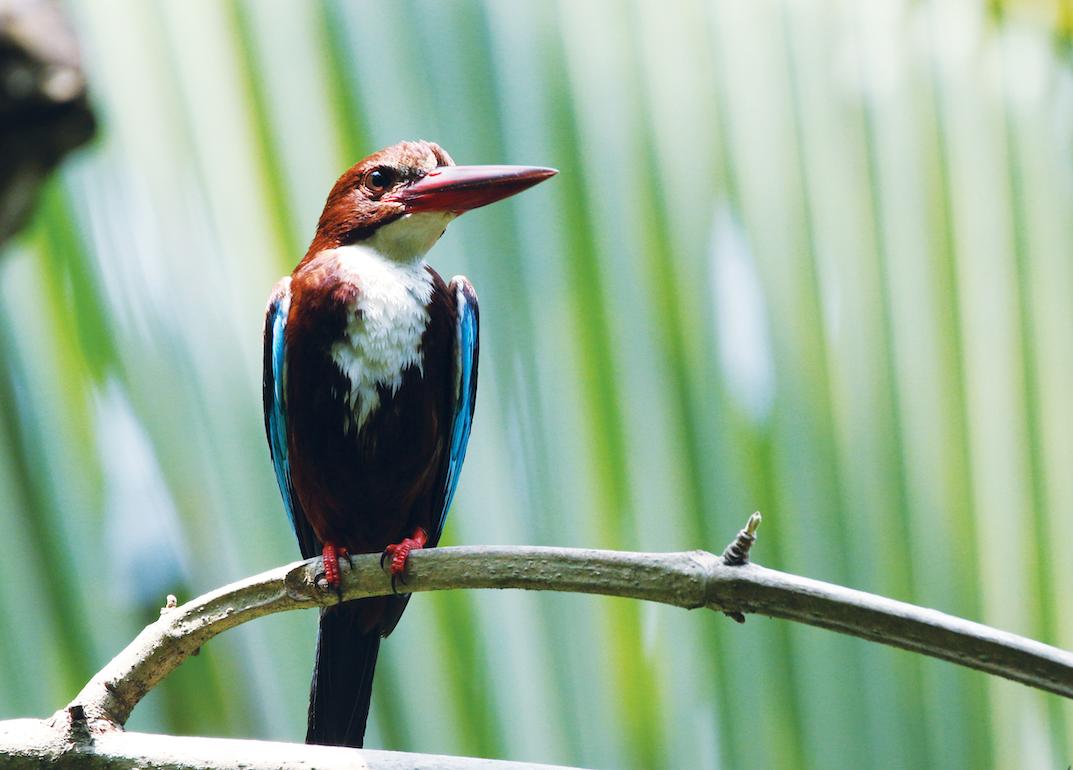
50 species that no longer exist in the wild
50 species that no longer exist in the wild
There are an estimated currently living on planet Earth. However, experts estimate that . According to the United Nations, In light of the current biodiversity crisis, it is necessary to quantify current species that are facing down extinction.
Enter the International Union for Conservation of Nature (IUCN), which, since it was founding in 1964, has assessed more than 105, 700 species for the IUCN Red List of threatened species.
To quote famed naturalist Sir David Attenborough, "The IUCN Red List tells us where we ought to be concerned and where the urgent needs are to do something to prevent the despoliation of this world. It is a great agenda for the work of conservationists."
The IUCN has developed a standard system for classifying species at high risk of global extinction. This system organizes species on a scale from least concern regarding possible extinction to extinct, with specifications for plants and animals that are have not been evaluated or don't carry enough data to make a call. Additional categories include near threatened, vulnerable, endangered, critically endangered, and extinct in the wild.
as a plant, animal, or fungi known only to survive in cultivation, in captivity, or as a naturalized population (or populations) well outside the indigenous range. A species is presumed extinct in the wild when exhaustive surveys conducted in known habitats have failed to record a single individual. Surveys should be conducted over a time frame appropriate to the species' life cycle and life form.
For example, the is an extinct species, whereas, , which still exists in captivity but not in the wilderness, is considered extinct in the wild.
These classifications help identify species in urgent need of recovery efforts and also pinpoint the habitats that need to be restored to possibly re-establish the species in the wild. The best recovery example is that of the California Condor, whose numbers declined so much in 1987 that they were marked extinct in the wild. The 27 condors left in the world were bred in captivity and reintroduced into their original habitat beginning in1992. Now, the IUCN lists the California —an upgrade from their previous status.
Using 2019 data from the categorized as extinct in the wild from across the globe. Most of these species have declined due to urbanization, agriculture, and human alteration of the species' habitat, pushing them towards extinction. The list offers a glimpse into the smallest-known areas that could be home to a living creature, and how every little change humans make in their behavior can be life-altering for other species.
You may also like:
Yellow fatu
- Scientific name: Abutilon pitcairnense
This plant with beautiful yellow flowers was found only on Pitcairn Island, an isolated volcanic island southeast of Tahiti in the south-central Pacific Ocean. It grew in the forests alongside another plant endemic to the island called the Homalium taypau. The only specimen of Yellow fatu found in the wild on the island was destroyed in a landslide in 2004.
Scientists also found that the island was losing like Syzygium jambos (Roseapple) and Lantana camara. Now, the National Botanic Gardens of Ireland have teamed up with the Pitcairn Island Conservation Department to develop an invasive species control plan and restore native vegetation. The organization has proposed the reintroduction of the Yellow fatu to the islands.
Banded allotoca
- Scientific name: Allotoca goslinei
This ray-finned Goodeid fish was once found in the Ameca River Basin of Mexico and first . By the late 1990s, it had disappeared from the Ameca, but remained , until non-native swordtails (Xiphophorus hellerii) invaded the river in the early aughts. Once abundant, these fish have experienced a rapid decline. Extensive searches in 2005 and 2006 didn't turn up a single individual. The last record of the species in the wild dates back to 2004.
All is not lost. The Goodeid Working Group is an international non-profit organization of volunteers that is maintaining the aquarium population of banded allotoca.
[Pictured: Allotoca zacapuensis]
Baxter's toad
- Scientific name: Anaxyrus baxteri
Also known as Wyoming toads, Baxter's toad was last observed in the wild in 1983. They were listed as endangered under the Endangered Species Act in February 1984, but, per the IUCN, they have been marked extinct in the wild.
Historically, , where they were found in the floodplains of the Big and Little Laramie rivers. However, in the mid-1970s, they disappeared from most of their range. Surveys in the early 1980s yielded few animals.
The toads have been reintroduced under a U.S. Fish and Wildlife Service recovery plan to Mortenson Lake, about 14 miles southwest of Laramie and the site of the last known population of toads, but the population continues to struggle. Agriculture, aquaculture, invasive species, and forestry effluents seem to be the . Captive populations of the toad are being maintained at seven American zoos and aquariums.
Aylacostoma chloroticum
- Scientific name: Aylacostoma chloroticum
Aylacostoma chloroticum is a snail that inhabits high-energy environments, such as the Apipé rapids in the Paraná River, in the region known as Alto Paraná, between Argentina and Paraguay. The species is endemic to the region, with a range of distribution that covers just under 90 miles of river. Though it appears as extinct in the wild on the IUCN Red List of Endangered Species, in Argentina, it is listed as endemic and vulnerable as a captive population remains.
The snail suffered severe habitat loss after the filling of the Yacyretá reservoir in Argentina, which led to flooding and modification of the coastline. , the species is being maintained in captivity through an ex-situ conservation program involving the Yacyretá Binational Entity, the Argentine Museum of Natural Sciences "Bernardino Rivadavia," and the National University of Missions.
[Pictured: Hemisinus globosus]
Brome of the Ardennes
- Scientific name: Bromus bromoideus
This species of grass was first discovered in Belgium in 1821, where it was only found in the calcareous meadows of the . By the end of the 19th century, the species became progressively rare, and, since being harvested for the last time in 1935, the Brome of the Ardennes has been absent from Belgian meadows.
Its extinction has been blamed on agricultural practices. Though the University Botanical Garden of Liege continued to grow the grass, it closed down, and with it, the seeds of the grass were thought to be lost.
In 2005, Dave Aplin, a botanist at the National Botanic Garden of Belgium in Meise, unearthed seeds in the Meise seed bank and is now helping bring the grass back to life.
You may also like:
Interrupted brome
- Scientific name: Bromus interruptus
Interrupted brome is a very rare grass that is endemic to the UK. It became the first endemic plant to go extinct in the wild in the U.K. in 1972. In 2004, it also became the first extinct plant to be .
The plant was discovered in 1849 and spread very rapidly. It grew like a weed along with common sainfoin, a legume that was used as fodder. As motor vehicles replaced horses and better seed cleaning methods came into practice, interrupted brome became rarer and rarer.
Huanduj (B. aurea)
- Scientific name: Brugmansia aurea
The bell-shaped flowering plant Huanduj, or Brugmansia aurea, belongs to a family of plants that are similar in look and blossoms. spanning Ecuador, Colombia, and Venezuela. It occurs at a higher altitude, from 2000 to 3000 meters, and is thus adapted to cooler temperatures but is highly sensitive to frost. There are many hybrids of this particular species, such as the B. candida, that make it difficult to distinguish the non-hybrid flowers. It has been described to have white, yellow, and pink flowers.
Known also as angel's trumpets, : B. arborea, B. aurea, B. san-guinea, B. suaveolens. All the other names refer to forms, subspecies, hybrids, and races. Each of these plants have been used since prehistoric times as hallucinogens and in rituals. While the true B. aurea might be extinct in the wild, its hybrid varieties exist worldwide.
Huanduj (B. insignis)
- Scientific name: Brugmansia insignis
Brugmansia are defined by their large, fragrant flowers that give them their common name of Angel's Trumpets, a name sometimes refers to the . All seven species, including B. aurea from the previous slide, are listed as extinct in the wild by the IUCN Red List of threatened species. These flowering plants contain the . The bark appears to be particularly rich in alkaloids and has medicinal as well as psychoactive properties. The flowers manifest in shades of white and pink.
This particular species was endemic to the Andean foothills of western Amazonia, but hybrids are now found in many countries.
Huanduj (B. versicolor)
- Scientific name: Brugmansia versicolor
The tropical Brugmansia versicolor can be recognized and differentiated from its similar-looking cousins by its . All seven species of the Brugmansia family have been declared extinct in the wild. B. versicolor was primarily found in Ecuador and Northern Peru, but there are for use as ornamental plants.
study observes that there are no herbarium collections of any species of this genus made from confirmed wild plants. No botanist specializing in this genus has ever reported seeing wild plants of any species. The cultivation usually occurs from vegetative propagation. The complete lack of evidence of fruit dispersal or spontaneous seedlings suggests their dispersers are extinct. Hence, all the species are regarded as extinct in the wild.
Hawaiian crow
- Scientific name: Corvus hawaiiensis
Hawaiian crows, or 'Alalā, have been extinct in their natural habitat since 2002. The last wild pair occupied less than 13 square miles of habitat on the . There have been no fledglings in the wild since 1992 and no eggs produced since 1996. The reason for their decline includes , diseases like avian malaria, and loss of habitat owing to agriculture and ranching.
Concerned by the decline in numbers, a captive breeding program of this native bird of Hawaii began in1973, but the birds released either died or did not reproduce. Now, the government's 'Alalā project is trying to restore the bird's habitat and release more specimens into the wild.
You may also like:
Tali palm
- Scientific name: Corypha taliera
This species of palm is native to the forests of Bangladesh, India, and Myanmar. Tali palm have enormous, almost circular leaves. The inflorescence is a pyramidal shape with a showy mass of yellow flowers. The plant blooms only once and then dies. That was the fate of the last specimen present on the , whose "natural" origin was not absolutely certain, but it died after the blooming in 2012.
The only adult plant at present is in the Howrah Botanic Garden in India. Around 300 young plants are also present in other botanical institutions, including the Montgomery Botanical Center in Miami, Florida.
Lago Yojoa palm
- Scientific name: Cryosophila williamsii
This species is also known as the due to its stems, which are covered with characteristic root spines. The plant was found in a small, restricted area in West-central Honduras on the steep, high rainfall slopes of the Lago Yojoa. It is believed that led to the extinction of the plant in the wild.
In order to safeguard the species, the harvested seeds from Lago Yojoa. The first captive blooms appeared in 2005.
Christmas Island blue-tailed shinning-skink
- Scientific name: Cryptoblepharus egeriae
As the name suggests, the tail is the most striking feature of this lizard once native to Christmas Island in Australia. The is a feature of both male and female skinks and is the brightest in juveniles. About a decade ago, the entire species of the tiny lizard vanished from the island almost overnight. Only months before the mass die-off, managed to scoop up 86 specimens from the rainforest floor in an effort to preserve their rapidly declining numbers. It is believed that the mass die-off could have been due to invasive predators.
The lizards are now being bred in captivity with the hope of reintroducing them to the island one day.
Sharktail cyanea
- Scientific name: Cyanea pinnatifida
This plant has only been observed in By 1990, only a single wild plant remained. The leaf margins are deeply cut into 2–6 lobes per side, giving the shrub the common name of Sharktail cynea. IUCN marked the plant extinct in the wild in 2003, though in . At present, only one plant remains in Kakua'a Gulch on privately owned land.
The major threats to this species are feral pigs and invasive plants. Loss of genetic variability in this species may also be a serious problem, as all of the cultivated plants are descended from the single remaining wild plant.
Superb cyanea
- Scientific name: Cyanea superba
There are and of these, Cyanea superba is the tallest. The plant has a 20-foot-long stalk with a bunch of leaves on top, making it look like a palm. It is also called Mt. Kaala cyanea.
The plant was first discovered in the 1850s and then was not seen again until its rediscovery more than a hundred years later in 1971. From 60 plants at the time to less than two dozen by 1991, the species was listed as endangered and gradually disappeared due to loss of habitat, pollinators, and presence of invasive species like pigs, goats, and slugs. The last wild plant was observed in 2002. Seeds of the plant have been collected and are now being grown in controlled conditions.
You may also like:
Potosi pupfish
- Scientific name: Cyprinodon alvarezi
The Potosi pupfish is native to Mexico. It was found in a single, . The water there used to be clear and abundant, but as the need for irrigation increased, the water level reduced, leading to a decline in the population of the fish as well. By the 1990s, the fish was declared extinct in its natural habitat and now only exists in captivity.
The distinguishing feature of the tiny fish is its iridescent silver coloring with a blue tinge, which makes it mesmerizing to watch.
At present, have a captive breeding program to safeguard the fish apart from private breeders in Spain, Mexico, and America.
[Pictured: Cyprinodon variegatus]
La Palma pupfish
- Scientific name: Cyprinodon longidorsalis
La Palma pupfish (Cyprinodon longidorsalis), were . But as human activities increased in the area, the fish's natural habitat was lost to extensive land drainage. A few of the fish were saved from the drying ponds and bred in captivity as part of public and private collections.
Since 2004, they've been bred at the Toronto Zoo too, but a bacterial disease was detected that led to the death of the captive fish. Fortunately, the species is also being bred separately by private and public breeders.
[Pictured: Cyprinodon nevadensis]
Charco Palma pupfish
- Scientific name: Cyprinodon veronicae
located within the Bolsón de Sandia (pluvial Lake Sandia) fossil lake system in Mexico, where this fish thrived at one time. But as the locals extracted the water for irrigation, the spring system dried up. By the 1990s, the Charco Palma pupfish was extinct in the wild, along with three other Cyprinodon species found in the same area. The fish is just about 45–50 millimeters in length and is now being bred in aquariums.
[Pictured: Cyprinodon variegatus]
Governor Laffan's fern
- Scientific name: Diplazium laffanianum
This fern is , who sent a living plant to the Kew Royal Botanic Gardens in 1880. It was found in cave mouths and rock crevices between Harrington Sound and Paynters Vale in Bermuda up until 1905. In the 1918 book "Flora of Bermuda," the author writes how he first saw the plant in 1905, but when he returned to the same location in 1913, he could not find any fern. He was also unable to grow it from the spores successfully.
In 2002, spores from this species were sent to the Henry Doorly Zoo in Omaha. A few of the successfully propagated plants were returned to Bermuda and are housed in a government-run nursery at the Department of Environment and Natural Resources.
Père David's deer
- Scientific name: Elaphurus davidianus
The story of how this deer became extinct in the wild and was subsequently saved from going totally extinct is unusual. The deer, which is native to China's Yangtze River basin, was already disappearing in the late 19th century when French missionary Père (Father) David first saw it in . He was so impressed by this deer, which had never been seen in the West, that he requested a specimen. Soon, other European countries requested deer for their zoos. Meanwhile, in China, flooding and the Boxer Rebellion led to the death of indigenous populations of the animal.
, is credited as saving the species by acquiring the last captive pair of deer and breeding them on his estate. Decades later, the deer have been reintroduced in China.
You may also like:
Escarpment cycad
- Scientific name: Encephalartos brevifoliolatus
This plant is one of the rarest in the world. which grows on large cliffs, the Escarpment cycad has a well-developed stem, usually unbranched but often suckering from the base to form clumps of up to six stems. The thick stem is covered by relatively small remains of leaf bases, which are often charred from fires in its grassland habitat of South Africa in the very open Protea savannah.
According to the , when this species was described in 1996, there were five mature plants on one site in the Limpopo Province. Collectors removed most of the remaining plants and left only a few damaged stems. For fear of the safety of the species and protecting it from collectors, these stems were removed by conservation officials for ex situ conservation.
[Pictured: Encephalartos transvenosus]
Wood's cycad
- Scientific name: Encephalartos woodii
was in the Ngoya Forest of Zululand in southern Africa when he saw this plant. He collected some specimens, which were all planted at the Durban Botanic Gardens in KwaZulu-Natal, where he was the curator and where the original specimen still grows. Strangely, no second wild plant has ever been found, despite vigilant searches by researchers. This technically makes Wood's Cycad the only one of its kind, though it does grow when cultivated in gardens.
According to , Cycads are in danger of becoming extinct both because they live in endangered habitats such as tropical forests, and because they grow so slowly and reproduce so infrequently.
Euphorbia mayurnathanii
- Scientific name: Euphorbia mayurnathanii
The plant was endemic to the Palghat area in Kerala, India. It was first described in . The IUCN assessed the plant's habitat in 1998 and found no specimens growing in the wild. It is believed that the climate was drier in the past, and the plant survived because of its exposed position.
The species has now been cultivated successfully and is also protected under making sure that trade is not detrimental to the population of the species.
Franklin tree
- Scientific name: Franklinia alatamaha
This tree was , by botanists John and William Bartram. William Bartram collected specimens of this species, including seeds that he later successfully propagated. He also named the plant in honor of his father's friend Benjamin Franklin.
The plant was only found in a small area in acidic bogs, and in 1803, English plant collector John Lyon made the last observation of the plant in the wild. Numerous searches to re-discover the plant again did not give any fruitful results.
All Franklin trees today are descendants of Bartram's specimens which were cultivated in Bartram's Garden in Philadelphia, one of the oldest surviving botanic garden in North America.
Guam rail
- Scientific name: Hypotaenidia owstoni
A flightless bird endemic to the U.S. territory of Guam, the last wild individual of this species died in 1987. Its demise was mainly due to predation by the invasive brown tree-snake,
Eventually, a snake-proof enclosure was created to keep the bird in captive-breeding programs. Attempts have been made since 1995 to reintroduce them into the wild, especially on the island of Rota in the . But the bird remains classified as extinct in the wild until an introduced population becomes firmly established.
You may also like:
°´ǰ쾱ʻ´Ç
- Scientific name: Kokia cookei
This plant is also known as the Molokaʻi treecotton and has bright and showy red flowers. The plant, originally found in , has been extinct in the wild since 1918. In 1910, a single living tree was discovered within the general area of the initial sighting. In 1915, this last remaining wild specimen was found in extremely poor condition. Fearing that the species might go extinct, a few seeds were collected. Subsequently, many plants were grown from this seed in different botanical gardens. At present, all plants growing are grafted plants.
She cabbage tree
- Scientific name: Lachanodes arborea
This plant was originally observed in Saint Helena, found in British territories around the world. Saint Helena was created around 14 million years ago due to volcanic activity and subsequently developed into a biodiversity hub. But as people started inhabiting the place, they brought feral cats, rats, and goats that fed on the native species, destroying much of the native wildlife.
The she cabbage tree is home to she cabbage beetles, which have been found to feed only on this particular plant. Now, the plants and beetles only exist in controlled environments and captivity.
Christmas Island chained gecko
- Scientific name: Lepidodactylus listeri
Christmas Island is known for its biodiversity. It is located in the Indian Ocean. The Christmas island chained gecko, or Lister's gecko, was named after . It is a brown lizard with pale fawn stripes covering the head. Until 1970, they were found throughout the island, but a dramatic decline occurred when such as feral cats, giant centipedes, wolf snakes, and yellow crazy ants were introduced to the area.
In 2009, Parks Australia collected as many lizards from the island as possible to begin a captive breeding program, and currently, about 900 of these lizards are present in captivity.
Oʻahu deceptor bush cricket
- Scientific name: Leptogryllus deceptor
As the name suggests, this cricket was found on the Hawaiian island O'ahu. It was first described in the year 1910, and to this day, little is known about it. , the cricket lives mostly in dead tree fern fronds and rotting wood in forests.
While the species has been described as extinct in the wild, there are hardly any records of it breeding in captivity, leading some to believe that it might be truly extinct.
[Pictured: Paratrigonidium nigricornis]
Kalimantan mango
- Scientific name: Mangifera casturi
This variety of mango is locally known as Kasturi. It's is a tropical fruit tree about 10–30 meters tall and is endemic to a very small area around , Indonesia. Nowadays, it is extinct in the wild due to illegal logging as people use the wood of the tree. It is cultivated regionally in a , but not extensively as the tree grows slowly, and the size of the fruit is relatively smaller to other commercial varieties of mangoes.
You may also like:
Alagoas curassow
- Scientific name: Mitu mitu
This bird was first discovered in the early 17th century, and then there was no further information concerning its existence until rediscovery in 1951. It was found in the , and in recent decades only in Alagoas and Pernambuco. The Alagoas curassow was last seen in 1984, although there was a further unconfirmed report in 1987. According to , a concerned private collector established a captive population in the late 1970s, and through successful breeding, there are now more than 40 individuals. The challenge now is finding a suitable area for re-wildling.
Kihansi spray toad
- Scientific name: Nectophrynoides asperginis
Not more than 10–13 millimeters in length, the Kihansi spray toad is known only from one location encompassing about in the Udzungwa Mountains, Tanzania. The toad has been found at several sites within the spray zone along the escarpments of the Gorge, in rocky, mist-shrouded wetland spray meadow. In 1999, over 20,000 toads were estimated to be present here, but by January 2004, only three were observed in the wild. None have been seen since 2005, despite repeated surveys. It is believed that the construction of a massive hydroelectric dam made the area considerably drier in 2000, leading to the decline of the habitat and the species. A captive population is present in different zoos.
Black softshell turtle
- Scientific name: Nilssonia nigricans
The black softshell turtle was once believed to be but was declared extinct in the wild due to habitat encroachment and water pollution. It has still survived in a few spots in the Brahmaputra River drainage in the state of Assam, India, and some of the temple ponds of Bangladesh and India. The turtles are considered sacred in both countries and thus have miraculously been sheltered in sacred temple ponds, though the temple communities do not allow the release of turtles into the wild or for scientific studies.
Ameca shiner
- Scientific name: Notropis amecae
The Ameca shiner was first described in 1986 from the , Mexico. Interestingly, this tiny fish was listed as extinct by IUCN when it was in the Ameca river basin in very small numbers. The fish was then uplisted to extinct in the wild. According to the IUCN, the major reasons for its decline are the presence of non-native species in the waters and pollution due to domestic and urban wastewater as well as agricultural effluents.
[Pictured: Notropis wickliffi]
Nymphaea thermarum
- Scientific name: Nymphaea thermarum
The world's smallest and rarest water lily has inspired so much fascination that a specimen was once stolen from the , where it is being grown in captivity. The only known wild location of this small wonder is a hot spring in Rwanda, but repeated research did not reveal any wild specimens, making it one of around 100 plant species that now only survive in botanical gardens.
It was discovered in 1987 by German botanist Professor Eberhard Fischer. The reason for the lily's disappearance was said to be .
You may also like:
Kunimasu
- Scientific name: Oncorhynchus kawamurae
This species of fish endemic to Lake Tazawa, Akita Prefecture, Japan, was believed to have been extinct since 1940. At that time, water from the as part of a scheme for increased hydroelectric power generation prior to WWII. However, because of the acidic nature of the river, almost all of the fish and small crustaceans disappeared from the lake. Thankfully, in 2010, some specimens of the fish were discovered in , where eggs of the species had been once introduced in the year 1935.
The fish is now being bred in captivity.
Scimitar-horned Oryx
- Scientific name: Oryx dammah
These elegant antelopes are said to be the inspiration behind the stories of unicorns. A century ago, hundreds of thousands of the desert-adapted antelopes roamed the , including Morocco, Tunisia, Algeria, Libya, Egypt, Mauritania, Mali, Niger, Chad, and Sudan. Sadly, human disturbance, over-hunting, drought, and loss of food due to overgrazing led to the extinction of the species in its native habitat.
Still, there is hope for the Oryx as their numbers are relatively high in captivity, and perhaps one day they'll be re-introduced to their original habitats.
Moorean viviparous tree snail (P. mirabilis)
- Scientific name: Partula mirabilis
The Partula snails are a genus of air-breathing tropical land snails that specially adapted to live in different volcanic valleys across the Pacific islands. The genus contains 104 species, of which there are 15 species and subspecies in the conservation breeding program.
, the once abundant snails were nearly wiped out in the 1980s and early 1990s after the rosy wolf snail was introduced to the island as a way to get rid of the non-native African giant land snails. The action accidentally led to the predation of the tiny Partula snails, which could never recover from the sudden presence of the larger species. In a collaborative effort in 2018, the snail was reintroduced to the islands of Moorea and Tahiti in the Society Islands by ZSL London Zoo and others.
[Pictured: Partula radiolata]
Moorean viviparous tree snail (P. suturalis)
- Scientific name: Partula suturalis
Also known as the this snail is one of the most varied species of Partula snail on Moorea island in French Polynesia. The species features a variety of color variations as well as left-handed and right-handed snail populations. Its variation led to it being one of the most important species for the study of evolution and genetics in the wild from as early as 1899. The two subspecies now survive only in captivity. As per the website —"At least 50 species of Partula are now completely extinct, a further 11 survive only in captivity, and just five species still exist in the wild."
Rhododendron kanehirai
- Scientific name: Rhododendron kanehirai
This beautiful flowering plant was first discovered by Ernest Henry (E.H.) Wilson, a British botanist, in the in 1922 in Taiwan.
The plant's only habitat was submerged in water when the construction of the Feitsui dam began in 1984. It was thought that the Rhododendron kanehirai would disappear forever. Fortunately, it was declared as a precious rare species on Aug. 20, 1988, by the government. Grown in the cultivated form now, the plant still grows in the office area of Feitsui Reservoir, Feitsui dam site, and its original habitat.
You may also like:
Golden skiffia
- Scientific name: Skiffia francesae
The Golden skiffia is endemic to . It was historically only known from the Río Teuchitlán in the Río Ameca headwaters and from the Río Ameca itself about 7 miles east of the town of Ameca.
The reason for its extinction in the wild could be due to livestock farming and ranching, construction of dams, or the introduction of a non-native species and river pollution as per the IUCN.
[Pictured: Skiffia multipunctata]
Toromiro
- Scientific name: Sophora toromiro
This tree with yellow flowers used to grow on Rapa Nui (Easter Island), where it once formed scattered thickets. The name Sophora is from the Arabic sofera, meaning 'yellowish,' and toromiro was the name used for the 'tree' on Rapa Nui. In the first half of the 17th century, most of the trees were cut down, and the last known tree was destroyed in 1960.
Norwegian explorer Thor Heyerdahl collected a few seeds in 1955–56 and took them back to Europe. The trees growing today are descended from these seeds. There are now efforts being made to reintroduce the trees to Rapa Nui, with a major program led jointly by the Royal Botanic Gardens, Kew Gardens, and the Gothenburg Botanical Garden in Sweden.
Beloribitsa
- Scientific name: Stenodus leucichthys
This rare fish is known by like Inconnu (English), Belorybitsa (Russian), Mahi Ziba (Persian), Stenode Blanc (French), Salmon Blanco (Spanish) Ak balyk (Kazakh) and Azatmahy (Turkmenian). It mainly occurred in the western and eastern coast of the Caspian Sea, but it became extinct due to heavy fishing, water pollution, habitat destruction, and alteration. There is also an arctic subspecies of the same fish.
Guarajuba
- Scientific name: Terminalia acuminata
This tree species was described in 1867 and is , which forms part of the Atlantic Forest Biome. During the 20th century, it was exploited for its high-quality timber, which was used to construct a wide range of commodities, including boats and houses. This lead to a decrease in numbers, and it was said to be extinct locally. The last record of the species in the wild dates from 1942, and the only known living individuals were those grown at Rio de Janeiro Botanic Garden. Quite unexpectedly, in 2015, the tree was found growing in an Atlantic Forest Fragment near the Grumari beach, with another one growing nearby in the garden of an elderly couple. The tree species are now being re-evaluated, and specimens preserved.
Socorro sowbug
- Scientific name: Thermosphaeroma thermophilum
They are one of only seven freshwater species of sowbug, in what is otherwise primarily a marine family—they are cousins of shrimps and prawns. Historically, the species was found in three separate thermal springs in New Mexico. They were which was diverted to a hot spring spa in the late 1970s, confining the isopod to 50 meters of habitat containing two small concrete pools and a narrow stream below. The population remained stable here until 1988 when invasive root growth blocked the outflow of the spring. Since then, artificial pools have been maintained to save the species.
You may also like:
Guam kingfisher
- Scientific name: Todiramphus cinnamominus
These birds are also known as the and were once plentiful on the island of Guam. Their survival was threatened by the introduction of brown tree-snake Boiga irregularis. In 1986, the remaining birds were safely removed and were taken into .
Saint Helena redwood
- Scientific name: Trochetiopsis erythroxylon
This tree was at one time quite common in St. Helena, but when English settlers came to the area, they made . Soon, trees were being chopped down for timber. The was saved because it was not straight, and the curved trunk made for poor building material. This survivor is now the ancestor of all the specimens growing in various botanical gardens. These trees are not as tall as the original Saint Helena redwood, but smaller in size with the progenitor's signature curved branches.
Monterrey platyfish
- Scientific name: Xiphophorus couchianus
The fish was first described in 1859 by American zoologist Charles Girard in 1859. It was found to inhabit a number of springs, streams, ponds, and rivers other than the Huasteca Canyon. However, as the population of Monterrey grew, the increasing need for groundwater and the resulting pollution destroyed the habitat of the fish.
According to "Dr. Myron Gordon, the famed geneticist and Xiphophorus hunter, collected this fish on several occasions from 1930 through the 1950s." The fish that are currently living and breeding in captivity may originate from these various collections.
Marbled swordtail
- Scientific name: Xiphophorus meyeri
This freshwater swordtail was once found in Mexico. , the species was endemic to and found only in the freshwater springs of La Cascada and El Socavon, Mexico, as well as the small creeks which connect those springs. Over-extraction of water and general ecological degradation resulted in the extinction of the fish in its native habitat. The fish are said to be livebearers, which means the female will give birth to live young rather than lay eggs. Specimens are now living in captivity at the Texas Xiphophorus Centre at Texas State University, San Marcos.
Socorro dove
- Scientific name: Zenaida graysoni
This dove was once commonly found in Socorro Island, off the coast of western Mexico. It preferred feeding on fruits and small seeds and walking rather than flying. It was this behavior that led to the decline in the population of the dove in the 1950s when more and more people began inhabiting the island and brought feral cats with them. The dove is also known as after the American bird artist Andrew Jackson Grayson.
You may also like: