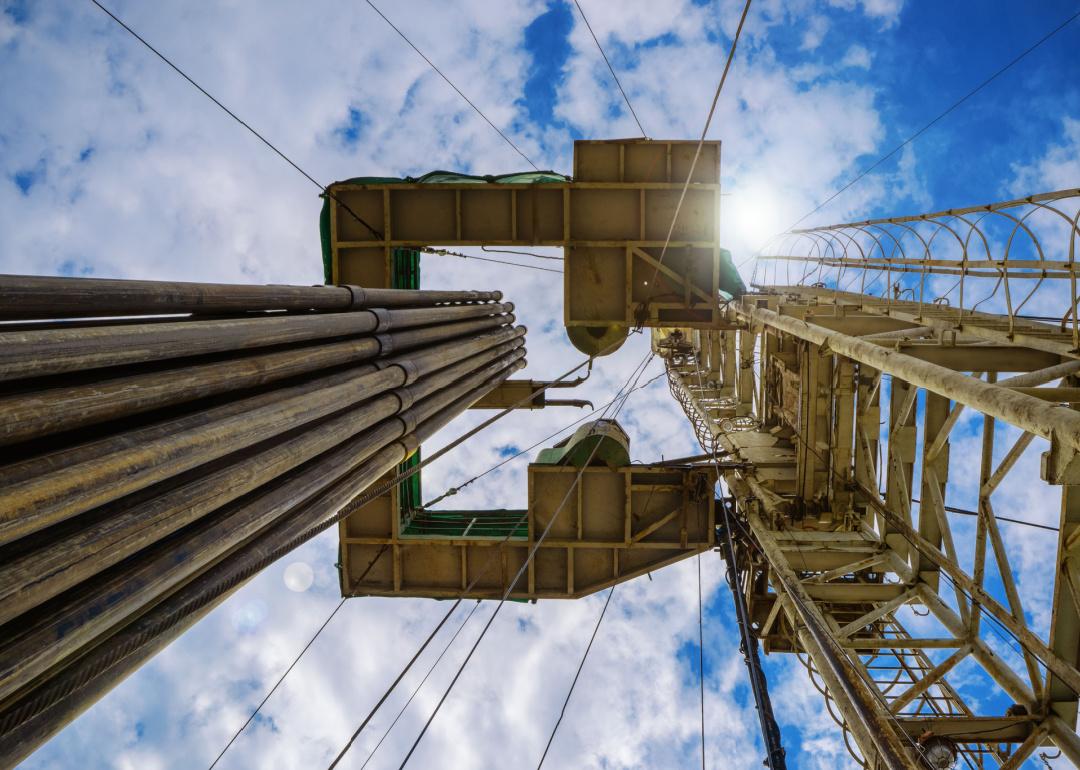
Here's how fracking and renewables are changing US energy production
This story originally appeared on OhmConnect and was produced and distributed in partnership with 麻豆原创 Studio.
Here's how fracking and renewables are changing US energy production
The use of renewable energy sources is on the rise in the U.S., which may be a welcome relief to both Earth and its inhabitants. Sourcing energy from renewables such as solar power, hydropower, and wind offers a plethora of health and sustainability benefits, especially compared to energy sources that release greenhouse gases into the atmosphere. Considering the volume of U.S. energy use, national over-reliance on GHG-emitting energy sources has been a cause for concern in most scientific circles for decades.
Currently, the residential and commercial sectors of the U.S. between 4-7 quadrillion Btu, or British thermal units, of energy annually, while the industrial and transportation sectors use between 22-27 quadrillion Btu. By far the largest energy consumer in the U.S. is the electric power sector, which gobbled up more than 36 quadrillion Btu in 2021.
Unfortunately, renewable energy source use pales against sources like natural gas. The Energy Information Administration found that , natural gas use in the residential sector alone has been more than three times that of renewables, despite an uptick in renewable sourcing since 2010. In the commercial sector, the difference is , at nearly four times that of renewables. So, it is of little surprise that hydraulic fracturing (or fracking), which is the method by which natural gas is extracted, dominated U.S. energy production in 2021鈥攁 year that also marked the third in a row that in the U.S.
Fracking is a process . While it has been a major industry in states like Pennsylvania, Ohio, Texas, Colorado, and the Dakotas for several years, it came to widespread public attention during the 2020 presidential campaign, when both then-President Trump and President Biden to make their respective energy stances known. The process is in the U.K. as a plinth from which the political right is attempting to address the nation's energy crisis.
Both renewables and natural gas energy production reached record highs in 2021; however, even though incentives such as tax credits encourage increasing the use of renewables, fracking remains popular, as it offers what a much-needed clean energy alternative to petroleum.
Using annual report information from the, looked into how the U.S. generates its power, and how the rise of renewable energy fits into the future landscape.
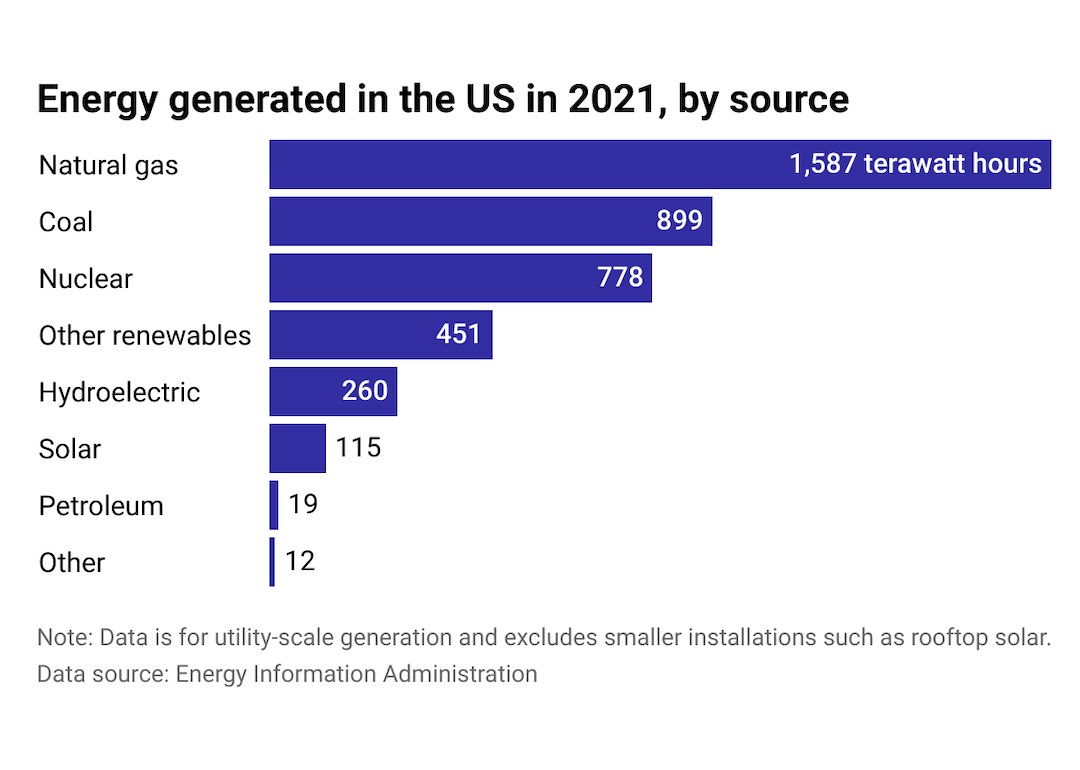
Natural gas is responsible for generating more than a third of US-produced energy
In 2021, the U.S. produced , of which 38.3% came from natural gas. As electricity is the greatest form of energy consumed in the U.S., this figure almost by itself is indicative of overall national energy production and use.
The EIA found that 36% of all energy consumption was last year. Natural gas when it is extracted from wells; it is "wet" because at this stage it contains water vapor and natural gas liquids such as propane, ethane, and butanes. Once separated from these compounds, it becomes dry natural gas, at which point it is distributed to consuming industries鈥攑rimarily the paper, coal, and chemical industries.
Last year, dry natural gas production hit its highest level since at least 1930, reaching 34.2 trillion cubic feet. Of all of the U.S. states, of dry natural gas, followed by Pennsylvania and Louisiana.
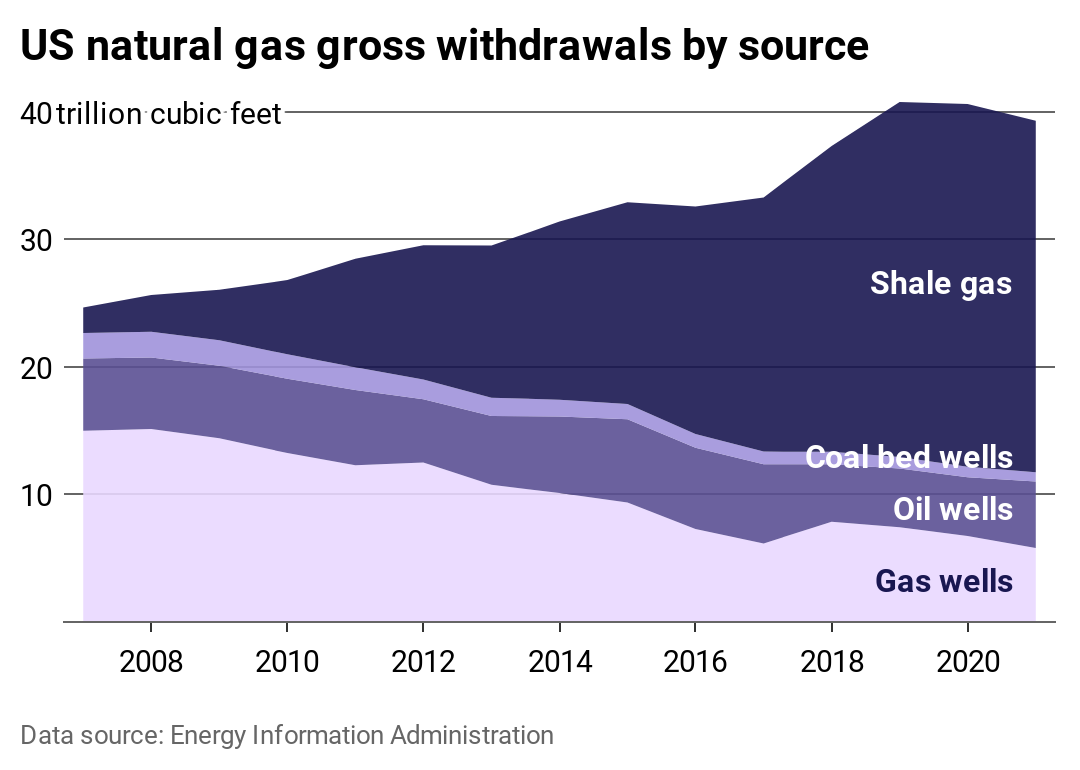
Most natural gas in the US comes from fracking, a controversial extraction method
Natural gas is overwhelmingly , a process whereby shale rock is drilled into, and water and sand are injected underground at very high pressure until the rock formation below fractures and emits the natural gas within it. Though natural gas could also be released through natural oil wells, hydraulically fractured wells , accounting for 69% of all oil and natural gas wells in the U.S. in 2016.
Fracking is a controversial practice due to its detrimental environmental impacts, including air pollution, groundwater contamination, and seismic triggers. So concerned are opponents of fracking that the practice was following criticism from the Oil and Gas Authority. However, this past spring, in the wake of economic strains from rising energy costs largely due to the ongoing conflict in Ukraine, .
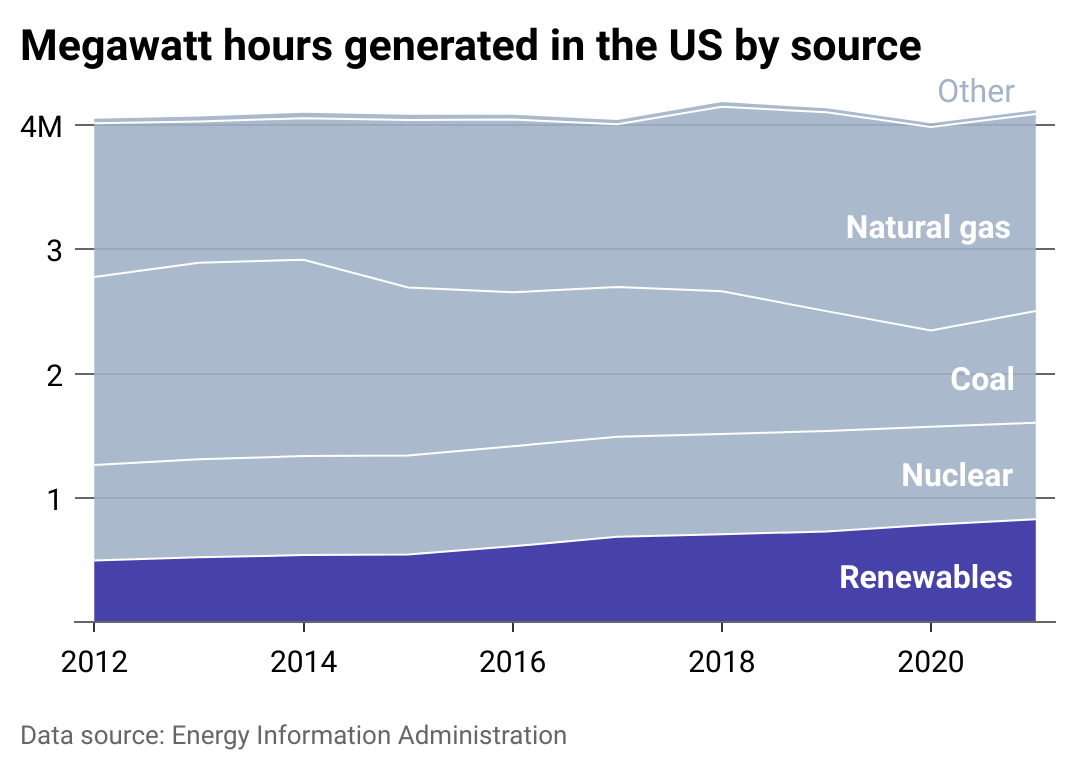
Renewables now account for 20% of the energy generated in the US
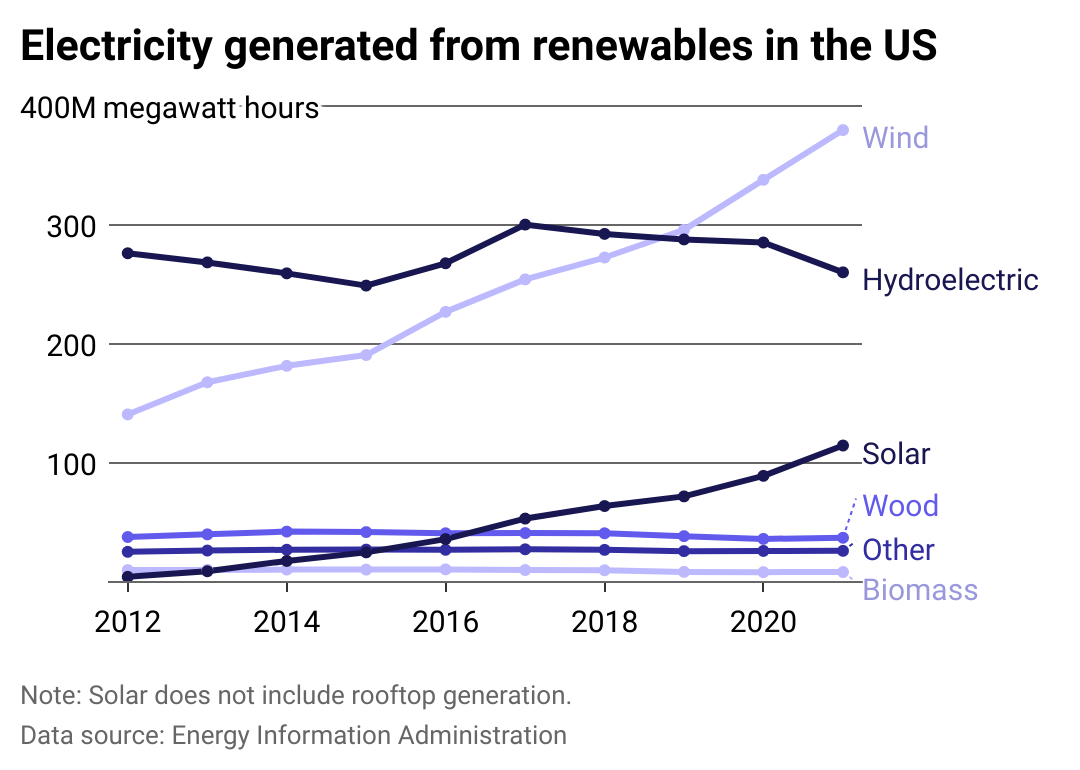
While dry natural gas leads the way in U.S. energy generation, renewables also play a large role鈥攁nd one that continues to increase. From 2012 to 2021, renewables鈥攊ncluding wind, solar, and hydroelectric power鈥攈ave steadily increased their contribution to U.S. energy production. Generation from renewables even surpassed nuclear sources in 2021.
Although renewable energy sources cannot be fully depleted due to their cyclical nature (hence the name "renewables"), they are limited in how much energy they can produce within a given time frame. Though hydropower and wood dominated renewable energy sources used in the U.S. for many decades, the use of solar and wind energy, as well as biofuels, has
Wind and solar energy lead increases in US production of renewable energy
Wind generation tops renewable energy source production in the U.S. and has seen rapid growth since 2012鈥�169% growth to be exact. While that is an impressive boost, solar power has in that same time period, rising to become the third-most prominent renewable source. The U.S. currently has enough solar power capacity to power 18 million homes, and is from solar panels.
At the end of 2020, there were approximately 2.7 million In 2022, there are now more than 3 million installations overall, 1 million of which were installed over the last two years. The number of homes powered by solar energy is expected to further increase in the coming years, offered to residential solar installations.
Even with the rise in renewables, overcoming dependence on fossil fuels won't happen without drastic policy changes
Although the use of renewable energy sources has steadily increased in the past three decades, it will be a long time before renewables overtake the use of fossil fuels, particularly natural gas. Incentives like tax credits can encourage a shift in usage, but ultimately, policy changes will be necessary for a dramatic revamping of energy sources in the U.S., which remains the . Current fracking projects planned in the U.S. may result in as much as .
The 2005 Energy Policy Act put the onus on state governments to regulate fracking within their borders, under the umbrella of . Although the Biden administration has advocated for , it stopped short of taking a hard stance against fracking altogether. Two years into the administration, there has yet to arise any significant curb to the practice.